BV vs Yeast Infection: How to Tell the Difference
Quick Answer: What is the difference between BV and a yeast infection?
Bacterial vaginosis is a bacterial imbalance; a yeast infection is a fungal overgrowth. BV brings thin greyish discharge, a fishy odor and an elevated pH with little itching, while yeast brings thick white discharge, intense itching and a normal pH. The two feel alike, self-diagnosis is wrong about half the time, and BV recurs in most women, so confirmation matters.
- Odor: fishy points to BV; little or no smell points to yeast.
- Itch & texture: intense itch with thick "cottage cheese" discharge points to yeast.
- Get it confirmed: overlapping symptoms mean a clinician's check beats guessing.

Two different problems that feel similar
Bacterial vaginosis and a vaginal yeast infection are the two most common causes of vaginal symptoms, and they are frequently confused because both produce discharge and discomfort. But they are biologically opposite events.
Bacterial vaginosis (BV) is a bacterial imbalance. The protective Lactobacillus species that normally dominate the vagina decline, and a mixed community of anaerobic bacteria — Gardnerella vaginalis and others — grows in their place. It is the most common vaginal condition in reproductive-age women.
A yeast infection (vulvovaginal candidiasis) is a fungal overgrowth, usually of Candida albicans. The yeast is often present in small amounts normally; symptoms appear when it multiplies. Roughly three in four women will have at least one in their lifetime.
Because one is bacterial and one is fungal, they respond to entirely different approaches — which is exactly why guessing wrong wastes time and money and can leave the real issue untreated.
The side-by-side comparison
No single symptom is definitive, but the pattern of symptoms is informative. Here is how the classic pictures differ, with trichomoniasis (a sexually transmitted infection that mimics BV) included because it is the third condition self-testers most often miss.
| Feature | Bacterial vaginosis (BV) | Yeast infection | Trichomoniasis |
|---|---|---|---|
| Cause | Anaerobic bacteria overgrow; lactobacilli decline | Candida fungus overgrows | Trichomonas parasite (STI) |
| Discharge | Thin, greyish-white, homogeneous | Thick, white, "cottage cheese" | Frothy, yellow-green, heavier |
| Odor | Fishy, worse after sex | Little or none | Often unpleasant / musty |
| Itch / irritation | Usually mild or none | Intense itching & burning | Itching, soreness common |
| Vaginal pH | Elevated (above 4.5) | Usually normal (3.8–4.5) | Elevated (above 4.5) |
The quick heuristic clinicians teach: smell leans BV, itch leans yeast, and an elevated pH rules yeast unlikely. That last point is why an at-home strip can be genuinely useful as a first filter — we explain what it measures and its limits in our guide to normal vaginal pH and home testing.
Odor: the most telling single sign
If you notice only one thing, notice the smell. BV's hallmark is a thin discharge with a distinct fishy odor that characteristically intensifies after sex. The chemistry is straightforward: the anaerobic bacteria of BV produce amine compounds, and semen (which is alkaline) raises the pH and releases those amines, sharpening the smell. Clinicians reproduce this deliberately with the "whiff test," adding potassium hydroxide to a sample — one of the four Amsel criteria still used to diagnose BV.
Classic yeast infections, by contrast, are dominated by itch, not odor. The discharge is typically thick and white with little smell. So a strong fishy odor is one of the more reliable pointers toward BV rather than yeast — though, as with everything here, it is suggestive rather than conclusive.
Why self-diagnosis is wrong so often
People are confident about telling these apart. The data says they should not be. In studies of women who bought over-the-counter antifungal treatments believing they had a yeast infection, only about a third turned out to actually have one on testing. The rest had BV, trichomoniasis, a mix of conditions, or nothing that an antifungal would touch. Put simply, self-diagnosis is wrong roughly half the time or more.
There are good reasons for that. The symptoms overlap heavily. Many women have more than one condition at once. And prior experience is a poor guide, because the next episode may not be the same condition as the last. This is the whole argument for confirmation rather than assumption — not because women cannot read their own bodies — professional patient guidance on vaginitis makes the same point, but because these three conditions are genuinely hard to separate without a microscope or a swab.
When to see a clinician rather than self-treat. A first-ever episode, symptoms in pregnancy, recurrent episodes, fever or pelvic pain, an uncertain picture, or any chance of an STI all warrant an actual diagnosis. Treating BV with an antifungal (or vice versa) simply delays relief, and an untreated STI does not wait.

What tips the balance toward BV
Because BV is fundamentally a loss of protective lactobacilli, it helps to know what pushes the balance in that direction. Douching is one of the most consistently identified factors: rinsing the vagina strips away lactobacilli and the acidic environment they maintain, which is why every major guideline advises against it. New or multiple sexual partners are associated with BV, and while it is not classed as a classic sexually transmitted infection, the balance of the vaginal microbiome is clearly influenced by sexual activity. Menstruation nudges pH upward each month, since blood is close to neutral, giving anaerobes a recurring window. Hormonal shifts across the cycle, in pregnancy and around menopause change the glycogen supply that feeds lactobacilli. Even scented washes, deodorising products and some lubricants can disturb the chemistry. None of these guarantees BV, and plenty of women with none of them still get it, but avoiding the modifiable ones is the least invasive lever available.
Yeast has its own tilt factors, and they are largely different: recent antibiotics (which clear competing bacteria and let Candida expand), higher-estrogen states, poorly controlled blood sugar, and a warm, occlusive environment. That the two conditions have such different triggers is another reason a single episode should not be assumed to be a repeat of the last one.
Why BV comes back so often
Here is the fact that reframes the whole topic: BV is not usually a one-off. Recurrence is the norm. Across the literature, roughly 50 to 80 percent of women experience a recurrence within 6 to 12 months of an initial episode — a landmark 12-month follow-up study by Bradshaw and colleagues reported more than half recurring within a year, and the CDC likewise notes recurrence in more than half of cases.
Three things drive that. First, the BV bacteria form a biofilm — a protective, glue-like layer on the vaginal wall — that standard treatment does not always fully dislodge, letting the community regrow. Second, the protective lactobacilli are slow to re-establish; clearing the overgrowth is not the same as rebuilding a stable, acidic, Lactobacillus-dominant community. Third, the original contributing factors — douching, new or multiple sexual partners, and hormonal shifts — often continue.
That recurrence pattern is precisely why interest has grown in supporting the microbiome after an episode, rather than only reacting to each flare.
Where lactobacilli and supplements fit — honestly
If BV is fundamentally a loss of protective lactobacilli, then rebuilding and maintaining those populations is a logical long-term goal. Research into Lactobacillus for vaginal balance is active and cautiously encouraging, particularly for reducing recurrence rather than treating an acute episode — but the evidence is strain-specific and far from settled.
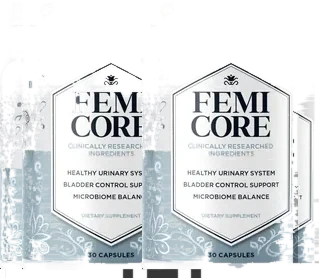
This is the honest framing for a supplement like FemiCore, which pairs a five-strain Lactobacillus blend (L. crispatus, L. gasseri, L. acidophilus, L. plantarum and L. casei) with cranberry and bearberry botanicals. It is positioned to support ongoing balance, not to treat, cure or clear an infection. It is not a substitute for diagnosis or for a clinician's care of an active episode. And it works slowly — the realistic timeline for microbiome measures is weeks to months, which we lay out in our week-by-week probiotic timeline. If you are exploring options for stubborn recurrence, discuss them — including evidence-based ones like those covered in our review of boric acid suppositories — with your clinician rather than self-directing.
A practical takeaway
Use the pattern, not a single sign: fishy odor and thin discharge lean BV; intense itch and thick white discharge lean yeast; an elevated pH makes yeast unlikely. Then get it confirmed, especially the first time, in pregnancy, or when episodes keep returning — because you will be wrong more often than feels possible, and because BV's high recurrence rate makes the long game of microbiome balance the part actually worth investing in.
Related reading
- Normal Vaginal pH: The 3.8-4.5 Range and How Testing Works
- Vaginal Discharge Color Guide: What Is Normal?
- Boric Acid Suppositories: What the Evidence Shows
Frequently asked questions
What is the main difference between BV and a yeast infection?
BV is an overgrowth of mixed anaerobic bacteria after protective lactobacilli decline, while a yeast infection is an overgrowth of Candida fungus. BV typically causes thin greyish discharge with a fishy odor and little itching, whereas yeast causes thick white discharge with intense itching and usually no strong smell. Their vaginal pH also differs.
Does BV have a smell that yeast infections do not?
Usually yes. BV is known for a thin discharge and a fishy odor that often gets stronger after sex, because semen raises the pH and releases amine compounds. Classic yeast infections tend to have little or no odor and are dominated instead by itching, burning, and thick discharge. Odor alone is suggestive, not conclusive.
How often do women misdiagnose themselves?
Frequently. Studies of women buying over-the-counter antifungals have found that only about a third who self-diagnosed a yeast infection actually had one, so self-diagnosis is wrong roughly half the time or more. Symptoms overlap heavily between BV, yeast, and trichomoniasis, which is why a clinician's confirmation is worthwhile.
Why does bacterial vaginosis come back so often?
BV recurs in roughly 50 to 80 percent of women within 6 to 12 months. The reasons include a resilient bacterial biofilm that treatment does not fully clear, slow recovery of protective lactobacilli, and ongoing factors such as douching, new or multiple partners, and hormonal shifts. Recurrence is common enough that follow-up matters.
Scientific references
- Centers for Disease Control and Prevention — About Bacterial Vaginosis
- Centers for Disease Control and Prevention — Vaginal Candidiasis
- Bradshaw CS, et al. — High recurrence rates of bacterial vaginosis over the course of 12 months after oral metronidazole therapy and factors associated with recurrence. J Infect Dis. 2006;193(11):1478–1486. PMID 16652274
- Amsel R, et al. — Nonspecific vaginitis: diagnostic criteria and microbial and epidemiologic associations. Am J Med. 1983;74(1):14–22. PMID 6600371
- American College of Obstetricians and Gynecologists — Vaginitis (patient FAQ)
- NIH NCCIH — Probiotics: What You Need To Know
Playing the long game on balance
FemiCore combines five Lactobacillus strains with cranberry and bearberry to support ongoing vaginal and urinary balance — a preventive routine, not a treatment. Read our full FemiCore overview first, then decide.
Order Now