How Long Before a Women's Probiotic Does Anything? A Week-by-Week Reality Check
Quick Answer: How Long Do Women's Probiotics Take to Work?
Plan on 12 weeks minimum — in a 2024 meta-analysis of cranberry trials, the only duration that produced a statistically significant result was 12 to 24 weeks of continuous daily use (RR 0.75, 95% CI 0.61–0.91), while anything under 12 weeks did not. Measurable colonisation can begin within days, but early detection is not a stable microbiome shift, and consistency matters more than the number of weeks on the calendar.
- First detection: day 3 in one 2025 trial, in 11.8% of women.
- Earliest honest review point: week 12, not week 4.
- Adherence penalty: two missed days a week = 71% of the studied dose.

Why "eight to twelve weeks" is a habit, not a measurement
Almost every women's microbiome supplement sold today asks for eight to twelve weeks of patience, and the Cochrane review of cranberry for preventing urinary tract infections does not settle the question either. This site says the same thing on its homepage. The number is repeated so consistently that it reads like a finding, but it is not one: nobody ran a trial that compared eight weeks against four and reported eight as the winner. It is a commercial convention that happens to line up with a three-bottle bundle.
There is a real measurement of duration in this field, and it points slightly further out. In 2024, Xiong and colleagues published a systematic review and meta-analysis in Frontiers in Nutrition pooling 10 randomised controlled trials and 2,438 participants (1,217 in the intervention arms, 1,221 in the controls). Alongside the headline dose finding, they ran a subgroup analysis on how long people had taken the product. That subgroup is the single most useful piece of timeline data available, and no consumer page on this topic uses it.
The result was narrow and specific. Benefit reached statistical significance only in the 12-to-24-week band (RR 0.75, 95% CI 0.61–0.91, p = 0.004). Below 12 weeks there was no significant association. Above 24 weeks, the significance disappeared again. The authors put it plainly: there was no significant association when the duration of use was too short or too long.
The upper end of that band deserves a caveat rather than a theory. It is tempting to read "significance lost after 24 weeks" as evidence that the body adapts, or that an effect wears off. Nothing in the paper supports that reading. Long-duration subgroups in supplement meta-analyses contain fewer trials and fewer people, which widens confidence intervals on its own, and trials that run past six months lose participants to drop-out and declining adherence. A subgroup can stop being statistically significant simply because it got smaller and noisier. The safe conclusion is the modest one: 12 to 24 weeks is where the data is strongest, and that is where you should set your own review point.
What this does mean is that four weeks is not a short trial — it is a non-trial. If the pooled data cannot detect a difference at eight weeks across thousands of randomised participants, one person forming an impression at week four is not going to detect one either.
Label this honestly. The Xiong duration subgroup measured cranberry products, not probiotic capsules. It is the best duration-versus-outcome dataset in the women's urinary-health supplement space, and a combined botanical-plus-probiotic formula is bought and taken on the same schedule — but we are borrowing a cranberry finding to set a probiotic expectation. That is a transfer, and you should know we made it. Nobody has run the equivalent duration subgroup on a five-strain Lactobacillus blend.
The week-by-week timeline
Here is what each window can honestly be said to represent. The middle column is deliberately narrower than the marketing: it lists only what published data supports, not what a routine "should" be doing.
| Window | What has plausibly changed | What the evidence actually supports | What to do |
|---|---|---|---|
| Weeks 0–2 Days 1–14 |
Swallowed strains start turning up at other body sites. Digestive adjustment is commonly reported and usually brief. | Detection only. In a 2025 randomised trial, a coded L. gasseri strain appeared in vaginal swabs of 11.8% of women by day 3 and 23.5% by day 6. | Take it daily and start a log. Judge nothing. Store it as the label directs. |
| Weeks 2–4 Days 15–28 |
If a given strain is going to be detectable at all, it usually is by now. | Nothing about outcomes. A 2023 RCT in 50 women who were already Lactobacillus-dominant found two weeks of oral supplementation produced no detectable colonisation and no community shift. | Keep going. This is where most people quit, and it is far too early to conclude anything. |
| Weeks 4–8 Days 29–56 |
Habit is either formed or it is not. This is where most consumer content starts promising something. | Still nothing. The 2024 meta-analysis found durations under 12 weeks did not produce a statistically significant reduction in risk. | Audit adherence rather than results. Count the capsules left in the bottle against the days elapsed. |
| Weeks 8–12 Days 57–84 |
The commonly quoted window closes here, including the 8-to-12-week window on this site's own homepage. | Still below the only duration band that reached significance. Eight weeks is a commitment threshold, not an evidence threshold. | Do a first review at week 12, and treat it as provisional. |
| Weeks 12–24 Days 85–168 |
You are now inside the only window with a positive duration result behind it. | RR 0.75 (95% CI 0.61–0.91, p = 0.004) in the 12-to-24-week subgroup of 10 RCTs. Beyond 24 weeks, significance was lost again. | Decide here. This is the honest length of a personal trial, and it is roughly a 6-bottle supply. |
Weeks 0–2: what colonisation looked like when somebody actually measured it
The early-week question — does anything you swallow reach the vaginal tract at all — was measured directly in 2025. Perez and colleagues published a randomised trial in Microbiology Spectrum in which 48 healthy women aged 18 to 45 took either Lactobacillus gasseri CECT 30648 alone at 109 CFU/day, the same strain combined with L. crispatus CECT 30647 at 1.5 × 10⁹ CFU/day, or placebo. Vaginal swabs were taken every three days for up to 18 days between menses.
The strain was detected in at least one timepoint in 19 of 34 women in the probiotic arms (55.9%) versus 1 of 12 on placebo (8.3%), p = 0.005. The kinetics are what matter for a timeline. By day 3, four volunteers (11.8%) already had a positive vaginal sample. Positives peaked at day 6 with eight participants (23.5%), then held roughly between 15% and 22% through day 18.
Read that carefully, because it cuts both ways. Yes, an orally swallowed capsule can put a specific coded strain where you want it, and it can happen inside a week. But at the peak, fewer than one woman in four had a detectable sample on any given day. Detection is a signal that the delivery route works. It is not evidence of a settled, restructured microbiome, and it was demonstrated for two coded strains at a stated CFU dose — not for the species names printed on a bottle. We go through the strain-code problem in detail in our piece on whether oral probiotics actually reach the vagina.
The adherence arithmetic nobody does
Every timeline article discusses weeks. None of them discusses doses, which is odd, because the trials counted doses and your bathroom cabinet does not. A twelve-week course is 84 daily capsules. If you take fewer than 84, you have not run a twelve-week trial; you have run a longer, weaker one and then judged it on the calendar.
The arithmetic is simple enough to do in your head, and it is unforgiving:
| Days missed per week | Doses taken in 12 weeks | Share of the studied dose | Calendar time to reach 84 doses |
|---|---|---|---|
| 0 | 84 of 84 | 100% | 12.0 weeks |
| 1 | 72 of 84 | 85.7% | 14.0 weeks |
| 2 | 60 of 84 | 71.4% | 16.8 weeks |
| 3 | 48 of 84 | 57.1% | 21.0 weeks |
Missing two days a week is not unusual behaviour — it is a busy Saturday and a hotel room. It also means that at the twelve-week mark you have taken roughly 71% of what the studies used, and that reaching a genuine 84 doses will take you nearly 17 weeks. Neither of those facts is a reason to feel bad. They are a reason to move your review date, and to buy the bundle size that matches the trial length you actually intend to run rather than the one you hope to.
Why an early verdict is almost always wrong
Beyond the dose arithmetic, three ordinary things make a short personal trial close to uninformative — and all three push in the same direction, toward a falsely positive early impression.
You started at a low point. Nobody buys a women's microbiome supplement during a good month. People start one after a bad stretch, which means the baseline you are comparing everything to is close to your personal worst. Whatever happens over the following weeks is measured against that trough. Statisticians call the drift back toward your own average regression to the mean, and it is not a trick of perception: it is a real, predictable pattern that produces genuine-feeling improvement in the weeks after any low point, whether or not you took anything.
The thing you are watching fluctuates anyway. Urinary and vaginal comfort varies with the menstrual cycle, hydration, sleep, sexual activity, travel, recent antibiotic courses and hormonal changes. A four-week observation window covers roughly one cycle. That is not enough resolution to separate a supplement's contribution from ordinary variation, which is precisely why the trials pool hundreds of people over months rather than trusting individual before-and-after impressions.
Memory edits itself in favour of the purchase. Once you have paid for something and committed to a daily routine, recall of how things were beforehand shifts. This is well documented across health behaviours and it is not a character flaw. It is also the entire reason the one-line weekly note we suggest below is worth the twenty seconds: written baselines do not drift, and remembered ones reliably do.
None of this means a daily capsule does nothing — the NIH NCCIH summary on probiotics is a fair statement of where the general evidence sits. It means that the honest signal, if there is one, lives in months of consistent use and a written record — not in how week three felt.
Running a full 12-week trial
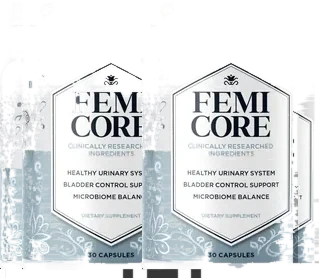
FemiCore is a once-daily capsule sold in 60-, 90- and 180-day supplies, with a 60-day money-back guarantee. If you intend to test it against the 12-to-24-week window described above, the multi-bottle bundles are the ones that match the arithmetic.
Order NowWhat the evidence does not show
Four honest limits, stated plainly.
The duration finding is not about probiotics. It is a cranberry duration subgroup. We have used it because it is the best duration-versus-outcome data in this product category and because these ingredients are sold and taken together, but the equivalent analysis for a multi-strain Lactobacillus blend has not been published. Treat 12 weeks as a defensible floor, not a proven probiotic threshold.
Nothing here says a supplement resolves anything. The trials pooled by Xiong measured risk of recurrence at a population level over months. That is not the same as an individual outcome, and this timeline describes how long to run a supplement routine before assessing it — not how long anything takes to get better. FemiCore is a dietary supplement, not a drug, and it is not intended to diagnose, treat, cure or prevent any disease.
A healthy microbiome may simply not move. The 2023 randomised trial published in Microorganisms enrolled 50 women who were already in good shape — Nugent score 0 to 3, vaginal pH at or below 4.5 — and gave them oral Lactobacillus acidophilus La-14 and Lacticaseibacillus rhamnosus HN001 for two weeks. Colonisation was not observed above the assay detection limit, and the vaginal microbiota remained stable and lactobacilli-dominated throughout. Two weeks is short, so this is best read as a colonisation result rather than a verdict on long-term supplementation. But it is a real null, and the honest reading is that if your microbiome is already Lactobacillus-dominant, there may be nothing for a supplement to change.
None of these numbers can be transferred to FemiCore's label. The colonisation figures belong to CECT 30648 and CECT 30647 at stated CFU doses. FemiCore names and codes five strains — L. crispatus LCr86, L. acidophilus LA88, L. plantarum N13, L. gasseri LG08 and L. casei LC16 — but gives a single 50 mg weight for the whole probiotic blend and no CFU count for any strain, on the label or on the vendor's sales page. Coding the strains is better than a bare species list, and it is still not enough to compare the product to any of the studies above, because none of the five codes returns a trial in PubMed and a milligram weight is not a viable-cell count. That gap is the whole subject of our women's supplement label audit.
How to run an honest twelve-week trial on yourself
If you are going to spend three to six months on a daily capsule, run it like a small experiment rather than a hope.
Set the end date before you start. Put week 12 in your calendar on day one and refuse to evaluate before it. Every consumer complaint that a probiotic "did nothing" that we have read describes a four- to six-week trial.
Count doses, not weeks. Write the start date on the bottle. At your review point, count what is left. If you have taken fewer than 70 of 84, extend rather than judge.
Write down two or three things at baseline. Anything you would otherwise reconstruct from memory three months later, memory will reconstruct in favour of whatever you paid for. A one-line note per week is enough.
Change one thing at a time. Starting a supplement, a new diet and a new fluid-intake habit in the same week guarantees you learn nothing from any of them.
Keep the clinician in the loop. A supplement routine is not a substitute for medical assessment, and symptoms that are new, worsening or persistent are a reason to see someone rather than to wait out another eight weeks. This matters more if you take prescription medication: berberine, one of the four botanicals in this class of formula, interacts with several drug classes and is covered in our berberine interactions guide.
Medical note: this article is general information, not medical advice. It describes how long to run a supplement routine before evaluating it, not how long any condition takes to resolve. Speak to a healthcare professional before starting any supplement, especially if you are pregnant, nursing, or taking medication.
Frequently asked questions
How long do women's probiotics take to work?
Plan on at least 12 weeks of near-daily use before you judge a product. The only duration band that produced a statistically significant result in a 2024 meta-analysis of 10 randomised cranberry trials was 12 to 24 weeks. Anything shorter than 12 weeks, and anything longer than 24 weeks, did not reach significance.
Can you feel a probiotic working in the first week?
Measurable detection can begin that early, but detection is not the same as a stable change. In a 2025 randomised trial, a coded Lactobacillus gasseri strain was found in the vaginal samples of 11.8% of women by day 3 and 23.5% by day 6. Anything you notice in week one is not evidence that the microbiome itself has shifted.
What happens if I miss doses?
Missing two days a week over a 12 week course delivers 60 of 84 daily doses, which is about 71% of the amount the studies used. To actually take 84 doses at that rate you would need roughly 17 weeks. Missed days do not just lower the dose, they lengthen the trial you are running on yourself.
Do oral probiotics change a vaginal microbiome that is already healthy?
In one randomised controlled trial they did not. Fifty women with a Nugent score of 0 to 3 and a vaginal pH at or below 4.5 took oral Lactobacillus acidophilus La-14 and Lacticaseibacillus rhamnosus HN001 for two weeks. Colonisation was not observed above the assay detection limit and the vaginal microbiota remained stable and lactobacilli-dominated. The trial ran for two weeks, so it tests early colonisation rather than long-term use.
Is the 8 to 12 week window used on this site wrong?
It is optimistic rather than wrong. Eight to twelve weeks is a reasonable minimum commitment, but the strongest duration evidence in this field points to 12 to 24 weeks, so 12 weeks is the better floor. FemiCore does code its five strains on the label, but it publishes no CFU count for any of them, so its dose cannot be compared to the trials at all.
Scientific references
- Xiong Z, Gao Y, Yuan C, Jian Z, Wei X. — Preventive effect of cranberries with high dose of proanthocyanidins on urinary tract infections: a meta-analysis and systematic review. Front Nutr. 2024;11:1422121. PMID 39668896
- Perez M, et al. — Lactobacillus gasseri CECT 30648 shows probiotic characteristics and colonizes the vagina of healthy women after oral administration. Microbiol Spectr. 2025. PMID 40772934
- A Healthy Vaginal Microbiota Remains Stable during Oral Probiotic Supplementation: A Randomised Controlled Trial. Microorganisms. 2023;11(2):499
- Williams G, et al. — Cranberries for preventing urinary tract infections. Cochrane Database of Systematic Reviews (2023)
- NIH NCCIH — Probiotics: What You Need To Know
- Evaluation of Modulatory Activities of Lactobacillus crispatus Strains in the Context of the Vaginal Microbiota. Microbiol Spectr. 2022
Ready to start the twelve-week clock?
FemiCore combines cranberry, bearberry, berberine and mimosa pudica with five Lactobacillus strains in one daily capsule. Read our full FemiCore review first, then decide.
Order Now