Do Oral Probiotics Actually Reach the Vagina? What the Colonisation Studies Measured
Quick Answer: Do Oral Probiotics Reach the Vagina?
Some specific strains do — in a 2025 randomised trial, Lactobacillus gasseri CECT 30648 taken orally at 1 billion CFU a day was detected in the vaginal samples of 55.9% of women versus 8.3% on placebo — but this is a property of individual coded strains, not of probiotics in general. In women whose vaginal microbiota was already Lactobacillus-dominant, a separate randomised trial found oral supplementation changed nothing.
- Positive number: 19 of 34 women (55.9%) vs 1 of 12 on placebo (8.3%), P = 0.005.
- Timing: first detection at day 3; peak between day 6 and day 15.
- The rule: colonisation belongs to a strain code, never to a species name.

What "reaching the vagina" actually means in a study
The question sounds simple and is not. Brand blogs say oral probiotics "reach the vaginal tract". Sceptics say the evidence is "limited". Older work such as Reid and colleagues' 2003 study of oral L. rhamnosus GR-1 and L. fermentum RC-14 sits behind both claims. Almost nobody on either side publishes a detection rate, a strain code, a dose or a timeframe, which is the only way to tell the two claims apart.
A colonisation study measures something very specific. Women swallow a capsule containing a named, coded strain. Vaginal swabs are taken on a schedule. A strain-specific assay — usually quantitative PCR against a genetic marker unique to that strain — asks whether that exact organism is present above a stated detection limit. The output is a percentage of participants positive, at a stated timepoint, compared with placebo.
Three things follow from that design, and they explain most of the confusion in this topic:
- Detection is not colonisation in the permanent sense. A positive swab on day 6 means the organism was there on day 6. It does not mean it established a lasting niche.
- An assay has a floor. "Not detected" means "not above the detection limit the authors declared", not "definitely absent".
- The result is tied to the strain that was tested. Two strains of the same species can behave completely differently, and at least one trial has shown exactly that within a single capsule.
With that framing, here is what the trials measured.
The colonisation table: what was measured, in whom, and how much showed up
This is the table that does not exist anywhere else in this topic. Every row is a randomised human trial with a strain-specific detection assay. Note that three of the five strain entries are negative.
| Strain (with code) | Oral dose, CFU/day | n | Vaginal detection | First detection | Peak window | Citation |
|---|---|---|---|---|---|---|
| L. gasseri CECT 30648 | 1×10⁹ alone, or 1.5×10⁹ combined | 34 probiotic / 12 placebo (per protocol) | 19/34 = 55.9% vs 1/12 = 8.3% on placebo (P = 0.005) | Day 3 (11.8% positive) | Days 6–15 (23.5% positive at day 6) | Perez 2025, Microbiol Spectr |
| L. crispatus CECT 30647 | 1.5×10⁹ (combination arm) | Same trial | Not detected in vaginal samples | — | — | Perez 2025, Microbiol Spectr |
| L. acidophilus La-14 (ATCC SD5212) | 1×10¹⁰ total with HN001, 4:1 ratio | 50 randomised (49 analysed) | Not detected above 5.29 log10 genomes per swab | — | — | Lyra 2023, Microorganisms |
| Lacticaseibacillus rhamnosus HN001 (ATCC SD5675) | 1×10¹⁰ total with La-14, 4:1 ratio | 50 randomised (49 analysed) | Not detected above 5.11 log10 genomes per swab | — | — | Lyra 2023, Microorganisms |
| L. rhamnosus GR-1 + L. fermentum RC-14 | Daily capsule for 60 days (dose not stated in the abstract) | 64 | Strain detection was not the endpoint; flora shifted to Lactobacillus-dominant in 37% vs 13% on placebo (P = 0.02) | — | Assessed at days 28, 60 and 90 | Reid 2003, FEMS Immunol Med Microbiol |
Read the second row again. In the same capsule, in the same women, on the same sampling schedule, one strain was detectable in over half the participants and the other was not detectable at all. That single contrast does more to explain this field than any amount of prose about the gut–vaginal axis, and it is the same strain-level variability Argentini and colleagues found across 15 L. crispatus strains.
What the positive trial actually measured
The strongest result comes from Perez and colleagues, published in Microbiology Spectrum in 2025. Forty-eight healthy women aged 18 to 45 were randomised to one of three arms: L. gasseri CECT 30648 alone at 1×10⁹ CFU/day, the same strain combined with L. crispatus CECT 30647 at 1.5×10⁹ CFU/day total, or placebo. Forty-six women completed per protocol.
Sampling ran for up to 18 days between menses, with swabs at seven timepoints: days 0, 3, 6, 9, 12, 15 and 18. That is an unusually dense schedule for this kind of work, and it is why the trial can say something about timing rather than only about endpoints.
Pooling the two probiotic arms, L. gasseri CECT 30648 was detected in 19 of 34 women, or 55.9%, against 1 of 12 on placebo, or 8.3%. The difference was statistically significant at P = 0.005. Four participants (11.8%) were already positive at day 3. Detection peaked between days 6 and 15, hitting 23.5% of participants at day 6 and staying roughly in the high-teens to low-twenties percentage range through day 15.
Two secondary findings are worth stating precisely, because they are modest and are often inflated in marketing copy. Non-Lactobacillus genera were significantly reduced after the intervention (P = 0.047), and there was a significant shift toward Lactobacillus-dominated community state types (P = 0.039). Those are compositional measurements in healthy volunteers over 18 days. They are not symptom outcomes, and the trial was not designed to produce any.
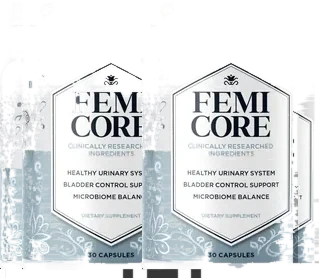
A five-strain formula built on this reasoning
FemiCore pairs cranberry and bearberry botanicals with five Lactobacillus species, including L. crispatus and L. gasseri. We lay out what is known about each — and what is not.
Order NowThe null result nobody quotes
If the Perez trial were the only evidence, the honest summary would still be narrow. It is not the only evidence, and the counterweight matters.
Lyra and colleagues, writing in Microorganisms in 2023, ran a randomised controlled trial in 50 healthy premenopausal women aged 18 to 50. Every participant had a Nugent score of 0 to 3 and a vaginal pH of 4.5 or below — in other words, a microbiota that was already in good shape. They took L. acidophilus La-14 and Lacticaseibacillus rhamnosus HN001 at a combined 1×10¹⁰ CFU per day in a 4:1 ratio for two weeks.
Neither strain was detected in vaginal samples above the assay's limits of 5.29 and 5.11 log10 genomes per swab. The vaginal microbiota stayed stable and remained dominated by lactobacilli, and vaginal pH stayed in the optimal range. The authors' conclusion was that the supplement "had no aberrant effects on stable and healthy commensal vaginal microbiota and immunological homeostasis" — a safety statement, not an efficacy one.
There are two clean readings of that result and both are useful. The first is that these particular strains, at that dose, over two weeks, do not colonise. The second is that a vaginal community which is already Lactobacillus-dominant has very little room to move, so a study designed this way has almost no headroom to show a change even if one were possible. Both readings point at the same practical conclusion: if your microbiota is already stable, an oral probiotic is unlikely to measurably alter it.
Why the strain code decides everything
The habit of writing "contains Lactobacillus crispatus" and stopping there treats a species as if it were a single organism. It is not.
Argentini and colleagues, in Microbiology Spectrum in 2022, evaluated 15 L. crispatus strains — eight from human vaginal samples, seven from poultry — against 11 pathogens. They reported "marked strain-specific differences among the tested L. crispatus strains in terms of inhibitory activity and inhibitory spectrum". Some organisms were inhibited only by the human-derived strains; one was inhibited only by the poultry strains. Most strains inhibited Candida growth by more than 80%, but five managed less than 50%. Eight putative bacteriocin-producing gene clusters were spread unevenly across the collection. The authors' summary is blunt: even phylogenetically close L. crispatus strains "possess unique features".
This is why a strain code is not pedantry. CECT 30648 is a specific deposited organism with a specific published dataset behind it. "L. gasseri" is a name that covers thousands of organisms, most of which have never been tested for anything. When a study result is attached to a code and a product is labelled only with a species, the study result does not transfer.
The oldest evidence in this area makes the same point from the other direction. Reid and colleagues showed in 2002 that L. fermentum RC-14 and L. rhamnosus GR-1 persisted in the human vagina while L. rhamnosus GG — the most studied probiotic strain in the world — did not. Same genus, same species in two of the three cases, opposite result.
What this means for a multi-strain women's formula
Most women's microbiome products, including FemiCore, sell a blend rather than a single studied strain. That is not automatically a problem, but it changes what you can conclude.
FemiCore's public marketing names all five of its Lactobacillus species openly — L. crispatus, L. acidophilus, L. gasseri, L. plantarum and L. casei — which is more disclosure than a hidden proprietary blend offers. What we could not find anywhere in the published material at the time of writing is a strain code or a CFU figure for any of them. That is common in this category and it is not an accusation. It does have one hard consequence: none of the detection percentages in the table above can be transferred to it, because you cannot tell whether the L. gasseri in the capsule is CECT 30648 or one of the many other strains carrying that species name.
The practical move is the same for any product in this aisle. Read the Supplement Facts panel on the bottle you actually receive, look for a code after each species, and look for a CFU number that is guaranteed to the expiry date rather than at the time of manufacture. If those are printed, you can compare the product to a study. If they are not, you are buying on the plausibility of the mechanism rather than on transferred evidence — which is a legitimate choice, as long as you know that is what you are doing.
For the wider question of whether these ingredients have any evidence behind them at all, we covered the cranberry and Lactobacillus literature separately in our evidence review of cranberry and Lactobacillus for women's urinary health. If you are weighing capsules against juice, the cranberry supplement versus juice PAC maths covers the botanical half of the same problem.
What the evidence does not show
This is the section the brand blogs leave out, so it is worth being explicit.
- It does not show that probiotics in general reach the vagina. Of the strains listed above, one was detected and three were not. Generalising from the positive row to the whole category is exactly the error this article exists to correct.
- It does not show permanent colonisation. The longest of these detection trials ran 18 days. Nobody has published a strain-specific detection curve for these organisms months after stopping.
- It does not show a symptom benefit. Detection in a swab and a change in community state types are microbiological measurements in healthy volunteers. They are not clinical outcomes, and none of these trials was designed to measure one.
- It does not show a dose–response relationship. The 2025 trial used one dose per arm. There is no published curve telling you whether 5 billion CFU would have done better than 1 billion.
- It says nothing about combination products. None of these trials tested a probiotic co-formulated with botanicals such as cranberry, bearberry or berberine. Whether those ingredients affect strain survival in the same capsule has not, as far as we can find, been measured.
The honest one-line version: a small number of coded strains have been shown to be detectable in vaginal samples after oral dosing, at modest rates, for short periods, in healthy volunteers. That is a real finding and it is much narrower than the marketing built on top of it.
Medical note: this article is general information, not medical advice. Dietary supplements are not intended to diagnose, treat, cure or prevent any disease. Speak to a healthcare professional before starting any supplement, especially if you are pregnant, nursing, immunocompromised or taking medication. Symptoms of an infection need a clinician, not a capsule.
Frequently asked questions
Do oral probiotics reach the vagina?
Some specific strains do. In a 2025 randomised trial, Lactobacillus gasseri CECT 30648 taken by mouth was detected in vaginal samples from 19 of 34 women (55.9%) compared with 1 of 12 on placebo (8.3%), P = 0.005. That result belongs to that coded strain at that dose. It is not evidence that probiotics in general travel from the gut to the vagina.
How long does it take for an oral probiotic to show up in vaginal samples?
In the 2025 trial the first positive vaginal samples appeared at day 3, in 11.8% of participants. Detection peaked between day 6 and day 15, reaching 23.5% of participants at day 6. Detection at a single timepoint is not the same as a stable change in the microbial community, and the trial only ran for up to 18 days.
Why does the strain code matter more than the species name?
Because closely related strains of the same species behave differently. A 2022 study of 15 Lactobacillus crispatus strains found marked strain-specific differences in which organisms they inhibited and how strongly. Colonisation was demonstrated for coded strains such as CECT 30648, not for the species as a whole, so a label that says only Lactobacillus gasseri does not tell you which strain is inside.
Is a vaginal probiotic better than an oral one?
The two have not been compared head to head in a way that settles the question, and this article does not claim one is better. What the oral colonisation trials show is that the oral route can deliver a detectable amount of certain coded strains, and that other strains tested by the same method were not detectable at all. Talk to a clinician about which format suits you.
Does an oral probiotic change a vaginal microbiome that is already healthy?
In one randomised trial, no. Fifty women with a Nugent score of 0 to 3 and a vaginal pH of 4.5 or lower took Lactobacillus acidophilus La-14 and Lacticaseibacillus rhamnosus HN001 at 10 billion CFU a day for two weeks. Neither strain was detected above the assay limit and the vaginal community stayed stable. A microbiome that is already Lactobacillus dominant has little room to shift.
Scientific references
- Perez M, Armengol E, Del Casale A, et al. — Lactobacillus gasseri CECT 30648 shows probiotic characteristics and colonizes the vagina of healthy women after oral administration. Microbiology Spectrum. 2025;13(9):e0021125. PMID 40772934. DOI 10.1128/spectrum.00211-25
- Lyra A, Ala-Jaakkola R, Yeung N, et al. — A healthy vaginal microbiota remains stable during oral probiotic supplementation: a randomised controlled trial. Microorganisms. 2023;11(2):499. PMID 36838464. DOI 10.3390/microorganisms11020499
- Argentini C, Fontana F, Alessandri G, et al. — Evaluation of modulatory activities of Lactobacillus crispatus strains in the context of the vaginal microbiota. Microbiology Spectrum. 2022;10(2):e0273321. PMID 35266820. DOI 10.1128/spectrum.02733-21
- Reid G, Charbonneau D, Erb J, et al. — Oral use of Lactobacillus rhamnosus GR-1 and L. fermentum RC-14 significantly alters vaginal flora: randomized, placebo-controlled trial in 64 healthy women. FEMS Immunology & Medical Microbiology. 2003;35(2):131–134. PMID 12628548
- Reid G, et al. — Persistence of Lactobacillus fermentum RC-14 and Lactobacillus rhamnosus GR-1 but not L. rhamnosus GG in the human vagina as demonstrated by randomly amplified polymorphic DNA. Clinical and Diagnostic Laboratory Immunology. 2002;9(1):92–96
- NIH National Center for Complementary and Integrative Health — Probiotics: What You Need To Know
Ready to try a daily women's microbiome formula?
Cranberry, bearberry, berberine, mimosa pudica seed and five named Lactobacillus species in one capsule. Sold with a 60-day money-back guarantee through the official store.
Order Now