Cranberry and Lactobacillus for Women's Urinary Health: What the Research Actually Shows
Quick Answer: Do Cranberry and Probiotics Help Women's Urinary Health?
To a modest, real extent for the right person. The 2023 Cochrane review found that cranberry products reduce the risk of recurrent urinary tract infections in women prone to them, provided the proanthocyanidin (PAC) dose is adequate. Separately, Lactobacillus crispatus is well established as the anchor of a healthy, acidic vaginal microbiome, and small trials of Lactobacillus supplementation for vaginal balance are promising. Neither is a treatment for an active infection, and neither works overnight.
- Strongest finding: cranberry reduces recurrent-UTI risk in susceptible women.
- Dose that matters: around 36 mg PAC/day in many studies.
- Key caveat: prevention and balance, not a cure — see a clinician for symptoms.
Why cranberry, and why it is so often misunderstood
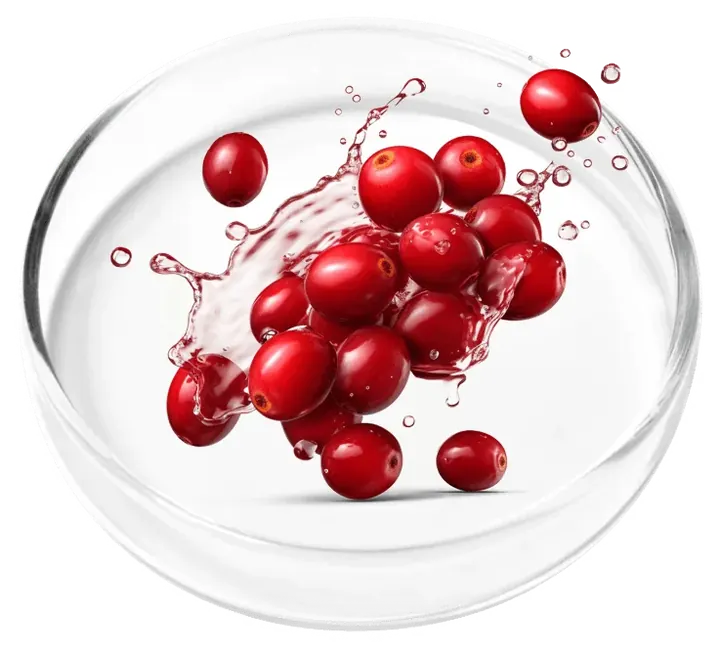
Cranberry has been folk medicine for urinary complaints for generations, and for years the science was frustratingly mixed. Part of the confusion was dose: early trials used cranberry juice or low-PAC extracts that simply did not deliver enough of the active compound. The proanthocyanidins — specifically the A-type PACs — are thought to interfere with the ability of E. coli to adhere to the urinary-tract wall, and without enough of them the effect disappears.
The picture sharpened in 2023, when an updated Cochrane systematic review pooled 50 trials and 8,857 participants and concluded that cranberry products do reduce the risk of repeat symptomatic, culture-verified UTIs in women with recurrent infections, and in some other higher-risk groups. The effect is moderate, not miraculous — but it is real, and it is prevention, not treatment.
The Lactobacillus side of the story
The second half of the women's-health microbiome picture is vaginal, not urinary — though the two are linked. A healthy vaginal microbiome is dominated by Lactobacillus species, and L. crispatus in particular. These bacteria produce lactic acid, keeping the environment acidic and less hospitable to the organisms behind bacterial vaginosis and, indirectly, some urinary issues.
When those Lactobacillus populations are knocked down — by antibiotics, hormonal changes, or other disruptions — the environment can drift. Small clinical trials of oral and vaginal Lactobacillus supplementation have shown promise in helping restore balance, though the field still needs larger, longer studies to be definitive.
What the evidence supports, in one table
| Ingredient | What the research supports |
|---|---|
| Cranberry (PACs) | Modestly reduces recurrent-UTI risk in susceptible women (Cochrane 2023) |
| L. crispatus | Anchors a healthy, acidic vaginal microbiome; promising in small trials |
| Bearberry (uva-ursi) | Older short-term data only; not for prolonged use |
| Berberine | Gut and metabolic evidence; drug interactions matter |
| Mimosa pudica | Traditional use; little human clinical data for this purpose |
How much, in what form, and for how long
The single most useful thing to know about cranberry is that its evidence is dose-dependent, and the dose is almost never printed. A 2024 systematic review and meta-analysis in Frontiers in Nutrition pooled 10 randomised trials and 2,438 participants and split them by how much proanthocyanidin the product actually delivered per day. At 36 mg of PAC a day or more, the risk reduction was 18% (RR 0.82, 95% CI 0.69–0.98). Below 36 mg a day, nothing reached statistical significance at all. Same berry, same outcome, opposite conclusion — which is why how many milligrams of cranberry PACs you are getting matters more than the extract weight on the front of the bottle, and why the same arithmetic sinks most attempts to reach the threshold from juice rather than a capsule.
Duration is the second overlooked variable. In the same meta-analysis, the only duration band that reached significance was 12 to 24 weeks of continuous daily use. Shorter courses did not, which means a four-week personal trial is not a short experiment so much as a non-experiment. We set out what each window can honestly be said to represent in our week-by-week probiotic timeline.
Where the cranberry evidence does not hold
Quoting the headline number without its subgroups is the most common way this literature gets misrepresented. The Cochrane review reports an overall risk ratio of 0.70 and a risk ratio of 0.74 in women with recurrent infections — but several other populations in the same review showed no significant benefit, and the NIH NCCIH summary on cranberry is correspondingly cautious. Cranberry is an intervention with a defined population where the data support it, not a general-purpose urinary supplement. The nearest alternative people ask about fares worse still: we compare the trial evidence directly in d-mannose versus cranberry PACs.
Why the strain code decides the Lactobacillus half
The species name on a probiotic label is not a specification. Argentini and colleagues compared 15 L. crispatus strains in 2022 and found they did not behave alike: acidification times ranged from roughly five to nine hours, and anti-Candida activity ranged from under 50% inhibition to over 80%. Their conclusion was that even closely related L. crispatus strains possess unique antimicrobial and competitive features. Evidence earned by one coded strain therefore does not transfer to another strain of the same species, which is why a label naming only the species is asking you to accept an inference nobody has tested. What that means in practice — and what a laboratory audit found when it cultured nine products sold as L. crispatus — is in our label-versus-lab comparison for L. crispatus supplements.
Four checks before you buy
1. A strain code, not just a species. A code such as CECT 30647 or M247 is what lets you search the literature. “Lactobacillus crispatus” alone does not.
2. A CFU count per strain, guaranteed at expiry. A blend total tells you nothing about how much of the strain you actually chose the product for, and a count taken at manufacture does not account for die-off.
3. A standardised PAC figure for the cranberry, in milligrams. Extract weight is not PAC weight, and only the PAC figure can be checked against the 36 mg line.
4. A duration limit for any bearberry in the formula. European regulators cap continuous bearberry use at about a week, which sits awkwardly against a six-month bundle — the conflict is set out in our piece on the bearberry duration limit. The full twelve-point version of these checks is in our women's supplement label audit.
Three common mistakes
Judging it in week three. The pooled data could not detect a difference below 12 weeks across thousands of randomised participants. One person forming an impression at week three will not do better.
Treating an active infection with it. Every study discussed here measures prevention or microbiome composition. Guidance on recurrent urinary infections in women treats an established infection as a medical matter, and so should you.
Assuming the ingredients transfer to the finished product. The ingredients can have evidence while the specific blend has never been trialled, and an undisclosed amount cannot be compared to a studied one. The least-supported ingredient in this category is a good illustration — see our mimosa pudica seed evidence check.
Where the evidence stops
Two honest limitations are worth stating plainly. First, a finished multi-ingredient supplement is not the same as any single studied dose — the ingredients can have evidence while the specific product has never been trialled. Always check a label's PAC milligrams and probiotic CFU counts against what the studies actually used. Second, none of this treats an infection. If you have burning, urgency, fever or pelvic pain, that is a medical situation, and cranberry is not the answer — a clinician is.
A third limit is worth stating because it is rarely admitted on pages like this one. The cranberry evidence and the Lactobacillus evidence measure different things. The cranberry trials count symptomatic, culture-verified infections, which is a clinical outcome. Most of the probiotic work counts detection of a strain or a shift in community composition, which is a laboratory outcome and not the same currency. Reading them as one combined body of proof overstates both. We apply the same test to every ingredient on the shelf in our guide to urinary support supplements for women.
Medical note: this article is general information, not medical advice. Speak to a healthcare professional before starting any supplement, especially if you are pregnant, nursing, or taking medication — berberine in particular interacts with several drugs.
Scientific references
- Williams G. et al. — Cranberries for preventing urinary tract infections, Cochrane Database of Systematic Reviews (2023)
- NIH NCCIH — Cranberry: What You Need To Know
- NIH NCCIH — Probiotics: What You Need To Know
- Ravel J, Gajer P, Abdo Z, et al. — Vaginal microbiome of reproductive-age women, Proceedings of the National Academy of Sciences 2011;108(Suppl 1):4680–4687 (PMID 20534435)
- Argentini C, Fontana F, Alessandri G, et al. — Evaluation of modulatory activities of Lactobacillus crispatus strains in the context of the vaginal microbiota, Microbiology Spectrum 2022;10(2):e0273321 (PMID 35266820)
- Xiong Z, Gao Y, Yuan C, Jian Z, Wei X — Preventive effect of cranberries with high dose of proanthocyanidins on urinary tract infections: a meta-analysis and systematic review, Frontiers in Nutrition 2024;11:1422121 (PMID 39668896)
- American Urological Association — Recurrent uncomplicated UTIs in women
Frequently asked questions
Does cranberry prevent UTIs?
For some women, modestly. The 2023 Cochrane review concluded that cranberry products reduce the risk of recurrent urinary tract infections in women with recurrent UTIs, though the effect is moderate and depends on a sufficient proanthocyanidin (PAC) dose. It is prevention support, not a treatment for an active infection.
How much cranberry PAC is needed?
Studies commonly use around 36 mg of proanthocyanidins per day, though products vary widely and many list total cranberry weight rather than standardised PAC content. Because PAC is the compound tied to the anti-adhesion effect, it is the number worth checking on any label.
What does Lactobacillus crispatus do?
L. crispatus is the species that dominates a healthy vaginal microbiome. It produces lactic acid that keeps the environment acidic, which is associated with resistance to disruptive bacteria. Restoring it is the mechanism most directly studied for vaginal balance.
How long does cranberry or a Lactobacillus supplement take to work?
Plan on at least twelve weeks. In the 2024 meta-analysis of cranberry trials, the only duration band that reached statistical significance was 12 to 24 weeks of continuous daily use, and shorter courses did not. Colonisation by a specific probiotic strain can be detectable within days, but detection is not the same as a settled change in the microbiome, and neither is a symptom outcome.
Can a supplement replace antibiotics for a UTI?
No. An active urinary tract infection can require antibiotics, and a dietary supplement is not a substitute. Cranberry and probiotics are studied for prevention and balance, not for clearing an established infection. If you have symptoms, see a clinician.
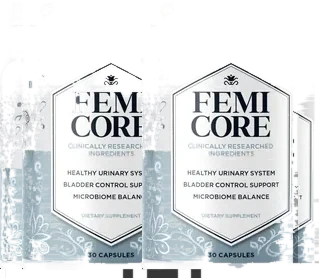
See how FemiCore puts this together
Cranberry, bearberry and five Lactobacillus strains in one daily capsule — with every ingredient and its evidence laid out.
Read the FemiCore Review