Bearberry (Uva-Ursi): The Duration Limit Nobody Mentions on the Label
Quick Answer: How Long Can You Take Bearberry (Uva-Ursi)?
Regulators set a short ceiling — the European Medicines Agency herbal monograph on bearberry leaf states, in exactly these words, that it is “not to be used for more than one week”, and the ESCOP monograph is widely cited for a maximum of two weeks. That sits awkwardly next to the format most people buy: bearberry appears inside daily women's formulas sold as 60-, 90- and 180-day supplies, which is a genuine reason to read the label and ask a clinician rather than assume.
- EMA: one week maximum. Adult women only. Contraindicated in kidney disorders.
- Why: arbutin releases hydroquinone, which is why courses are kept short.
- The gap: most multi-ingredient formulas, this one included, print no bearberry milligram figure.
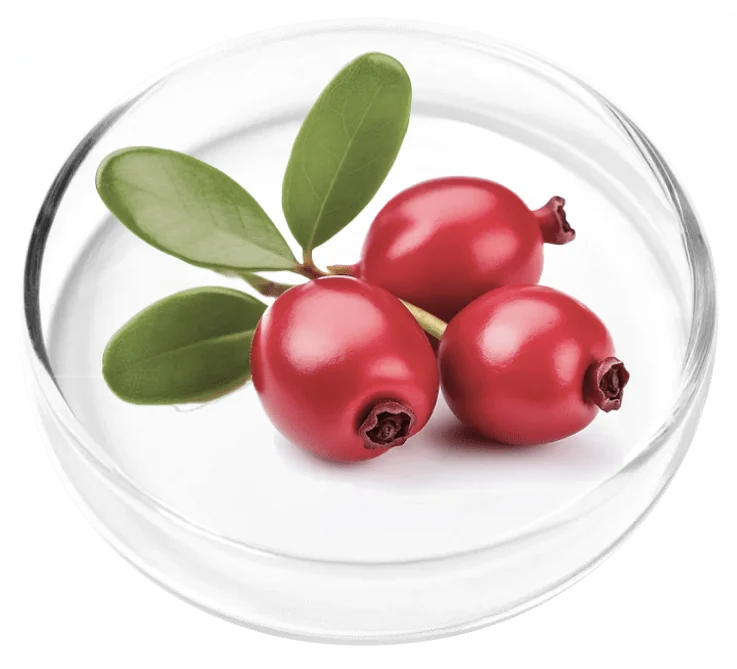
Search for bearberry and you will find plenty of pages describing what it is. Almost none connect the two facts that matter most to somebody holding a bottle: European regulators cap continuous use at about a week, and the ingredient is routinely sold inside daily blends meant to be taken for months. This is a safety and regulatory-information piece about that gap, not a claim that bearberry does anything.
What the EMA monograph actually says
The document is the European Union herbal monograph on Arctostaphylos uva-ursi (L.) Spreng., folium, reference EMA/HMPC/750269/2016, adopted by the Committee on Herbal Medicinal Products on 30 January 2018. We read the full text rather than a summary, and the details are more restrictive than the secondhand versions suggest.
The first thing to notice is structural. The monograph is laid out in two columns, “well-established use” and “traditional use”. The well-established use column is empty. Every entry sits under traditional use, meaning the registration rests on documented long-standing use rather than clinical efficacy trials.
On duration, section 4.2 is one sentence long and unambiguous: “Not to be used for more than one week.” It is followed immediately by: “If the symptoms persist for more than 4 days during the use of the medicinal product, a doctor or a qualified health care practitioner should be consulted.”
On who may use it, the posology is headed Female adults and elderly; use in children and adolescents under 18, and use in men, are both stated as not recommended. Section 4.3 lists two contraindications: hypersensitivity to the active substance, and kidney disorders. Section 4.6 records that safety in pregnancy and lactation has not been established and use is not recommended. Section 4.4 adds that a doctor should be consulted if symptoms worsen or if fever, dysuria, spasms or blood in the urine occur, and notes that bearberry leaf may cause a greenish-brown colouration of the urine.
The EMA posology, in full
This table is the part that is genuinely hard to find in consumer form. It is what a regulated bearberry medicine is permitted to deliver.
| Preparation | Single dose | Daily dose |
|---|---|---|
| Comminuted herbal substance, as herbal tea | 1.5 – 4 g in 150 ml water, 2 to 4 times daily | Maximum 8 g |
| Powdered herbal substance | 700 – 1050 mg twice daily | Maximum 1.75 g |
| Dry extracts (DER 3.5–5.5:1 ethanol 60%, or DER 2.5–4.5:1 water) | 100 – 210 mg hydroquinone derivatives as anhydrous arbutin, 2 to 4 times daily | 200 – 840 mg hydroquinone derivatives as anhydrous arbutin |
| Liquid extract (DER 1:1, ethanol 25% V/V) | 1.5 – 4 ml up to three times daily | Maximum 8 ml |
Source: EMA/HMPC/750269/2016, section 4.2, adopted 30 January 2018. The dry extracts specified in the monograph contain 23.5–29.3% (ethanolic) or 20–28% (aqueous) hydroquinone derivatives calculated as anhydrous arbutin, measured by spectrophotometry.
Read that dry-extract row again. The unit regulators use is not milligrams of leaf or of extract — it is milligrams of hydroquinone derivatives calculated as anhydrous arbutin. That is a number which essentially never appears on a multi-ingredient supplement panel.
Why the limit exists: arbutin, hydroquinone and the liver
The ceiling is not arbitrary, and it is not really about bearberry the plant — it is about what the plant's main constituent turns into. The NIH's LiverTox database describes the pathway directly: arbutin is “hydrolyzed in the stomach releasing hydroquinone that is absorbed and metabolized to the glucuronide in the liver, which is then rapidly excreted in the urine”. Hydroquinone reaching the urinary tract is the traditional rationale for using bearberry at all. Hydration is the other everyday lever people ask about for the urinary tract, and it has been tested directly — see what a randomised trial found on water intake and urinary health. It is also why nobody wants you exposed to it indefinitely: LiverTox states that “hydroquinone is potentially carcinogenic so that uva ursi is recommended in short courses only and not to be taken chronically”.
The EMA monograph reinforces this through what is missing. Section 5.3 records that “Adequate tests on genotoxicity have not been performed” and that “Tests on reproductive toxicity and carcinogenicity have not been performed.” The one-week ceiling is therefore a precaution taken in the absence of long-term safety data, not a threshold derived from an observed harm in humans.
To be fair to the ingredient, that cuts both ways: LiverTox assigns uva ursi a likelihood score of E, an unlikely cause of clinically apparent liver injury, and states there have been no convincing published instances of it. The concern is not short courses at monograph doses — it is chronic, unmeasured, indefinite exposure, which is precisely the scenario a daily supplement creates.
One week, two weeks, or five times a year? Reconciling the numbers
Read four bearberry articles and you will get four durations. Here is what each source actually supports, including where we could not verify a claim.
| Source | Maximum continuous duration | Who may use it | Contraindications stated | Reference |
|---|---|---|---|---|
| European Medicines Agency, HMPC | “Not to be used for more than one week” | Female adults and elderly. Not recommended under 18, in men, or in pregnancy or lactation. | Hypersensitivity to the active substance; kidney disorders | EMA/HMPC/750269/2016 Rev. 2, 30 Jan 2018 — read in full |
| ESCOP | Widely cited as a maximum of two weeks | Not verified | Not verified | ESCOP Monographs, Uvae ursi folium (2012) — primary wording not read (subscription) |
| NIH LiverTox | No fixed figure. “Short courses only and not to be taken chronically” | Not specified | Notes potential carcinogenicity of hydroquinone | LiverTox, NBK556475 — read in full |
| “No more than five times a year” | Not traceable to any primary regulator document we could read | — | — | Usually attributed to German Commission E. Not present in the EMA monograph. |
That last row is the most-repeated bearberry “fact” on the consumer web. We searched the full EMA monograph text for it and it is not there — not in the posology, not in the warnings, not anywhere. It is usually attributed to the older German Commission E monograph and may well originate there, but we could not read that primary text either, so we will not state it as a rule. If a page tells you “five times a year” without naming a document, treat it as we do: plausible, widely repeated, unverified.
The ESCOP two-week figure sits in a similar but less severe position: cited consistently across practitioner sources by a serious body, but sold by subscription and unread by us. Where sources disagree and we have read only one, we anchor on the one we read — here, the EMA's one week.
What this means for a daily multi-ingredient formula
Now the part no competing page attempts. Bearberry is not mostly sold as a stand-alone one-week course any more. It is sold as one line item inside women's urinary and vaginal formulas, taken once daily, in bundles sized by the month.
FemiCore is a clear example, and we will not be coy about it because this site covers the product. It is a once-daily capsule containing bearberry leaf alongside cranberry extract, berberine, mimosa pudica seed and five Lactobacillus species, sold in 2-, 3- and 6-bottle bundles — at one capsule a day, a 60-, 90- or 180-day supply, with the pricing rewarding the six-month option.
So how much bearberry is in a capsule, and how does that compare to the 200–840 mg arbutin-equivalent daily dose in the monograph? There is no way to know. We read this site's ingredient breakdown and the manufacturer's own sales-page text. Nine ingredients are named; not one milligram amount, standardisation percentage or CFU count appears for any of them, and the manufacturer's FAQ describes the product as a proprietary formula.
Be precise about what that does and does not mean. It does not mean the amount is high — an undisclosed amount in a nine-ingredient daily capsule could easily be a small inclusion well below any monograph dose, which is common in blends. It means the question is unanswerable from the available information. That is worth raising with a pharmacist or doctor before committing to a 180-day supply, particularly if you have any kidney condition, are pregnant or breastfeeding, or are under 18 — all groups the EMA monograph explicitly excludes.
For the same disclosure problem applied to the cranberry side of the formula, see how many mg of cranberry PACs you actually need, and for the underlying ingredient evidence see our review of the cranberry and Lactobacillus research. The full ingredient list is on the main FemiCore review.
Reading a bearberry label: four checks
1. Is there a milligram figure for bearberry at all? If the ingredient is named but not quantified, nothing else here can be assessed.
2. Is the arbutin or hydroquinone-derivative content stated? This is the unit regulators use; its absence means the product cannot be compared to a monograph.
3. Are the exclusions printed? Kidney disorders, pregnancy, breastfeeding, under-18s and men are all groups the EMA monograph rules out. A US dietary supplement is under no obligation to print a duration limit either, so its absence on the box is not evidence that none applies to the ingredient.
4. Is it a short course or a daily routine? The decisive one. A one-week course and a six-month subscription are different propositions, and the monograph was written with only the first in mind.
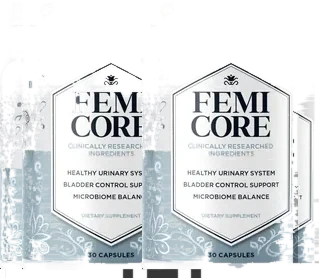
Check the current FemiCore price and guarantee
Orders go through the manufacturer's official checkout with the 60-day money-back guarantee attached. Read this page first and ask your clinician about the bearberry question.
Order NowWhat the evidence does not show
The EMA monograph is not an efficacy finding. It is a traditional-use registration. Under Article 16c(1)(a)(iii) of Directive 2001/83/EC no pharmacodynamic, pharmacokinetic or preclinical data were required. Long-standing use is a real form of evidence, but it is not a clinical trial and should not be quoted as one.
The one-week limit is precautionary, not a measured harm threshold. Nobody has run a study establishing that eight days of bearberry causes a problem. Absence of data is the reason for the caution — and equally the reason we cannot tell you what a small daily amount over six months does.
The EU monograph governs a different product category. It applies to licensed herbal medicinal products in the European Union. A dietary supplement sold in the United States is regulated differently, makes no medicinal claim, and is not required to comply with an EMA monograph. FemiCore is a dietary supplement, not a drug, and nothing here implies it treats, cures or prevents anything.
Two numbers in circulation could not be verified. The ESCOP two-week figure and the “five times a year” restriction are both reported above as unverified, because that is what they are. And no published clinical trial exists on FemiCore as formulated, so no safety or duration conclusion can be drawn about the combination as sold.
What the two randomised trials of uva-ursi actually tested
Bearberry does have controlled trial evidence, and it is worth knowing exactly what it covers, because it is not what a daily capsule is doing. Both trials tested a short course as treatment for an acute, uncomplicated urinary tract infection in women — days of dosing, not months.
The ATAFUTI factorial randomised trial, published by Moore and colleagues in Clinical Microbiology and Infection in 2019, compared uva-ursi extract with placebo in women with symptoms of uncomplicated infection and found no evidence of a difference in frequency symptoms on days 2 to 4 (−0.06, 95% CI −0.33 to 0.21), and no significant reduction in antibiotic use (39.9% versus 47.4%). No safety concerns and no upper-tract infections were recorded.
A larger 2021 randomised trial by Gágyor and colleagues compared uva-ursi with the antibiotic fosfomycin as initial treatment in 398 women. The herbal arm used 63.6% fewer antibiotic courses, but carried a higher total symptom burden, saw eight cases of pyelonephritis against two in the fosfomycin arm, and failed to demonstrate non-inferiority. The authors’ own conclusion is the honest summary: less antibiotic use, more symptoms and more safety concern.
Neither trial supports taking bearberry every day for months, and neither tested prevention. If you are looking at the wider category rather than this one herb, our guide to urinary support supplements for women ranks the ingredients by the strength of the trial evidence behind each of them.
Medical note: this article is general information, not medical advice. FemiCore is a dietary supplement, not a drug, and is not intended to diagnose, treat, cure or prevent any disease. Speak to a healthcare professional before starting any supplement, especially if you are pregnant, nursing, under 18, or taking medication.
Frequently asked questions
How long can you take uva ursi?
The European Medicines Agency herbal monograph on bearberry leaf states that it is not to be used for more than one week. The same monograph says that if symptoms persist for more than 4 days while the product is being used, a doctor or a qualified health care practitioner should be consulted. The ESCOP monograph is widely cited for a maximum of two weeks, but its full text sits behind a paid subscription and we were not able to read the original wording ourselves.
Who should not take bearberry?
The EMA monograph lists hypersensitivity to the active substance and kidney disorders as contraindications. It restricts the posology to female adults and the elderly, does not recommend use in children and adolescents under 18, does not recommend use in men, and does not recommend use during pregnancy or breastfeeding because safety in those groups has not been established.
Is the 'no more than five times a year' rule for uva ursi real?
We could not confirm it in a primary regulatory document. We read the full text of the EMA herbal monograph on Arctostaphylos uva-ursi (L.) Spreng., folium, and that restriction does not appear anywhere in it. It is usually traced back to the older German Commission E monograph, whose primary text we were also unable to read, so we do not repeat it here as a rule.
Why is there a duration limit on bearberry at all?
It comes down to hydroquinone. The NIH LiverTox database describes arbutin as being hydrolysed in the stomach to release hydroquinone, which is absorbed and metabolised in the liver before being excreted in the urine. LiverTox notes that hydroquinone is potentially carcinogenic, so uva ursi is recommended in short courses only and not to be taken chronically. The EMA monograph separately records that adequate tests on genotoxicity, reproductive toxicity and carcinogenicity have not been performed.
FemiCore is sold as a 60, 90 or 180 day supply and contains bearberry. Is that a problem?
It is a fair question to put to a clinician, and not one we can answer from the label. Neither this site's ingredient breakdown nor the manufacturer's sales page states a milligram amount for bearberry leaf or a standardised arbutin figure, so there is no way to compare a daily intake to the amounts in the EMA monograph. What we can say is that the monograph was written for a one week course of a licensed herbal medicine in the European Union, and a daily multi-ingredient dietary supplement in the United States is a different format in a different regulatory category.
Regulatory and scientific references
- European Medicines Agency, HMPC — European Union herbal monograph on Arctostaphylos uva-ursi (L.) Spreng., folium, EMA/HMPC/750269/2016, adopted 30 January 2018 (PDF)
- European Medicines Agency — Uvae ursi folium (bearberry leaf) medicine overview
- European Medicines Agency — Assessment report on Arctostaphylos uva-ursi (L.) Spreng., folium (PDF)
- Gágyor I, Hummers E, Schmiemann G, et al. — Herbal treatment with uva ursi extract versus fosfomycin in women with uncomplicated urinary tract infection in primary care: a randomized controlled trial, Clinical Microbiology and Infection 2021;27(10):1441–1447 (PMID 34111592)
- Moore M, Trill J, Simpson C, et al. — Uva-ursi extract and ibuprofen as alternative treatments for uncomplicated urinary tract infection in women (ATAFUTI): a factorial randomized trial, Clinical Microbiology and Infection 2019;25(8):973–980 (PMID 30685500)
- NIH LiverTox: Clinical and Research Information on Drug-Induced Liver Injury — Uva Ursi (NBK556475)
- ESCOP Monographs — Uvae ursi folium (Bearberry Leaf), 2012 (subscription required; primary text not read)
Order FemiCore from the official store
Bearberry, cranberry and five Lactobacillus strains in one daily capsule, backed by the manufacturer's 60-day money-back guarantee.
Order Now