How to Read a Women's Microbiome Supplement Label Before You Buy
Quick Answer: What Should a Women's Supplement Label Tell You?
Four things — a strain code after each probiotic species, a CFU count per strain guaranteed to the expiry date rather than at manufacture, a standardised botanical figure such as milligrams of proanthocyanidins rather than total cranberry extract, and a storage instruction. If any of the four is missing, you cannot compare the product to the studies it is being sold on.
That is the whole test. Everything below is how to apply it, and what each number has to clear.
- Probiotic benchmark: at least 1 × 10⁹ CFU per gram, per strain, at expiry.
- Cranberry benchmark: at least 36 mg of proanthocyanidins per day.
- Biggest single red flag: a species name with no strain code after it — or a strain code that returns nothing when you search PubMed for it.

Why one checklist is not enough for a women's formula
Most articles about reading supplement labels were written for the sports-nutrition aisle. They explain proprietary blends, they explain CFU counts, and they explain them separately. A women's microbiome formula is a harder object, because it is usually two different product categories fused into one capsule.
On one side are live bacteria, where the meaningful numbers are a strain code and a colony-forming-unit count that survives to the date on the bottle. On the other are botanical extracts, where the meaningful number is a standardised active compound — milligrams of proanthocyanidins, not milligrams of cranberry. The two halves fail in different ways, and a label can look generous on one while telling you nothing on the other.
So run the probiotic rows and the botanical rows separately, then look at the whole. A formula that passes six of twelve is not "half good" — it depends entirely on which six.
The 12-point label audit
Hold this against the bottle or the Supplement Facts panel. Each row is one yes-or-no question, and the red-flag column is the wording that usually signals a no.
| # | What to look for | Why it matters | Red-flag wording |
|---|---|---|---|
| 1 | Strain code after every species | Trials are run on strains, not species. Without a code you cannot find the research. | "Lactobacillus crispatus" with nothing after it |
| 2 | CFU stated per strain | A blend total lets one cheap strain carry the count while the strain you care about is a rounding error. | "20 billion CFU probiotic blend" |
| 3 | CFU guaranteed at expiry | Live cells die across shelf life. A manufacture-date count describes a bottle you will never receive. | "at time of manufacture" |
| 4 | PAC milligrams, not extract milligrams | PAC content varies hugely between cranberry extracts of identical weight. | "Cranberry extract 500 mg" |
| 5 | Assay named for the PAC figure | Different laboratory methods return different PAC numbers for the same powder. | A PAC figure with no method stated |
| 6 | Standardisation percentage for each botanical | "Standardised" without a percentage and a marker compound is a marketing word. | "Standardised extract" alone |
| 7 | Storage requirement stated | Probiotic viability is temperature-dependent; no storage line means no accountability for it. | Silence, or "store in a cool dry place" only |
| 8 | No single-weight proprietary blend | A blend total legally hides every individual amount inside it. | "Proprietary Blend 450 mg" |
| 9 | Ingredient order inside any blend | Blend contents must be listed heaviest first, so late-listed ingredients may be trace amounts. | An ingredient you were sold on sitting last |
| 10 | Third-party testing named | An identifiable testing body can be checked; an unnamed one cannot. | "Third-party tested" with no lab named |
| 11 | Published research on that exact strain or extract | Most declared strains have no literature at all — see the audit data below. | A strain code that returns nothing on PubMed |
| 12 | Lot number and expiry printed | Without a lot and a date, a recall or a viability complaint cannot be traced. | A sticker-applied date, or none |
What the CFU number actually has to clear
The reason row 2 and row 3 exist is a laboratory audit that almost no consumer page cites. In 2019, Di Pierro and colleagues bought nine commercial products from the Italian and French markets — seven dietary supplements and two medical devices — each of which declared at least one strain of Lactobacillus crispatus, and cultured what was actually in them.
Their headline conclusion, stated plainly in the paper: out of nine products, only two definitely contained viable L. crispatus cells at a daily dose of at least 1 × 10⁹ CFU per gram with acceptable correspondence to the label. Of those two, only one was formulated with a strain that had any documented scientific literature behind it.
| Product | Strain declared | Total viable count, log10 CFU/g | Viable L. crispatus recovered? | Published literature on that strain |
|---|---|---|---|---|
| A | M247 | 10.4 | Yes | Yes — the only one with a documented record |
| B | LBV10 | 9.4 | Yes | None found |
| C | IMC6075 | 8.0 | No | None found |
| D | IP174178 | 8.1 | Yes | None found |
| E (medical device) | IP174178 | 8.0 | Yes | None found |
| F | KS127 | 9.9 | Yes | None found |
| G | IMC607S | 2.0 | No | None found |
| H | P17631 | 6.7 | No | None found |
| I (medical device) | Not indicated | 11.0 | Not confirmed on selective medium | No strain declared to check |
Counts are total viable cells across all declared species on MRS medium, reported by the authors as log10 CFU/g; a value of 9.0 is one billion CFU per gram, and each whole number is a tenfold difference. Presence of L. crispatus specifically was assessed on selective medium. Source: Di Pierro et al., Microorganisms 2019.
Three things fall out of that table. First, the spread is not marginal — product G returned a total viable count around 102 CFU per gram while product I returned around 1011, nine orders of magnitude between two products on the same kind of shelf. Second, a product can carry a respectable total count and still contain no viable L. crispatus, because the total is a sum across every species in the blend. That is exactly why row 2 asks for a per-strain figure, and why a large total is not the reassurance it looks like — the argument in full is in why a bigger CFU count is not a better probiotic. Third, and most usefully: eight of the nine declared strain codes returned nothing in the published literature. A strain code is necessary but not sufficient — the point of having one is that you can go and search it.
The benchmark itself, at least 1 × 10⁹ CFU per gram per day, lines up with the labelling guidance from the International Scientific Association for Probiotics and Prebiotics. ISAPP asks manufacturers to declare genus, species and strain for each organism, and the minimum viable count of each strain at the end of shelf life. It advises consumers to avoid products stating a count at time of manufacture, because that number does not account for die-off. Row 3 is a direct restatement of that advice.
What the botanical number has to clear
The probiotic half of a women's formula fails by vagueness. The botanical half fails by substitution: a big, reassuring number is printed that is not the number the research used.
Cranberry is the clearest case. The compounds studied are the proanthocyanidins — PACs — and a milligram of cranberry extract is not a milligram of PAC. Two capsules can both say "cranberry extract 500 mg" and differ several-fold in PAC content, so the extract weight tells you almost nothing.
There is a threshold worth measuring against. A 2024 meta-analysis in Frontiers in Nutrition by Xiong and colleagues pooled 10 randomised controlled trials covering 2,438 participants and split them by PAC dose. At 36 mg a day or more, the pooled risk ratio was 0.82 (95% CI 0.69–0.98, p = 0.03). Below 36 mg a day, the result was not statistically significant (p = 0.39). In female-only cohorts the figure was RR 0.84 (95% CI 0.71–0.98, p = 0.02).
Read that as a labelling instruction, not a health promise: the number deciding whether a cranberry ingredient resembles the trials at all is a PAC figure, and 36 mg is the line. A label without one is not necessarily a weak product — it is an unverifiable one. For what cranberry and Lactobacillus do and do not show in trials, see our evidence review of cranberry and Lactobacillus for women's urinary health.
The proprietary blend rule, in one paragraph
Row 8 deserves an explanation, because a proprietary blend is not a loophole — it is written into the rules. Under US dietary supplement labelling regulations, a manufacturer using a proprietary blend must identify it as such, declare the total weight of the blend, and list the ingredients inside it in descending order of predominance by weight. It does not have to declare how much of each individual ingredient is in there. That is legal and common. The consequence is that with a blend you have only a total and a ranking: an ingredient sitting fourth in a 450 mg blend could be 200 mg or 2 mg, and nothing on the label distinguishes those two products. That matters most for the ingredients with the least behind them, such as the one we examine in the mimosa pudica seed evidence check.
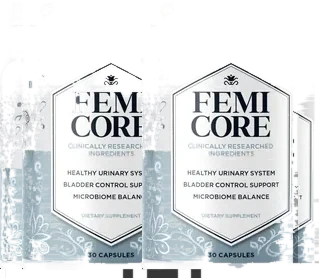
Check the current FemiCore label and pricing
Bundles, the 60-day money-back guarantee and the current Supplement Facts panel are shown on the official store. Read them against the twelve rows above before you decide.
Order NowScoring a real product: FemiCore against the twelve rows
A checklist nobody applies is a decoration, so here is the product this site covers, scored honestly. FemiCore is a once-daily capsule containing four botanicals — cranberry extract, bearberry (uva-ursi) leaf, berberine and mimosa pudica seed — plus a five-strain Lactobacillus blend of L. crispatus, L. acidophilus, L. gasseri, L. plantarum and L. casei.
| Audit row | FemiCore | Note |
|---|---|---|
| 1. Strain code per species | Pass | All five strains are coded on the supplement facts panel — LCr86, LA88, N13, LG08 and LC16 |
| 2. CFU per strain | Fail | No per-strain CFU figure published |
| 3. CFU at expiry | Fail | No blend-total CFU published either, so the expiry question does not arise |
| 4. PAC mg rather than extract mg | Fail | No proanthocyanidin milligram figure published |
| 5. Assay named for the PAC figure | Fail | No PAC figure to attach an assay to |
| 6. Standardisation percentage | Partial | Cranberry is standardised to 30 percent proanthocyanidin and berberine hydrochloride to 8 percent; bearberry and mimosa pudica carry no percentage |
| 7. Storage requirement | Partial | General storage advice only; no temperature specification |
| 8. No single-weight proprietary blend | Partial | All nine are named, but they sit inside two weighted blends — Herbal Blend 350 mg and Probiotic Blend 50 mg — with no individual amounts |
| 9. Ingredient order disclosed | Pass | Ingredients are itemised, so ordering is visible |
| 10. Third-party testing named | Partial | GMP and facility badges are shown; no named third-party assay body |
| 11. Published research on the exact strain | Fail | The codes are printed, but a PubMed search for LCr86, LA88, N13, LG08 and LC16 returns no strain-specific trial |
| 12. Lot and expiry printed | Not assessable online | Printed on the physical bottle; not verifiable from web copy |
Score: 2 clear passes, 4 partials, 5 fails, 1 not assessable. That is a middling result on the numeric checks and a genuinely strong one on identity. The supplement facts panel codes all five strains and standardises the cranberry to 30 percent proanthocyanidin, which is more than a large share of the category does, and strain identity is the row hardest to fake. But the fails cluster in one place: the amounts. The panel prints two blend totals — Herbal Blend 350 mg and Probiotic Blend 50 mg — and no per-ingredient weight inside either, so there is no cranberry milligram figure to apply the 30 percent to, and no CFU count appears on the panel or on the manufacturer's sales page.
We are an affiliate publisher, and it would be easier to skip that paragraph. It is here because it is the honest output of the checklist — and because a reader applying these twelve rows across the category will reach much the same conclusion about most of it.
What this checklist does not show
Being straight about the limits of the method matters as much as the method.
A full label is not a working product. Every row above tests disclosure, not effect. A product could publish strain codes, per-strain CFU at expiry and a 40 mg PAC figure and still do nothing useful for a given person. Disclosure buys the ability to compare a product to the research; it does not transfer the research's results onto the product.
A missing number is not proof of a low dose. An undisclosed PAC content might be 50 mg or 5 mg. The failure is that you cannot tell, and a buyer should price that uncertainty in rather than assume the worst or the best.
Ingredient evidence is not finished-product evidence. Nearly every multi-ingredient supplement on the market, including this one, has never been tested as a finished formula in a clinical trial.
The audit paper is small and regional. Di Pierro tested nine products from two European markets in 2019. It is the most directly relevant data on this question, and nine products is not a survey of a global category. Treat it as a strong warning, not a population estimate. Once a label passes these checks, the next question is whether the ingredient itself has evidence — which is what our guide to urinary support supplements for women sets out.
None of this is about treating anything. These are dietary supplements. Nothing above claims that any product diagnoses, treats, cures or prevents any condition, and label quality is no substitute for a clinician when there are symptoms to explain.
Medical note: this article is general information about product labelling, not medical advice. Speak to a healthcare professional before starting any supplement, especially if you are pregnant, nursing, or taking medication. Berberine in particular interacts with several prescription drugs — see our guide to berberine interactions in women's formulas.
Frequently asked questions
What is a strain code and why does it matter on a probiotic label?
A strain code is the short alphanumeric tag that follows the species name, such as M247, LBV10 or CECT 30647. It identifies the exact bacterial strain in the bottle. Research is done on strains, not on species, and two strains of the same species can behave differently, so a label that stops at the species name cannot be matched to any published study. ISAPP recommends that labels give genus, species and strain for every organism in the product.
Should CFU be listed at manufacture or at expiry?
At expiry. Live bacteria die off across a product's shelf life, so a count measured at the time of manufacture describes a bottle you will never buy. ISAPP advises listing the minimum viable count of each strain at the end of shelf life and suggests avoiding products that state the count at time of manufacture.
Why is total cranberry extract in milligrams not enough?
Because the compounds studied for urinary comfort are the proanthocyanidins, or PACs, and the PAC content of a cranberry extract varies enormously between products. A 2024 meta-analysis of 10 randomised trials in 2,438 people found a significant result only at 36 mg of PAC a day or more, with no significant result below that. A label that prints 500 mg of cranberry extract and no PAC figure cannot be compared to that threshold.
Is a proprietary blend automatically a bad sign?
Not automatically, but it removes your ability to check. US rules let a manufacturer declare only the total weight of a blend and list its ingredients in descending order by weight, without disclosing individual amounts. That is legal. It also means an ingredient could be present at a token amount and you would have no way to tell from the label.
How does FemiCore score on this checklist?
Mixed, and we score it in the article. It passes on naming all nine ingredients openly rather than hiding them inside a proprietary blend, which is more than many competitors do. It fails on the numeric checks: we could not find a strain code, a per-strain CFU count, a blend total CFU, a PAC milligram figure or a CFU-at-expiry statement in the published product copy. That is a transparency gap, and it means the product cannot be compared to the studies its ingredients are sold on.
Scientific references
- Di Pierro F, Polzonetti V, Patrone V, Morelli L. — Microbiological Assessment of the Quality of Some Commercial Products Marketed as Lactobacillus crispatus-Containing Probiotic Dietary Supplements. Microorganisms. 2019;7(11):524. PMID 31684185
- Xiong Z, Gao Y, Yuan C, Jian Z, Wei X. — Preventive effect of cranberries with high dose of proanthocyanidins on urinary tract infections: a meta-analysis and systematic review. Frontiers in Nutrition. 2024;11:1422121. PMID 39668896
- International Scientific Association for Probiotics and Prebiotics (ISAPP) — Decoding a Probiotic Product Label
- NIH Office of Dietary Supplements — Probiotics: Fact Sheet for Health Professionals
- eCFR — 21 CFR 101.36, Nutrition labeling of dietary supplements (proprietary blend requirements)
- NIH NCCIH — Probiotics: What You Need To Know
- NIH NCCIH — Cranberry: What You Need To Know
Ready to check the label yourself?
The current Supplement Facts panel, bundle pricing and the 60-day money-back guarantee are all on the official store. Take the twelve rows with you.
Order Now