Mimosa Pudica Seed: What the Human Evidence Actually Shows
Quick Answer: Is Mimosa Pudica Seed Backed by Human Research?
Barely — almost everything published on mimosa pudica seed comes from laboratory and animal work rather than human clinical trials, which means it should be read as a traditional supporting ingredient rather than a proven active. When we searched PubMed on 4 August 2026, Mimosa pudica returned 350 records and exactly one carried the Clinical Trial publication type — and that one tested a topical skin formulation, not a swallowed seed. Because the human data is thin and its amount is not disclosed on the label, it is not a reason to choose one formula over another.
- PubMed records for the plant: 350.
- Indexed as clinical trials: 1 — and it was topical.
- Oral human trials of the seed: none we could find.
- Scope of this page: mimosa pudica seed taken as a dietary supplement — not the seed gum's use as a pharmaceutical or industrial excipient.
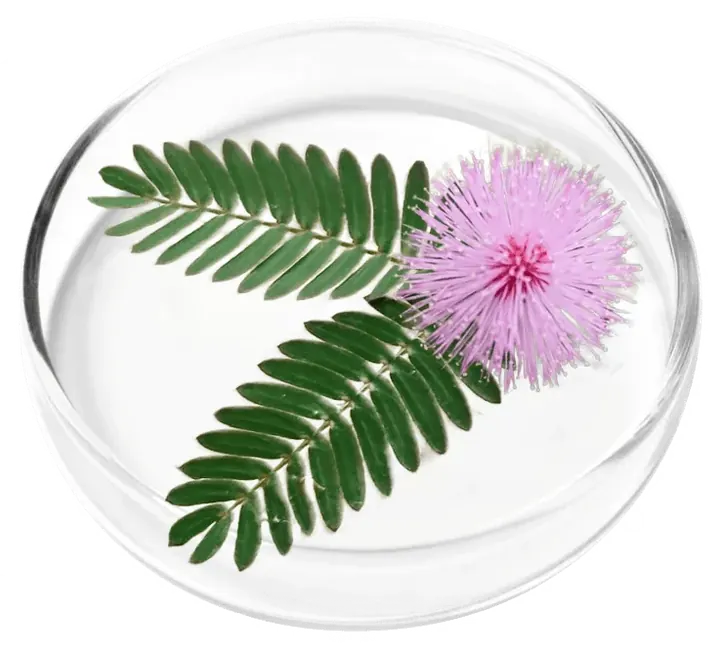
What we searched, and what came back
Most articles about this ingredient assert that research "supports" it without ever saying how much research there is. That is easy to check, so we checked it. Every figure below comes from the public PubMed interface on 4 August 2026 and can be reproduced in about a minute.
| PubMed query | Filter applied | Records returned | What that tells you |
|---|---|---|---|
| "Mimosa pudica" | None | 350 | The plant is genuinely studied. Volume is not the problem. |
| "Mimosa pudica" | Humans | 28 | Roughly 8% involve human material, mostly cells and tissue in a laboratory. |
| "Mimosa pudica" | Clinical Trial publication type | 1 | A single record. It is a topical skin study. |
| "Mimosa pudica" seed | None | 32 | Seed-specific work exists but is dominated by materials science on the seed mucilage. |
That last row is the surprising one. Search the seed specifically and the literature is mostly pharmaceutical and industrial formulation science — a body of work about materials, not about swallowing the seed for a health outcome: characterising the mucilage extracted from the seed and evaluating it as a tablet binder, a disintegrant and a sustained-release excipient. The seed's best-documented property is that it swells and forms a gel, which makes it useful for holding a tablet together.
The evidence-tier table
Every category of benefit we found being marketed for this ingredient, ranked by the strongest evidence behind it. The fourth column is the one that matters.
| Claim category being marketed | Highest level of evidence located | Study type | Human trials indexed | What can honestly be said |
|---|---|---|---|---|
| Digestive and gut support | A 2016 narrative review of pharmacological activities attributed to the plant | In vitro and animal | 0 | Traditional use plus preclinical signals. No human trial has tested oral seed for a digestive outcome. |
| Antioxidant activity | Chemical assays of seed polyphenols, plus one topical human study | In vitro, with 1 human topical trial | 1 (topical) | The seed contains measurable polyphenols. Scoring well in an assay is a chemistry result, not a health outcome. |
| Skin appearance (applied to skin) | Ijaz et al. 2019, randomised controlled trial of a topical emulgel | Human, topical | 1 | The only PubMed record indexed as a clinical trial. It is a cream, on skin, measuring skin parameters. |
| Urinary or vaginal microbiome support | Nothing located at any level | — | 0 | We found no human or animal study testing this seed for urinary or vaginal outcomes. |
| Seed mucilage as a pharmaceutical excipient | Multiple formulation and materials-science papers | Laboratory | 0 | The best-evidenced use of the seed — and it concerns drug delivery, not a benefit to you. |
A note on scope. Much of the consumer content about this seed promotes uses no published human study has examined. We are not assessing those claims here, in either direction, because there is no human clinical evidence to assess them against. This is an ingredient evidence review, and nothing on it should be read as a claim that mimosa pudica seed diagnoses, treats, cures or prevents anything.
The one human trial, and why it does not transfer
The single record PubMed indexes as a clinical trial is Ijaz S, Khan HMS, Anwar Z, Talbot B, Walsh JJ, "HPLC profiling of Mimosa pudica polyphenols and their non-invasive biophysical investigations for anti-dermatoheliotic and skin reinstating potential," published in Biomedicine & Pharmacotherapy in January 2019 (PMID 30551540, DOI 10.1016/j.biopha.2018.10.089).
It is a competent piece of work. The authors profiled the seed extract's polyphenols by HPLC, formulated it into a topical emulgel, applied it to skin, and measured erythema, melanin, elasticity, hydration and sebum with non-invasive instruments. They reported favourable effects on sun-exposed skin and no adverse effects in cultured keratinocytes.
Now note everything it is not. It was applied to skin, not swallowed, and it measured skin parameters rather than digestive, urinary or vaginal ones. A topical cosmetic study is not evidence for an oral capsule, and any page counting this trial toward "clinically studied" is misleading you with arithmetic that is technically true.
Why preclinical results do not carry over
The most-cited overview of this plant is Muhammad G, Hussain MA, Jantan I, Bukhari SNA, "Mimosa pudica L., a High-Value Medicinal Plant as a Source of Bioactives for Pharmaceuticals," Comprehensive Reviews in Food Science and Food Safety 2016;15(2):303–315 (PMID 33371596). It catalogues the plant's chemistry — mimosine, tannins, flavonoids, triterpenes — and a long list of pharmacological activities attributed to various parts of it.
Read the verbs carefully. "Attributed to" is doing enormous work: those attributions come overwhelmingly from cell cultures and rodent studies, and the review is framed as exploring the plant's potential — the accurate word for a compound not tested in people. It reports no human outcomes and does not claim to.
The gap is routine rather than scandalous. A compound that behaves well in a dish still faces absorption, first-pass metabolism and dose problems a dish does not have, and most promising preclinical botanical findings do not survive a human trial. That gap is exactly what the NIH NCCIH means when it warns that "natural" does not mean better. The honest position is not that mimosa pudica seed has failed. It is that it has not been tested — a much weaker statement than the one being sold.
Judge the formula, not the ingredient list
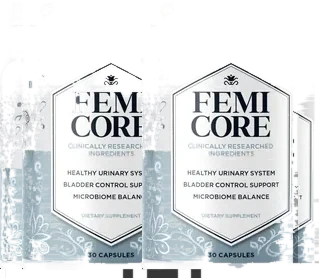
Mimosa pudica is one of nine ingredients in FemiCore, and the one with least behind it. The cranberry and Lactobacillus components are where the dose-response data lives, and where a number can actually be checked against the trials — see how many milligrams of cranberry PACs the research uses — see our full FemiCore review.
Order NowWhat the label does not tell you
A second problem sits on top of the thin evidence, and it applies to every ingredient here. Neither this site nor the vendor's sales page publishes a milligram figure for mimosa pudica seed. We checked both. The full set of questions worth asking of a panel like that is in our women's supplement label audit. Nine ingredients are named and not one dose appears anywhere — no milligram weights for the four botanicals, no CFU counts for the five Lactobacillus strains, not even a blend total.
Naming all nine openly beats burying them in an unnamed proprietary blend. But it means that if a well-designed human trial were published tomorrow at, say, 250 mg a day, you could not check whether your capsule holds 250 mg or 25 mg. An undisclosed amount of an unstudied ingredient cannot be evaluated at all — see our women's supplement label audit.
What the evidence does not show
Including the limits that cut against our own conclusions.
Absence of evidence is not evidence of absence. Nothing here shows mimosa pudica seed does nothing. It shows the trials that would settle it have not been run. Those are different findings, and we are only entitled to the second.
PubMed is not the whole world. The publication-type filter is applied by indexers and is imperfect; a small human study could exist untagged, and regional or non-English journals are under-indexed. We would not claim our count is exhaustive to the last record.
Safety is unquantified too. The thin literature cuts both ways: no body of human data establishes a tolerable long-term intake either. That is a reason for ordinary caution, and to mention it to a clinician if you take prescription medication.
Our position, plainly. Consistent with what this site says on its homepage, human clinical evidence for mimosa pudica in this context is limited, and it should be read as a traditional supporting ingredient rather than a proven active. Choose between formulas on the components with measurable thresholds behind them — cranberry proanthocyanidin dose, and probiotic strain and CFU disclosure. We cover those in our review of cranberry and Lactobacillus for women's urinary health.
Medical note: this article is general information, not medical advice, and it is a review of published evidence rather than a product claim. FemiCore is a dietary supplement, not a drug. Speak to a healthcare professional before starting any supplement, especially if you are pregnant, nursing, or taking medication.
Frequently asked questions
Is mimosa pudica seed backed by human research?
Barely. On 4 August 2026, PubMed indexed 350 records for Mimosa pudica and exactly one of them carried the Clinical Trial publication type. That single trial tested a topical skin formulation rather than a swallowed seed, so there is no human clinical trial of oral mimosa pudica seed to point to.
How many human clinical trials of mimosa pudica seed exist?
By the publication-type filter PubMed uses, one for the plant overall and none for the seed taken by mouth. Applying the Humans filter instead widens the list to 28 records, but those are largely laboratory studies using human cells and tissue rather than trials conducted in people.
How much mimosa pudica is in FemiCore?
It is not disclosed. Neither this site nor the vendor sales page publishes a milligram figure for mimosa pudica seed, or for any of the other eight ingredients in the formula. Without a number, you cannot compare the amount in the capsule to anything that has been published.
Should mimosa pudica seed influence which supplement I buy?
No. Because the human evidence is thin and the amount is not printed on the label, its presence in a formula is not a reason to choose that formula over another. Judge a women's supplement on the ingredients that do have dose-response data behind them, such as cranberry proanthocyanidins.
Is mimosa pudica seed safe?
The published human safety data is as thin as the efficacy data, so we cannot tell you it has been established either way. The standard cautions apply: not for use in pregnancy or while breastfeeding, not for under-18s, and anyone taking prescription medication or managing a health condition should speak to a clinician before starting any supplement.
Scientific references
- Ijaz S, Khan HMS, Anwar Z, Talbot B, Walsh JJ — HPLC profiling of Mimosa pudica polyphenols and their non-invasive biophysical investigations for anti-dermatoheliotic and skin reinstating potential. Biomed Pharmacother. 2019 Jan. PMID 30551540. DOI 10.1016/j.biopha.2018.10.089
- Muhammad G, Hussain MA, Jantan I, Bukhari SNA — Mimosa pudica L., a High-Value Medicinal Plant as a Source of Bioactives for Pharmaceuticals. Compr Rev Food Sci Food Saf. 2016;15(2):303–315. PMID 33371596
- PubMed — the full "Mimosa pudica" record set, reproducible with the filters described above
- NIH NCCIH — Know the Science: "Natural" Doesn't Necessarily Mean Safer, or Better
- NIH NCCIH — Dietary and Herbal Supplements
See the full ingredient breakdown
FemiCore pairs four botanicals with five Lactobacillus strains in one daily capsule. We list what each one has behind it — and where, as here, the answer is very little.
Order Now