Cranberry Supplement vs Juice: Doing the PAC Maths
Quick Answer: Cranberry Capsules or Cranberry Juice?
A PAC-standardised capsule is the only reliable way to hit the 36 mg proanthocyanidin threshold that the trials actually used — reaching it from juice takes a volume of unsweetened cranberry juice most people will not drink daily, and sweetened cranberry cocktail brings a large added-sugar load with far less PAC. The catch is that most capsules, including many women's formulas, print a total extract weight rather than a PAC figure, which makes them unverifiable.
- The threshold: at 36 mg PAC/day or more, RR 0.82; below it, no significant effect.
- The label problem: "cranberry extract 500 mg" is a weight, not a PAC content.
- The reality check: of 19 commercial cranberry products analysed, only 4 would have delivered 36 mg/day.
The number the maths has to hit
Every cranberry comparison lands on 36 mg of proanthocyanidins per day. That figure is not marketing folklore, and it is worth knowing where it comes from.
In 2024, Xiong and colleagues published a meta-analysis in Frontiers in Nutrition pooling 10 randomised controlled trials and 2,438 participants, split 1,217 in the cranberry arms and 1,221 in the controls. Across all trials, cranberry products were associated with a 15% lower incidence of urinary tract infection (RR 0.85, 95% CI 0.76–0.96, p = 0.008). The interesting part is the dose split. Where daily PAC intake was 36 mg or more, the risk reduction was 18% (RR 0.82, 95% CI 0.69–0.98, p = 0.03). Where it was below 36 mg, there was no statistically significant difference at all (p = 0.39). Female-only cohorts showed RR 0.84 (95% CI 0.71–0.98); mixed-gender cohorts showed nothing significant (p = 0.12).
The mechanistic backing for that line comes from a 2010 dose-ranging crossover study by Howell and colleagues in BMC Infectious Diseases. Thirty-two female volunteers across Japan, Hungary, Spain and France took cranberry powder standardised to 0, 18, 36 or 72 mg PAC once daily. Six hours after dosing, anti-adhesion activity in urine was 0% on placebo, 50% at 18 mg, 90.6% at 36 mg and 100% at 72 mg — the 18 mg versus 36 mg difference reaching p = 0.003. At 24 hours, only the 72 mg arm held on to substantial activity (50%), against 12.5% at 36 mg and 0% at 18 mg.
So the target is 36 mg a day as a floor, with the honest footnote that the effect measured in urine had largely faded by 24 hours at that dose. Now the practical question: which format actually gets you there?
The conversion table — and the column everyone else skips
Here is where the comparison usually breaks down. Most articles fill in a "PAC per serving" figure for juice and move on. We could not source a defensible per-serving PAC figure for any ready-to-drink retail juice, because retail juices do not measure or publish it. Rather than invent one, the table records that gap, because the gap is the answer.
| Product form | PAC per serving | Servings to reach 36 mg | Total sugars at that intake | Cost per 36 mg PAC |
|---|---|---|---|---|
| Sweetened cranberry juice cocktail (about 27% juice), 240 mL glass | Not printed on the label | Not calculable | About 30 g per 240 mL cup, mostly added sugar | Not calculable |
| Unsweetened 100% cranberry juice, 240 mL glass | Not printed on the label | Not calculable | About 31 g per cup, naturally occurring rather than added | Not calculable |
| Dried sweetened cranberries, 40 g (about a quarter cup) | Not printed on the label | Not calculable | About 29 g per 40 g, mostly added sugar | Not calculable |
| Generic "cranberry extract 500 mg" capsule | Not printed. 500 mg is the extract weight, not the PAC content | Not calculable | 0 g | Not calculable |
| PAC-standardised capsule (label states mg PAC and names the assay) | Stated on the label | Read directly from the label | 0 g | Bottle price divided by the number of servings that deliver 36 mg |
Four of the five rows say the same thing: you cannot check the product against the evidence, because it does not publish the one number the evidence is denominated in. That is why any comparison article filling those cells with confident figures is inventing them.
Why "cranberry extract 500 mg" tells you nothing
Two separate problems make an extract weight uninformative, and both have published evidence behind them.
Problem one: not all PACs are the same PACs
Howell, Dreyfus and Chughtai reported in the Journal of Dietary Supplements in 2022 that only the fractions containing soluble proanthocyanidins produced anti-adhesion activity in laboratory testing. In the human arm of the same work, a cranberry juice extract product was associated with significantly higher urinary anti-adhesion activity than a whole-berry blended product over a week of once-daily use. Two products can carry the same PAC number and behave differently because a large share of one product's PACs are bound in the insoluble fraction.
Problem two: the number depends on the assay
PAC quantification is done colorimetrically with the 4-(dimethylamino)cinnamaldehyde, or DMAC, assay. The current AOAC First Action Official Method, 2019.06, uses a cranberry-derived PAC reference standard, validated across cranberry fibre powder, cranberry extract powder and concentrated cranberry juice by Birmingham and colleagues in 2021. Earlier work used the procyanidin A2 dimer as the standard instead, and it is well documented that swapping the reference standard changes the answer for the same physical sample — published comparisons disagree on the exact multiplier, so we are not going to quote one, but the direction is consistent: the A2 dimer standard underestimates cranberry PAC content relative to a cranberry-derived standard.
The consequence for a shopper is simple. A PAC figure without a named method is a number without units: "36 mg proanthocyanidins (DMAC)" can be checked against the trials, while "36 mg proanthocyanidins" alone cannot.
How often does a real product clear 36 mg?
Rarely, on the only published audit we could find. Sánchez-Patán and colleagues, writing in the Journal of Agricultural and Food Chemistry in 2012, characterised 19 commercial cranberry products from American and European markets. Only 4 of the 19 would have provided the recommended intake of 36 mg total PACs per day. Among those that did, procyanidin A2 content ranged from 0.00 to 205 µg/g — that is, from none detected to a substantial amount, in products nominally hitting the same PAC target. The authors also found that presentation form mattered, with powders showing stronger anti-adhesion activity than gel capsules.
That audit is fourteen years old and the market has changed, so read it as an indication of how wide the spread can be rather than a current league table.
Where FemiCore sits in this comparison
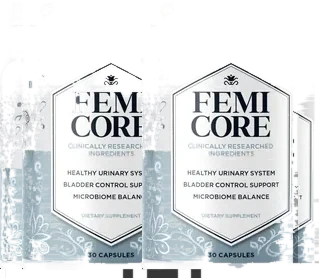
Cranberry extract, bearberry, berberine, mimosa pudica seed and five named Lactobacillus species in one daily capsule — sold with a 60-day money-back guarantee.
Order NowThe 32-ounce figure, and why we are not repeating it
Search this question and you will meet a specific claim: that you need roughly 32 ounces — nearly a litre — of pure unsweetened cranberry juice a day to reach 36 mg of PACs. It appears on supplement blogs, in forum answers and in AI summaries, always without a source.
We tried to trace it and could not. We found no peer-reviewed measurement of PAC content per 100 mL of a commercial ready-to-drink cranberry juice, by the current reference method, that would let anyone derive that volume. The published analytical work concentrates on powders, extracts and concentrated juice used as supplement raw materials — not on what is in the supermarket carton.
So the honest statement is a caveat rather than a number: the volume of juice needed is large enough to be impractical daily, and it varies enormously between products and even between harvest years, because juices are not standardised for PAC content the way a supplement raw material can be. The only way to get a precise multiplier for a particular juice is to assay that juice.
What we can say with confidence is the sugar side of the trade-off, because that is on the label. USDA FoodData Central puts a one-cup (about 240 mL) serving of bottled cranberry juice cocktail at roughly 30 g of sugars and about 137 calories. Any strategy that involves drinking multiple glasses a day to chase a PAC target is stacking up a substantial daily sugar load for an unverifiable amount of the active compound.
What this means for a multi-ingredient women's formula
Most women's urinary and vaginal formulas — including FemiCore — put cranberry alongside other botanicals and a probiotic blend rather than selling standardised cranberry on its own. The same rule applies, and it applies harder, because the cranberry is now one line in a longer ingredient list.
At the time of writing we could not find a proanthocyanidin milligram figure published anywhere in FemiCore's public marketing material, so a buyer cannot check it against the 36 mg threshold. That is a real limitation of the product's disclosure, and it is worth stating plainly rather than glossing over. Check the Supplement Facts panel on the bottle you actually receive, and look for a PAC figure with a named assay rather than a total extract weight.
If you want the underlying evidence on whether cranberry does anything at all, we covered that separately in our review of the cranberry and Lactobacillus evidence. For the probiotic half of these formulas, the oral probiotic colonisation data is the equivalent question on the other side of the capsule.
What the evidence does not show
- It does not show that cranberry treats anything. Every trial in the Xiong meta-analysis measured prevention of recurrence in people prone to episodes. An active infection is a medical matter and can require antibiotics.
- It does not show that juice is worthless. It shows that juice is unverifiable. Several trials in the pooled data used juice, and the absence of a printed PAC figure is a labelling problem rather than proof of no effect.
- It does not establish an exact juice-to-capsule conversion. We could not source one, and neither, as far as we can tell, can anyone else quoting a round number.
- It does not show benefit in mixed-gender populations. In the 2024 meta-analysis, only the female-only cohorts reached significance.
- It does not tell you whether more than 36 mg is better in practice. The 24-hour data favours 72 mg, but that is a urine surrogate in 32 volunteers, not a clinical outcome.
Medical note: this article is general information, not medical advice. Dietary supplements are not intended to diagnose, treat, cure or prevent any disease. Speak to a healthcare professional before starting any supplement, especially if you are pregnant, nursing, taking medication such as warfarin, or managing a health condition. If you have symptoms of an infection, see a clinician.
Frequently asked questions
How much cranberry juice equals a cranberry capsule?
You cannot work it out, because almost no cranberry juice prints a proanthocyanidin figure and neither do most capsules. The widely repeated claim that 32 ounces of unsweetened juice equals 36 mg of PACs is not something we could trace to a primary measurement, so we do not repeat it. The only honest comparison is between two products that both state their PAC content and the assay used.
Is cranberry juice or a cranberry supplement better?
A PAC-standardised capsule is the only format that lets you verify you are getting the 36 mg per day used in the trials, and it carries no sugar. Sweetened cranberry juice cocktail brings roughly 30 g of sugars per 240 mL cup according to USDA data, which is a real cost if you are drinking it daily. Neither format treats an infection.
Does cranberry extract 500 mg mean 500 mg of proanthocyanidins?
No. 500 mg is the weight of the extract, not the amount of the active compound in it. Two capsules both labelled cranberry extract 500 mg can contain very different PAC amounts. When 19 commercial cranberry products were analysed in 2012, only 4 of the 19 would have delivered the recommended 36 mg of total PACs per day.
Why do two cranberry products with the same PAC number behave differently?
Two reasons. First, only soluble proanthocyanidins showed anti-adhesion activity in laboratory testing, and a juice extract product produced significantly higher urinary anti-adhesion activity than a whole berry product over a week of daily use. Second, the number depends on the assay and the reference standard used to generate it, so the same sample can carry different PAC figures on different labels.
Scientific references
- Xiong Z, Gao Y, Yuan C, Jian Z, Wei X. — Preventive effect of cranberries with high dose of proanthocyanidins on urinary tract infections: a meta-analysis and systematic review. Frontiers in Nutrition. 2024;11:1422121. PMID 39668896. DOI 10.3389/fnut.2024.1422121
- Howell AB, Botto H, Combescure C, et al. — Dosage effect on uropathogenic Escherichia coli anti-adhesion activity in urine following consumption of cranberry powder standardized for proanthocyanidin content: a multicentric randomized double-blind study. BMC Infectious Diseases. 2010;10:94. PMID 20398248. DOI 10.1186/1471-2334-10-94
- Howell AB, Dreyfus JF, Chughtai B. — Differences in urinary bacterial anti-adhesion activity after intake of cranberry dietary supplements with soluble versus insoluble proanthocyanidins. Journal of Dietary Supplements. 2022;19(5):621–639. PMID 33818241. DOI 10.1080/19390211.2021.1908480
- Sánchez-Patán F, Bartolomé B, Martín-Alvarez PJ, Anderson M, Howell A, Monagas M. — Comprehensive assessment of the quality of commercial cranberry products: phenolic characterization and in vitro bioactivity. Journal of Agricultural and Food Chemistry. 2012. PMID 22439747
- Birmingham AD, Esquivel-Alvarado D, Maranan M, Krueger CG, Reed JD. — Inter-laboratory validation of the DMAC assay using cranberry proanthocyanidin standard, First Action Official Method 2019.06. Journal of AOAC International. 2021;104(1):216–222. DOI 10.1093/jaoacint/qsaa084
- NIH National Center for Complementary and Integrative Health — Cranberry: What You Need To Know
See the full FemiCore formula and pricing
A once-daily women's microbiome capsule, bought through the official store with a 60-day money-back guarantee.
Order Now