D-Mannose vs Cranberry PACs: Which Actually Has the Evidence in 2026?
Quick Answer: Is D-Mannose or Cranberry Better Supported?
Cranberry has the stronger evidence — a 2023 Cochrane review of 50 trials found a 26% relative reduction in women with recurrent episodes (RR 0.74), while the largest placebo-controlled d-mannose trial, MERIT (598 women, JAMA Internal Medicine 2024), found 2 g daily performed no better than placebo. Both are studied as support for people prone to repeat episodes; neither is a treatment for an active infection, and neither should be used in place of medical care. And the dose is the part most labels hide: the reduction in the meta-analytic data only appears at 36 mg of proanthocyanidins per day or more, not at whatever total extract weight is printed on the bottle.
- Cranberry: RR 0.74 (95% CI 0.55–0.99), 8 studies, 1,555 women — Cochrane 2023.
- D-mannose: 51.0% vs 55.7% on placebo, not statistically significant — MERIT 2024.
- Threshold that matters: 36 mg PAC/day; below it, no significant effect.
The head-to-head evidence table
This is the comparison almost nobody publishes. Most pages give you two prose sections and leave you to hold them side by side in your head. Here are both compounds against the same five columns, using each one's largest and most rigorous trial evidence rather than its most flattering.
| Compound | Dose used in the pivotal trial | Trial + year | n | Primary outcome result | 2025 guideline position |
|---|---|---|---|---|---|
| D-mannose | 2 g/day powder, 6 months | MERIT, Hayward et al., JAMA Intern Med 2024 | 598 women (mean age 58), 99 UK primary-care sites | 51.0% (150/294) contacted care for a suspected episode vs 55.7% (161/289) on placebo. Risk difference −5% (95% CI −13% to +3%), P = 0.26 — not significant. | AUA/CUA/SUFU 2025: clinicians should inform patients that d-mannose alone may not be effective for prevention. |
| Cranberry PACs | Varies by trial; benefit concentrated at ≥36 mg PAC/day | Williams et al., Cochrane Database Syst Rev 2023, CD001321.pub7 | 50 trials, 8,857 randomised participants | Overall RR 0.70 (95% CI 0.58–0.84). Women with recurrent episodes: RR 0.74 (95% CI 0.55–0.99), 8 studies, 1,555 participants, moderate certainty. | AUA/CUA/SUFU 2025: recommendation strengthened from may offer to should offer for prophylaxis. |
| Cranberry PACs, dose split | ≥36 mg/day vs <36 mg/day | Xiong et al., Front Nutr 2024;11:1422121 | 10 RCTs, 2,438 participants | ≥36 mg/day: RR 0.82 (95% CI 0.69–0.98), P = 0.03. Below 36 mg/day: no statistically significant reduction (P = 0.39). | Not a guideline document — this is the dose evidence sitting underneath the guideline. |
What the MERIT trial actually did
MERIT is the trial that changed the d-mannose conversation, and it is the trial that the pages currently ranking for this comparison do not cite. It was published in JAMA Internal Medicine in 2024 by Hayward and colleagues, and it is the largest placebo-controlled randomised trial of d-mannose ever run.
The design was deliberately pragmatic. Researchers recruited 598 women through 99 UK primary-care practices — ordinary general practices, not a specialist clinic with an unusually motivated population. The women had a documented history of repeat episodes: at least two in six months or three in twelve. Mean age was 58, with a range from 18 to 93. Half received 2 g of d-mannose powder daily; half received a matched placebo. Everyone was followed for six months. Neither the women nor the researchers knew who was taking what.
The result was flat. In the d-mannose group, 150 of 294 women (51.0%) contacted care for a suspected urinary infection during the six months. In the placebo group, 161 of 289 (55.7%) did. The risk difference was −5%, with a 95% confidence interval running from −13% to +3%, and a P value of 0.26. That confidence interval crossing zero is the whole story: the data are entirely compatible with d-mannose doing nothing.
The authors' own conclusion was blunt — d-mannose should not be recommended for prophylaxis in this group. That is a strong statement from a trial team, and it deserves to be reported accurately rather than buried.
Why the earlier d-mannose studies looked better
Smaller studies from the 2010s produced far more optimistic numbers, and they are the ones that built d-mannose's reputation. The honest reading is not that those studies were fraudulent, but that they were smaller, several were open-label rather than blinded, and some compared d-mannose against an antibiotic rather than against a placebo — a design that can make an ineffective agent look acceptable if the comparator also underperforms. When a large, blinded, placebo-controlled trial arrives and finds nothing, it generally outweighs a stack of smaller and weaker ones. That is how the evidence hierarchy is supposed to work, and it is uncomfortable when the answer goes against a popular supplement.
What the 2023 Cochrane review found — including where cranberry failed
The Cochrane review of cranberry for preventing urinary tract infections was updated in November 2023 (Williams et al., CD001321.pub7). It pooled 50 randomised or quasi-randomised trials covering 8,857 participants, which makes it the single largest body of evidence on either compound discussed here.
The headline number is an overall risk ratio of 0.70 (95% CI 0.58–0.84). For the group most relevant to a woman reading this page — women with a history of recurrent episodes — the risk ratio was 0.74 (95% CI 0.55–0.99), drawn from 8 studies and 1,555 participants, rated moderate certainty. A risk ratio of 0.74 is a 26% relative reduction. That is the figure that circulates on supplement blogs, and it is real, but it belongs to that subgroup and only that subgroup.
What almost nobody quotes is the other half of the same review. Cranberry did not work everywhere:
| Population | Risk ratio (95% CI) | Studies / participants | Cochrane's reading |
|---|---|---|---|
| Women with recurrent episodes | 0.74 (0.55–0.99) | 8 / 1,555 | Probably reduced risk |
| Children | 0.46 (0.32–0.68) | 5 / 504 | Reduced risk |
| People susceptible after an intervention | 0.47 (0.37–0.61) | 6 / 1,434 | Reduced risk |
| Elderly people in institutions | 0.93 (0.67–1.30) | 3 / 1,489 | Little or no benefit |
| Pregnant women | 1.06 (0.75–1.50) | 3 / 765 | Little or no benefit |
| Adults with bladder emptying problems | 0.97 (0.78–1.19) | 3 / 464 | Little or no benefit |
Three of the six subgroups show nothing. Cranberry is not a general-purpose urinary supplement that helps everyone who takes it; it is an intervention with a defined population where the data support it and several populations where they do not. Any page that quotes the 26% figure without that table is selling, not reporting.
Cochrane also compared cranberry products against antibiotics directly and found little or no difference between them (RR 1.03, 2 studies, 385 participants) — a small comparison, and one that should be read as a signal for further research rather than as a reason to substitute one for the other. Nobody should stop a prescribed medicine on the strength of two small trials, and the 2025 recurrent-UTI guideline does not suggest otherwise. The other free lever with randomised evidence behind it is fluid volume, covered in water intake and urinary health.
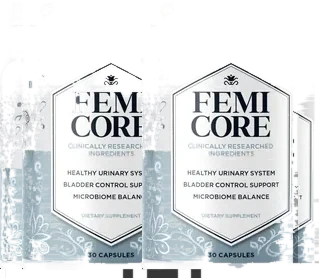
Cranberry, bearberry and five Lactobacillus strains in one daily capsule
FemiCore is the formula this site reviews — ingredients named openly, evidence and gaps laid out. Sold through the official store with a 60-day money-back guarantee.
Order NowWhat the 2025 guideline amendment changed
In 2025 the American Urological Association, together with the Canadian Urological Association and the Society of Urodynamics, Female Pelvic Medicine & Urogenital Reconstruction, published an amendment to their guideline on recurrent uncomplicated urinary tract infections in women. Two changes are directly relevant here.
First, the cranberry recommendation was strengthened. The previous language said clinicians may offer cranberry prophylaxis; the amendment moves it to clinicians should offer it, on the basis of newer and stronger evidence. That is a meaningful shift in guideline vocabulary — should and may are not interchangeable in these documents.
Second, the guideline addresses d-mannose explicitly, advising clinicians to inform patients that supplements containing only d-mannose may not be effective for prevention. The panel had MERIT available; the pages currently ranking for this comparison were written before it.
Two important framing notes. This is reporting on what a clinical guideline says, not a claim about any product. A guideline recommendation about cranberry as an ingredient class is not a statement about any particular capsule, including FemiCore, and no dietary supplement prevents, treats or cures any disease. Read the guideline as context for a conversation with your own clinician, which is exactly what it is written for.
The dose question everyone skips
Here is the part that makes most of this comparison academic: cranberry's evidence is dose-dependent, and most cranberry labels do not print the dose that matters.
A 2024 meta-analysis in Frontiers in Nutrition (Xiong et al., 11:1422121) pooled 10 randomised trials covering 2,438 participants and split them by proanthocyanidin intake. At 36 mg PAC per day or more, risk fell by 18% (RR 0.82, 95% CI 0.69–0.98, P = 0.03). Below 36 mg per day, there was no statistically significant reduction at all (P = 0.39). In female-only cohorts the reduction was RR 0.84 (95% CI 0.71–0.98, P = 0.02). The same analysis found the effect only reached significance when the product was used for 12 to 24 weeks — which tells you something about how long a fair trial of any of this takes.
That is a threshold, not a gradient. It means a cranberry product below the line is not a weaker version of one above it; in the pooled data it is a product with no demonstrated effect. And a label that says cranberry extract 500 mg tells you nothing about which side of that line it sits on, because PAC content depends on the extraction and the standardisation, not on the total weight. Our review of the underlying cranberry and Lactobacillus evidence covers whether these ingredients work; this page is about which of the two candidate compounds the data actually back.
We should apply that standard to the product this site covers, and it does not pass. FemiCore names cranberry extract as an ingredient, but neither this site's review nor the official sales page publishes a proanthocyanidin milligram figure — or any milligram figure, for any of its nine ingredients. We checked both directly. That means nobody, including us, can tell you whether FemiCore's cranberry content clears the 36 mg threshold. It is an honest gap, and the same gap applies to a very large share of the cranberry products on the market. The same disclosure problem affects the probiotic side of these formulas, which we cover in our audit of what L. crispatus labels actually deliver.
What this evidence does not show
Five limitations, stated plainly, because the pages competing for this query mostly skip them.
It does not show that d-mannose is inert. MERIT tested one dose (2 g daily), one formulation (powder), one duration (six months) and one population (women with documented recurrent episodes, mean age 58). A null result under those conditions is strong evidence about those conditions. It is not proof that no dose, format or population would respond. It is, however, the best evidence we have, and it points one way.
It does not show that cranberry works for you specifically. A risk ratio of 0.74 is a population average. Some women in those trials had no episodes and some had several; the average moved modestly. Nothing in a pooled estimate predicts an individual outcome.
It does not show that any finished multi-ingredient product works. Ingredient evidence is not product evidence. FemiCore has no clinical trial on the finished formula, and we have said so consistently. A capsule containing an ingredient with trial data behind it inherits the plausibility of that data, not its results.
It does not show a combination benefit. No trial has tested cranberry plus d-mannose against either alone. Marketing that implies the pair is additive is asserting something no one has measured. For how these two sit against the rest of the shelf — probiotics, uva-ursi and plain water included — see our ranking of urinary support supplements for women.
It does not show anything about treatment. Every trial discussed here measured prevention in people prone to repeat episodes. None tested clearing an existing infection, and a dietary supplement is not a substitute for antibiotics when they are needed.
Medical note: this article is general information, not medical advice. These are dietary supplements, not drugs, and they are not intended to diagnose, treat, cure or prevent any disease. Symptoms such as burning, urgency, fever, flank pain or blood in the urine need a clinician, not a capsule. Speak to a healthcare professional before starting any supplement, especially if you are pregnant, nursing, or taking medication.
Frequently asked questions
Is d-mannose or cranberry better supported by evidence?
Cranberry, on current evidence. A 2023 Cochrane review of 50 trials and 8,857 participants found a 26% relative reduction in risk for women with recurrent urinary tract infections (RR 0.74, 95% CI 0.55 to 0.99). The largest placebo-controlled d-mannose trial, MERIT, randomised 598 women and found 2 g daily performed no better than placebo over six months.
Does d-mannose work at all?
The best available trial says not for prevention at 2 g a day in women with recurrent infections. Earlier studies were more positive, but they were smaller, less rigorous, or compared d-mannose against an antibiotic rather than against placebo. The 2025 AUA, CUA and SUFU guideline now tells clinicians to inform patients that d-mannose alone may not be effective for prevention.
How many milligrams of cranberry proanthocyanidins do the trials use?
At least 36 mg a day. A 2024 meta-analysis of 10 randomised trials and 2,438 participants found an 18% risk reduction at 36 mg or more (RR 0.82, 95% CI 0.69 to 0.98) and no statistically significant reduction below that threshold. Total cranberry extract weight printed on a label does not tell you the proanthocyanidin content.
Can I take cranberry and d-mannose together?
No trial has tested the combination against either ingredient on its own, so nobody can tell you whether adding one to the other changes anything. They are not known to interact with each other. Speak to a clinician before combining supplements, particularly if you take prescription medication.
Does either one treat an active urinary tract infection?
No. Both are studied for prevention in people prone to repeat episodes, not as treatment. An active infection can need antibiotics, and a dietary supplement is not a substitute. If you have burning, urgency, fever or pelvic pain, see a clinician.
Scientific references
- Hayward G, Mort S, Hay AD, et al. — d-Mannose for Prevention of Recurrent Urinary Tract Infection Among Women: A Randomized Clinical Trial. JAMA Intern Med. 2024. PMID 38587819
- Williams G, Stothart CI, Hahn D, Stephens JH, Craig JC, Hodson EM — Cranberries for preventing urinary tract infections. Cochrane Database Syst Rev. 2023;11(11):CD001321. PMID 37947276
- Xiong Z, Gao Y, Yuan C, Jian Z, Wei X — Preventive effect of cranberries with high dose of proanthocyanidins on urinary tract infections: a meta-analysis and systematic review. Front Nutr. 2024;11:1422121. PMID 39668896
- Howell AB, Botto H, Combescure C, et al. — Dosage effect on uropathogenic Escherichia coli anti-adhesion activity in urine following consumption of cranberry powder standardized for proanthocyanidin content: a multicentric randomized double-blind study. BMC Infect Dis. 2010;10:94. PMID 20398248
- American Urological Association / CUA / SUFU — Recurrent Uncomplicated Urinary Tract Infections in Women: Guideline, 2025 amendment
- NIH NCCIH — Cranberry: What You Need To Know
- NIH NCCIH — Probiotics: What You Need To Know
See how FemiCore puts this together
Read our full breakdown on the FemiCore review page — every ingredient, the evidence behind it, and the doses the label does not disclose. Orders are handled by the official store.
Order Now