Does Your Lactobacillus crispatus Supplement Actually Contain L. crispatus?
Quick Answer: Can You Trust an L. crispatus Label?
Not automatically — when a 2019 laboratory audit tested nine commercial products sold as L. crispatus supplements, only two of them actually delivered at least 1 billion viable CFU per gram in line with what the label claimed. The rule that follows is the strain code: Lactobacillus crispatus is a species name, not a product specification, and closely related strains of the same species have measurably different behaviour, so a label without a strain code cannot be matched to any published study. Before you buy, check three things on the panel — a strain code after the species name, a CFU count for that specific strain, and a statement that the CFU is guaranteed at expiry rather than at manufacture.
- The audit: 9 products tested, 2 met the 1×10⁹ CFU/g bar with label correspondence.
- Worse still: of those two, only one contained a strain with published literature.
- The check: strain code → per-strain CFU → CFU at expiry. Three lines, thirty seconds.

What the 2019 laboratory audit actually found
In November 2019, Di Pierro, Polzonetti, Patrone and Morelli published a short, unglamorous paper in Microorganisms that is far more useful to a buyer than any of the explainer articles currently ranking for this topic. They bought nine commercial products from the Italian and French markets — seven marketed as dietary supplements, two as medical devices — each claiming to contain at least one strain of Lactobacillus crispatus. Then they took them into a laboratory and counted what was actually alive in them.
The finding, in the authors' own framing: out of nine products, only two definitely contained viable L. crispatus cells at a daily dose of at least 1 × 10⁹ CFU per gram with acceptable correspondence to what the label declared. And between those two, only one contained a strain — M247 — that has been scientifically documented in published literature.
That is one product out of nine that a reader could have matched to a study. The rest were, in evidentiary terms, unverifiable purchases.
| Product group | What the label declared | Viable L. crispatus recovered per daily dose | Matched the label? | Published literature on that strain |
|---|---|---|---|---|
| The one that passed everything (1 product) | A named, coded L. crispatus strain (M247) | At or above 1 × 10⁹ CFU/g | Yes — acceptable correspondence | Yes — M247 is documented in the scientific literature |
| Passed on dose only (1 product) | L. crispatus declared | At or above 1 × 10⁹ CFU/g | Yes — acceptable correspondence | No documented strain identified by the authors |
| Products D, E and F (3 products) | L. crispatus declared | Between 3.5 and 6.3 × 10⁷ CFU/g — roughly 16 to 29 times below the benchmark | No | Not established |
| The remaining products (4 products) | L. crispatus declared | Did not meet the 1 × 10⁹ CFU/g benchmark with acceptable label correspondence | No | Not established |
Source: Di Pierro F, Polzonetti V, Patrone V, Morelli L. Microorganisms. 2019;7(11):524. Grouped by outcome tier from the published findings; the paper reports the per-product detail for the low-recovery group as a range, which is reproduced here as such rather than invented per product.
Two things deserve emphasis. First, this is a small sample from two European markets, and it is now several years old — it is a snapshot, not a permanent verdict on every product on every shelf. Second, that caveat cuts both ways. There is no published evidence that the market has since improved, and no reason to assume a bottle bought in 2026 is different unless its label gives you something to check.
Why the strain code matters more than the species name
The reason the audit's strain finding matters is not bureaucratic. Strains of the same species genuinely differ.
In 2022, Argentini and colleagues published a study in Microbiology Spectrum comparing 15 L. crispatus strains — eight isolated from human vaginal swabs, seven from another source — against 11 different microorganisms. They measured antimicrobial activity, lactic acid production and competitive behaviour in co-culture. The strains did not behave alike. Acidification times ranged from roughly five to nine hours. Anti-Candida activity ranged from under 50% inhibition to over 80%. Different strains inhibited different organisms; human-derived strains and the comparison group had visibly different profiles.
Their conclusion is the sentence every probiotic buyer should internalise: even phylogenetically closely related L. crispatus strains possess unique features in terms of their antimicrobial activities and associated competitive abilities.
So Lactobacillus crispatus on a label is roughly as informative as dog on a pedigree certificate. It narrows things down. It does not tell you what you have got. Every colonisation study, every antimicrobial assay, every clinical trial in this field was run on a specific coded strain — CECT 30647, M247, and so on — and its results transfer to that strain, not to the species. A product that names only the species is asking you to accept an inference nobody has tested.
The eight-point label audit
Here is the checklist in a form you can hold against a bottle, physically or on a product page. It takes under a minute. Anything in the red-flag column is not proof of a bad product, but each one is a piece of information you are not being given.
| # | What to look for | Why it matters | Red flag |
|---|---|---|---|
| 1 | Genus present (Lactobacillus or Lactobacillus-derived genus) | The absolute minimum. A blend that names no organisms is unauditable. | Probiotic blend with no organism names |
| 2 | Species present (crispatus, gasseri, acidophilus…) | Species determines the broad ecological role. L. crispatus is the species associated with a stable, acidic vaginal environment. | Genus only, e.g. Lactobacillus spp. |
| 3 | Strain code after the species (CECT 30647, M247, and similar) | The single most informative item on the panel. Without it, no published study can be matched to what is in the capsule. | Species name with no code — the most common gap by far |
| 4 | CFU stated per strain, not only as a blend total | A 20 billion CFU blend can be 19.9 billion of a cheap strain and a token amount of the one you bought it for. | One combined CFU figure for five or more organisms |
| 5 | CFU guaranteed at expiry, not at time of manufacture | Live cultures die during storage and transport. At manufacture is the friendliest possible measurement point. | At time of manufacture, or no timing stated at all |
| 6 | Storage instruction present | Viability is temperature-dependent. A product making no storage claim is making no viability promise. | No storage line anywhere on the packaging |
| 7 | Third-party verification or independent testing statement | Moves the CFU figure from a manufacturer assertion to something externally checked. | Manufacturer testing only, or no mention |
| 8 | A published trial exists on that exact strain | The endpoint of the whole exercise. This is what the strain code is for — searching PubMed for the code should return something. | Strain code returns no results, or there is no code to search |
A practical note on row 8: you can do this yourself in about thirty seconds. Take the strain code off the label, put it into PubMed, and see what comes back. The headline CFU figure will not help you here, for reasons we set out in why a bigger CFU count is not a better probiotic. In the 2019 audit, only one of the tested strains had published literature behind it. That check is available to any buyer and almost nobody performs it.
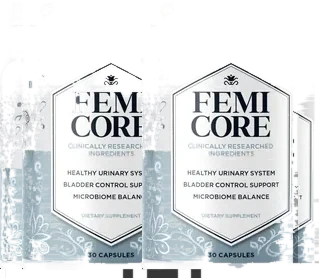
The formula this site reviews
FemiCore combines cranberry and bearberry botanicals with five named Lactobacillus species — including L. crispatus. Sold through the official store with a 60-day money-back guarantee.
Order NowRunning the checklist on FemiCore
It would be dishonest to publish a checklist and then not apply it to the product this site is paid to review. So here is the result, and it is mixed.
FemiCore passes rows 1 and 2 cleanly. It names all five of its Lactobacillus species openly — L. crispatus, L. acidophilus, L. gasseri, L. plantarum and L. casei — rather than concealing them inside an unnamed proprietary blend. That matters more than it sounds. A large share of the women's probiotic market lists a blend weight and nothing else, and FemiCore does not do that.
It passes row 3 as well: the supplement facts panel codes every strain — L. crispatus LCr86, L. acidophilus LA88, L. plantarum N13, L. gasseri LG08 and L. casei LC16 — which is more than most of the category prints. It fails rows 4 and 5, and row 8 fails too. There is no per-strain CFU count. There is no blend total CFU either, only a 50 mg weight for the whole probiotic blend, and a milligram weight is not a viable-cell count. And there is no statement about whether any CFU figure would be guaranteed at manufacture or at expiry, because there is no CFU figure to qualify. Row 6 passes — the panel carries a storage line, “store in a cool, dry place” — and row 7 does not, because GMP and facility badges are manufacturer assertions rather than an independent assay. Row 8 fails last of all: searching PubMed for each of the five codes in turn returns no strain-specific trial, which is exactly what that row asks for.
The consequence is specific and worth stating rather than softening: the dose benchmarks on this page cannot be applied to FemiCore in either direction. The Di Pierro benchmark of 1 × 10⁹ CFU/g cannot be checked against it, because there is no CFU figure to check. The Argentini strain-specificity finding can at least be aimed at LCr86 by name — and that is exactly the problem: the code is printed, it is searchable, and nothing comes back. A buyer choosing FemiCore is choosing a formula on the strength of its named and coded strains and its guarantee, not on the strength of a verifiable dose — and that should be a conscious choice rather than an assumption. The same disclosure gap applies on the botanical side of the formula, which we cover in our comparison of d-mannose against cranberry proanthocyanidins, where the 36 mg PAC threshold is equally uncheckable. Our broader review of the cranberry and Lactobacillus evidence base sets out what the ingredients themselves have behind them.
What this evidence does not show
It does not show that most probiotics on sale today fail. The 2019 audit tested nine products in two European markets at one point in time. It is a serious, peer-reviewed finding, and it is also a small sample. Generalising it to every bottle in every country would be exactly the kind of overreach this article exists to argue against.
It does not show that an undisclosed product is a bad product. Absence of a strain code is absence of information, not evidence of absence. Some manufacturers do not publish strain codes for supply-chain reasons. The honest position is that you cannot verify it, which is different from knowing it is deficient.
It does not show what CFU dose produces a benefit in a person. The 1 × 10⁹ CFU/g figure in the audit is a quality benchmark for label accuracy, not a clinically established effective dose. Hitting it means the product contains what it says. It does not mean the product does anything.
It does not show that any product changes a microbiome. Nothing on this page measured whether swallowing a capsule alters the vaginal environment. That is a separate question with a separate literature, and the answer there is strain-specific too.
It does not show anything about disease. These are dietary supplements. Nothing here treats, prevents or cures an infection or any other condition, and none of the studies cited attempted to.
Medical note: this article is general information about product labelling, not medical advice. Dietary supplements are not intended to diagnose, treat, cure or prevent any disease. Speak to a healthcare professional before starting any supplement, especially if you are pregnant, nursing, immunocompromised, or taking medication. Symptoms of an infection need a clinician, not a capsule.
Frequently asked questions
Can you trust a Lactobacillus crispatus supplement label?
Not automatically. When a 2019 laboratory audit tested nine commercial products sold as L. crispatus supplements, only two delivered a daily dose of at least 1 billion viable CFU per gram with acceptable correspondence to the label. Of those two, only one contained a strain with published scientific literature behind it.
Why does the strain code matter more than the species name?
Because closely related strains of the same species behave differently. A 2022 Microbiology Spectrum study compared 15 L. crispatus strains and found marked strain-level differences in antimicrobial activity and in how fast they acidified their environment. A label that gives only the species name tells you nothing about which strain is in the capsule or whether it has ever been studied.
What CFU count should an L. crispatus supplement state?
The benchmark used in the 2019 audit was at least 1 billion CFU per gram in the daily dose. Just as important is when that count is guaranteed. A CFU figure measured at the time of manufacture is not the same as a CFU figure guaranteed through the printed expiry date, because live cultures lose viability during storage.
Does FemiCore publish strain codes or CFU counts?
Strain codes yes, CFU counts no. The supplement facts panel prints LCr86, LA88, N13, LG08 and LC16 against the five species, which is more than most of the category discloses. What it does not give is a per-strain CFU count or a blend total — only a 50 mg weight for the whole probiotic blend, and milligrams are not viable cells. So the identity checks on this page can be applied to it and the dose benchmarks cannot.
Is a higher CFU count always better?
No. Dose only matters alongside identity and survival. A very high CFU count of an unstudied strain is not evidence of anything, and a count measured at manufacture can fall substantially before the bottle is opened. Check the strain code first, the CFU guaranteed to expiry second, and the total number third.
Scientific references
- Di Pierro F, Polzonetti V, Patrone V, Morelli L — Microbiological Assessment of the Quality of Some Commercial Products Marketed as Lactobacillus crispatus-Containing Probiotic Dietary Supplements. Microorganisms. 2019;7(11):524. PMID 31684185
- Argentini C, Fontana F, Alessandri G, et al. — Evaluation of Modulatory Activities of Lactobacillus crispatus Strains in the Context of the Vaginal Microbiota. Microbiol Spectr. 2022. PMID 35266820
- NIH NCCIH — Probiotics: What You Need To Know
- NIH Office of Dietary Supplements — Probiotics: Fact Sheet for Health Professionals
- U.S. Food and Drug Administration — Dietary Supplements: labelling and regulation
- Williams G, Stothart CI, Hahn D, et al. — Cranberries for preventing urinary tract infections. Cochrane Database Syst Rev. 2023;11(11):CD001321
See the full FemiCore breakdown
Every ingredient, the evidence behind it, and the figures the label does not disclose — set out on our FemiCore review page. Orders are handled by the official store.
Order Now