Can Vitamin D Cause a Yeast Infection? What the Research Shows
Quick Answer: Can Vitamin D Cause a Yeast Infection?
No published human study has found that taking vitamin D causes a vaginal yeast infection. The research points the other way: it asks whether low vitamin D is more common in women who get these infections, and a 2020 case-control study reported roughly three-fold higher odds of candidiasis in women reporting low sunlight exposure. That is an association, not a cause. No randomised trial has been designed to test whether supplementing triggers a yeast infection, so the accurate answer is that there is no evidence it does and no mechanism by which it plausibly would.
- Direction of the data: low vitamin D is studied as a risk factor, never supplementation as a cause.
- The real trigger: antibiotics, which clear competing bacteria that vitamin D does not touch.
- The dose that matters: 4000 IU a day is the adult tolerable upper intake level.
Can vitamin D pills cause a yeast infection?
There is no documented mechanism, and no trial has reported vaginal candidiasis as an adverse effect of vitamin D supplementation. That matters, because the mechanisms behind yeast infections are reasonably well understood and vitamin D sits on none of them. A yeast infection is an overgrowth of Candida, usually Candida albicans, normally held in check by a crowded, acidic, Lactobacillus-dominant environment. The reliable ways to disturb that balance either kill the competing bacteria or change the sugar and hormone supply: antibiotics, poorly controlled blood sugar, higher-oestrogen states, and a warm, occlusive environment. Vitamin D is not an antimicrobial and does not deplete lactobacilli.
The confusion is understandable: antibiotics genuinely do cause yeast infections, and it is a short step from “something I swallowed” to “anything I swallow”. It is also worth confirming what you actually have, because the two most common causes of vaginal symptoms are frequently mistaken for one another; we set out the distinguishing pattern in our guide to telling BV and a yeast infection apart.
What the research on vitamin D and yeast infections actually measured
The candidiasis literature is small and entirely observational. In a prevalence case-control study of an African population, Amegah and colleagues reported in the European Journal of Clinical Nutrition in 2020 that self-reported low sunlight exposure was associated with 3.38-fold increased odds of vulvovaginal candidiasis (95% CI 1.99–5.74), with the odds rising as consumption of vitamin D-rich foods fell. The authors were explicit that the findings need confirming in prospective studies before anyone acts on them.
That design is the crux of the question. A case-control study recruits women who already have an infection alongside women who do not, then looks backwards at how the groups differ, so it cannot establish which came first. What it absolutely cannot show is that raising vitamin D causes an infection — nobody in these studies was given a supplement at all.
The evidence on vitamin D and vaginal infections, by study type
| Study | Design | What it can tell you |
|---|---|---|
| Amegah 2020, candidiasis | Prevalence case-control | Low sun exposure and low dietary vitamin D occur alongside candidiasis; direction unknown. |
| Ma 2022, BV in pregnancy | Meta-analysis of observational studies | Vitamin D deficiency associated with 54% higher odds of BV in pregnancy. |
| Yang 2026, BV in non-pregnant women | Systematic review and meta-analysis | Pooled odds ratio 1.00 — no overall association outside pregnancy. |
| Taheri 2015, asymptomatic BV | Placebo-controlled randomised trial | 2000 IU/day cleared BV in more women than placebo, in a deficient population. |
| Turner 2014, recurrent BV | Blinded randomised controlled trial | High-dose vitamin D did not reduce recurrence. No causal claim in either direction. |
Vitamin D and BV: the two randomised trials that disagree
Bacterial vaginosis is the one place where somebody has actually run the experiment, and the two trials do not agree — worth knowing if you have searched “vitamin D BV” and found confident answers pointing both ways.
Taheri and colleagues, in the Indian Journal of Medical Research in 2015, randomised 208 women who had both vitamin D deficiency and asymptomatic BV to 2000 IU a day of oral vitamin D or placebo for 105 days. The cure rate by Nugent score was 63.5 per cent in the intervention group against 19.2 per cent in controls (P < 0.001) — a large effect, in a population selected for being deficient.
Turner and colleagues, in the American Journal of Obstetrics and Gynecology in 2014, ran a blinded, placebo-controlled trial in a very different setting: 118 women with symptomatic BV at an urban sexual-health clinic, all treated with metronidazole, half also given nine 50,000 IU doses of cholecalciferol across 24 weeks. Serum 25-hydroxyvitamin D rose as intended, from a median of 16.6 to 30.5 ng/mL. Recurrence did not fall: the intention-to-treat hazard ratio was 1.11 (95% CI 0.68–1.81). At 24 weeks, BV prevalence was 65 per cent in the vitamin D arm against 48 per cent on placebo — a gap sitting inside a confidence interval that crosses 1.0, so it is not evidence of harm, but it is a plain reminder that the supplement did not help either.
The most recent synthesis splits the difference. Yang and Gong's 2026 systematic review and meta-analysis pooled 13 studies in non-pregnant women and found a pooled odds ratio of 1.00 (95% CI 0.71–1.42) — no association overall, with a strong signal in one Iranian study and null results elsewhere. They graded that evidence as very low certainty. In pregnancy the picture is more consistent: Ma and colleagues' 2022 meta-analysis in Frontiers in Nutrition pooled 14 studies and 4,793 participants and reported 54 per cent higher odds of BV with deficiency (OR 1.54, 95% CI 1.25–1.91), while noting evidence of publication bias.
Why a new vitamin D routine gets blamed anyway
Three ordinary explanations cover most of these stories, and none requires vitamin D to be doing anything.
Timing, plus something else that changed. Roughly three in four women have at least one yeast infection in their lifetime, and episodes cluster. Vitamin D is also often started after an illness or an antibiotic course — and antibiotics are the best-documented trigger there is.
The wrong condition was assumed. Studies of women buying over-the-counter antifungals find only about a third actually have a yeast infection. Colour and texture are a second clue, set out in our vaginal discharge colour guide, and an elevated pH points away from yeast and toward BV, which is why an at-home strip is a useful first filter; our guide to the normal vaginal pH range and home testing explains what a reading can and cannot settle.
The product was not only vitamin D. Combination gummies and women's multivitamins carry sweeteners, fillers and other actives, so the vitamin D is rarely the only candidate in the bottle.
What high-dose vitamin D genuinely does cause
The real safety story with vitamin D is not infection, it is calcium. Vitamin D increases calcium absorption, and sustained very high intakes can raise blood calcium to harmful levels — hypercalcaemia, which can cause nausea, weakness, frequent urination, kidney stones and, at the extreme, kidney damage. The NIH Office of Dietary Supplements fact sheet on vitamin D sets the recommended dietary allowance for most adults at 600 IU a day (800 IU from age 71) and the tolerable upper intake level at 4000 IU a day from all sources combined. Frequent urination is worth flagging separately, because it is a symptom of hypercalcaemia and also of a urinary tract infection, and confusing the two is a reliable way to treat the wrong thing.
What the evidence shows, and what it does not
It does not show that vitamin D causes yeast infections. No trial has reported it and no mechanism supports it. Absence of evidence is not proof of absence, since the question has never been a study's primary endpoint — but there is nothing on the other side of the ledger either.
It does not show that vitamin D prevents them. The candidiasis data are case-control only, and in BV the two randomised trials disagree.
It does show that correcting a confirmed deficiency is worth doing on its own merits, for bone health, whichever way the vaginal question eventually resolves.
It does not show that a microbiome supplement is a substitute. Vitamin D adequacy and Lactobacillus support are different levers with different evidence bases — a distinction we work through in our companion piece on vitamin D and recurrent vaginal infections.
Two common mistakes
1. Supplementing on suspicion instead of testing. Vitamin D status is measured with a serum 25-hydroxyvitamin D test, and guessing is how people either under-treat a real deficiency or drift toward the upper limit for no reason. The 4000 IU ceiling is a total across every product you take.
2. Treating a presumed yeast infection blind. If an antifungal does not work, the usual explanation is that it was never yeast. Stubborn or non-albicans yeast is its own situation, covered in our piece on what the evidence shows for boric acid suppositories.
Medical note: this article is general information, not medical advice. Dietary supplements are not intended to diagnose, treat, cure or prevent any disease. Speak to a healthcare professional before starting or changing a vitamin D dose, especially if you are pregnant, nursing, taking medication or managing a condition affecting calcium or kidney function.
Scientific references
- Amegah AK, Baffour FK, Appiah A, et al. — Sunlight exposure, consumption of vitamin D-rich foods and vulvovaginal candidiasis in an African population: a prevalence case-control study, European Journal of Clinical Nutrition 2020;74(3):518–526 (PMID 31636409)
- Turner AN, Carr Reese P, Fields KS, et al. — A blinded, randomized controlled trial of high-dose vitamin D supplementation to reduce recurrence of bacterial vaginosis, American Journal of Obstetrics and Gynecology 2014;211(5):479.e1–479.e13 (PMID 24949544)
- Taheri M, Baheiraei A, Foroushani AR, Nikmanesh B, Modarres M — Treatment of vitamin D deficiency is an effective method in the elimination of asymptomatic bacterial vaginosis: a placebo-controlled randomized clinical trial, Indian Journal of Medical Research 2015;141(6):799–806 (PMID 26205023)
- Yang D, Gong X — Association between vitamin D status and bacterial vaginosis in non-pregnant women of reproductive age: a systematic review and meta-analysis, European Journal of Obstetrics, Gynecology and Reproductive Biology 2026;324:115208 (PMID 42235462)
- Ma L, Zhang Z, Li L, et al. — Vitamin D deficiency increases the risk of bacterial vaginosis during pregnancy: evidence from a meta-analysis based on observational studies, Frontiers in Nutrition 2022;9:1016592 (PMID 36483925)
- NIH Office of Dietary Supplements — Vitamin D: Fact Sheet for Health Professionals (RDA, tolerable upper intake level, toxicity)
- U.S. Centers for Disease Control and Prevention — About Bacterial Vaginosis
Related reading
- Vitamin D and Recurrent Vaginal Infections: The Evidence
- BV vs Yeast Infection: How to Tell the Difference
- Normal Vaginal pH: The 3.8-4.5 Range and How Testing Works
Frequently asked questions
Can vitamin D cause a yeast infection?
No published human trial has found that taking vitamin D causes vulvovaginal candidiasis. The published association runs the opposite way: Amegah and colleagues' 2020 case-control study in the European Journal of Clinical Nutrition reported higher odds of candidiasis in women reporting low sunlight exposure and low intake of vitamin D-rich foods. That is an association in observational data, not proof that supplementing prevents anything, and no trial has tested whether supplementation causes yeast infections.
Can vitamin D pills cause a yeast infection?
There is no known mechanism by which a vitamin D capsule would trigger Candida overgrowth, and no trial has reported it as an adverse effect. Vitamin D is not an antibiotic and does not clear the Lactobacillus population the way antibiotics do. If a yeast infection followed a new vitamin D routine, the likelier explanations are coincidence, a recent antibiotic course, or another change made at the same time.
Does vitamin D help with bacterial vaginosis?
The randomised evidence is split. Taheri and colleagues gave 2000 IU a day for 105 days to women with vitamin D deficiency and asymptomatic bacterial vaginosis and reported a 63.5 per cent cure rate against 19.2 per cent on placebo. Turner and colleagues gave nine 50,000 IU doses over 24 weeks alongside metronidazole and found no reduction in recurrence (hazard ratio 1.11, 95% CI 0.68 to 1.81).
Is it safe to take vitamin D if I get recurrent yeast infections?
For most women, correcting a tested deficiency at ordinary doses is low risk and worthwhile for bone health, and nothing in the literature suggests it makes recurrent yeast infections worse. The limit that matters is the dose: the adult tolerable upper intake level is 4000 IU per day from all sources. Test first, and let a clinician set the dose.
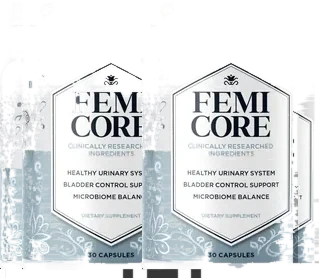
What FemiCore actually contains
Cranberry, bearberry and five Lactobacillus strains in one daily capsule — no vitamin D, every ingredient laid out with its evidence.
Read the FemiCore Ingredient Breakdown