The Estrobolome: How Gut Bacteria Recycle Estrogen
Quick Answer: What is the estrobolome?
The estrobolome is the set of gut bacteria, and their genes, that metabolize estrogen. Using an enzyme called beta-glucuronidase, these microbes reactivate estrogen the liver had packaged for disposal, allowing it to be reabsorbed rather than excreted. A balanced microbiome keeps that recycling in a healthy range, which is why gut health and hormonal balance are quietly linked.
- What it is: the estrogen-metabolizing arm of your gut microbiome.
- Key enzyme: beta-glucuronidase, which reactivates estrogen for reabsorption.
- Why it matters: microbiome balance influences how much estrogen is recycled.
A word for a hidden job the gut does
Most people think of estrogen as something the ovaries make and the body simply uses. That is only half the story. Estrogen is also constantly being cleared and, it turns out, partly recycled — and the gut microbiome sits right in the middle of that recycling loop. The word for the microbes responsible is the estrobolome, a term introduced by Plottel and Blaser in 2011 to describe the collection of gut bacterial genes capable of metabolizing estrogens.
The estrobolome is not a separate organ or a specific species. It is a functional group: whichever bacteria in your gut happen to carry the genes for acting on estrogen. Two people can have very different species making up their estrobolome and still perform the same job. What matters is the collective enzyme activity those microbes produce.
How the estrogen recycling loop works
To see where bacteria come in, follow a molecule of estrogen through its life cycle. The process is called enterohepatic recirculation, and it runs in four steps.
| Step | Where | What happens |
|---|---|---|
| 1. Use | Bloodstream / tissues | Active estrogen circulates and does its work throughout the body. |
| 2. Tag for disposal | Liver | The liver attaches a glucuronic-acid "tag" (conjugation), making estrogen water-soluble so it can be excreted. Tagged estrogen is inactive. |
| 3. Send to the gut | Bile → intestine | The tagged, inactive estrogen is dumped into the intestine in bile, on its way out of the body. |
| 4. Untag & reabsorb | Gut bacteria | Bacteria producing beta-glucuronidase remove the tag, reactivating the estrogen so it is reabsorbed into the blood instead of being excreted. |
That fourth step is the estrobolome's entire contribution, and it is the pivot point of the whole system. The liver's job is to get rid of estrogen; the gut bacteria can, in effect, overrule part of that decision and send some of it back into circulation.
Beta-glucuronidase: the master switch
The specific enzyme doing the "untagging" is beta-glucuronidase. It is produced by a range of gut bacteria — members of the Bacteroides, Clostridium, Escherichia and other groups — and it cleaves off the glucuronic-acid tag the liver added. Once the tag is gone, the estrogen molecule is active again and small enough to slip back across the gut wall into the bloodstream.
This gives a simple, testable logic to the gut-hormone link:
- Higher bacterial beta-glucuronidase activity → more estrogen reactivated → more recycled back into circulation, less excreted.
- Lower beta-glucuronidase activity → more estrogen stays tagged → more excreted, less recycled.
Because the mix and activity of these bacteria varies from person to person and shifts with diet, medication and life stage, the estrobolome is one plausible reason two women with similar ovarian output can end up with somewhat different circulating estrogen. Kwa, Plottel, Blaser and Adams reviewed this pathway in detail in 2016, framing the estrobolome as a modulator of the body's estrogen pool rather than its source.
Read this as mechanism, not medicine. The estrobolome is a real and well-described pathway, but most of the human evidence linking it to specific outcomes is associative. "Gut bacteria can influence estrogen recycling" is well supported; "take X to fix your hormones" is not. Nothing here is a claim that any food or supplement treats a hormonal condition.
The gut-hormone axis in plain terms
Zoom out and the estrobolome is one strand of a broader conversation between the gut and the endocrine system, sometimes called the gut-hormone axis. Baker and colleagues, in a 2017 review in Maturitas, described how the estrogen-gut microbiome relationship runs both ways: estrogen levels shape which bacteria thrive, and the bacteria in turn shape how much estrogen is recycled. It is a feedback loop, not a one-way street.
A useful mental model: the ovaries set the supply of estrogen, the liver decides how much to throw away, and the estrobolome decides how much of what was thrown away gets pulled back out of the bin. Diversity matters here. A varied, fiber-fed microbiome tends to keep beta-glucuronidase activity in a moderate range; a disrupted one — after antibiotics, or on a very low-fiber diet — can push that activity too high or too low.
Two everyday scenarios show why the loop matters. After a course of broad-spectrum antibiotics, the estrobolome is temporarily thinned out; beta-glucuronidase activity can drop, more estrogen leaves the body in waste, and the recycled pool shrinks until the microbiome recovers. At the opposite extreme, a low-fiber, low-diversity diet can favour a narrow set of bacteria and push beta-glucuronidase activity in unhelpful directions. Neither scenario is a disease in itself, but both illustrate the general principle: the estrobolome is not fixed. It responds to what you eat, the medications you take and the overall state of your gut, and it can shift within weeks. That responsiveness is precisely why diet, rather than any single supplement, is the lever researchers keep returning to. It is also why blanket claims that a probiotic "balances your hormones" overreach the evidence: the estrobolome is one input into a large, redundant system, and nudging it is not the same as controlling it.
Why it matters across the female life span
The estrobolome is relevant at every stage, but for different reasons.
Reproductive years. Estrogen is high and cycling, and the recycling loop is busiest. A stable microbiome contributes to steadier day-to-day estrogen handling. This is also where the gut and the vaginal microbiome interact, part of why estrogen, glycogen and lactobacilli are so intertwined — a thread we pick up in our piece on normal vaginal pH and how testing works.
Perimenopause. As ovarian output becomes erratic, the amount of estrogen the gut recycles becomes proportionally more noticeable against a shifting baseline. Microbiome changes in this window are increasingly linked to the digestive symptoms many women report, which we cover in perimenopause bloating and the gut.
After menopause. Ovarian estrogen falls sharply, and the body relies more on smaller, peripheral sources. The estrobolome still acts on whatever estrogen is in play, so gut health does not become irrelevant — it simply operates on a smaller pool.
What actually shapes your estrobolome
The levers with the most evidence are unglamorous and dietary. Fiber is central: it feeds a diverse microbiome and binds some estrogen in the gut, supporting healthy excretion. Plant variety — and the phytoestrogens and polyphenols that come with it — feeds bacteria that keep beta-glucuronidase in a moderate range. Antibiotics can transiently disrupt the estrobolome, which is one reason gut recovery after a course matters. And probiotics and fermented foods are studied as inputs that support overall microbiome diversity, though strain-specific effects on estrogen recycling in humans are still an open research question rather than a settled result.
Where a supplement fits — carefully framed
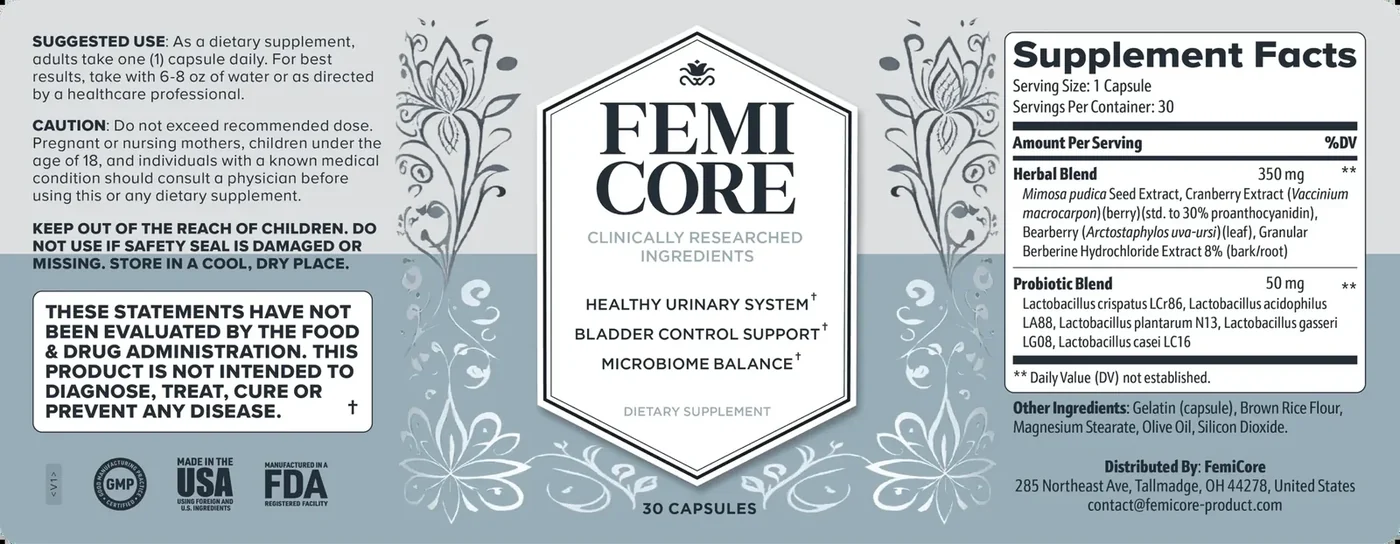
FemiCore is built around gut and microbiome balance: alongside its five Lactobacillus strains and cranberry and bearberry botanicals, it includes berberine and mimosa pudica, both positioned for gut support. Berberine in particular has genuine research behind it for metabolic and gut effects. The honest framing is that these are supportive inputs to a balanced gut environment — not hormone therapy, and not a way to raise or lower estrogen on demand. No supplement should be understood as adjusting your hormones, and the estrobolome literature does not support that leap.
Two cautions belong here. First, berberine interacts with several prescription medications and is not recommended in pregnancy, so it is the ingredient most worth flagging to a clinician — we detail this in our berberine interactions guide. Second, if you are exploring gut support specifically for hormone-related symptoms, the sensible starting move is a fiber-forward, plant-varied diet, with a supplement as an optional add-on rather than a substitute. Compare that logic in our explainer on prebiotics vs probiotics for women's health.
Related reading
- Perimenopause Bloating and the Gut: What Actually Helps
- Prebiotics vs Probiotics for Women's Health
- Normal Vaginal pH: The 3.8-4.5 Range and How Testing Works
Frequently asked questions
What is the estrobolome?
The estrobolome is the collection of gut bacteria, and their genes, that are able to metabolize estrogen. These microbes produce enzymes that act on estrogens the body has packaged for disposal, effectively deciding how much estrogen is sent out in waste and how much is reactivated and returned to the bloodstream.
How does gut bacteria affect estrogen levels?
After the liver tags estrogen for excretion and sends it into the gut, certain bacteria can untag it so it is reabsorbed instead of eliminated. A balanced microbiome keeps this recycling in a normal range, while an imbalanced one can raise or lower how much estrogen re-enters circulation. The effect is influence, not control.
What does beta-glucuronidase do to estrogen?
Beta-glucuronidase is a bacterial enzyme that removes the glucuronic acid tag the liver attaches to estrogen for disposal. Once that tag is removed, the estrogen becomes active again and can be reabsorbed from the gut back into the bloodstream. Higher bacterial beta-glucuronidase activity therefore means more estrogen is recycled rather than excreted.
Can gut health influence hormonal balance in women?
Evidence suggests it can play a supporting role, mainly through the estrobolome and estrogen recycling, plus effects on inflammation and blood sugar. This is mechanistic and associative rather than proof that changing gut bacteria treats a hormonal condition. Diet, fiber, and overall microbiome diversity are the levers with the most support.
Scientific references
- Plottel CS, Blaser MJ. — Microbiome and malignancy. Cell Host Microbe. 2011;10(4):324–335 (coined the term "estrobolome"). PMID 22018233
- Kwa M, Plottel CS, Blaser MJ, Adams S. — The intestinal microbiome and estrogen receptor-positive female breast cancer. J Natl Cancer Inst. 2016;108(8):djw029. PMID 27107051
- Baker JM, Al-Nakkash L, Herbst-Kralovetz MM. — Estrogen-gut microbiome axis: physiological and clinical implications. Maturitas. 2017;103:45–53. PMID 28778332
- Ervin SM, Li H, Lim L, et al. — Gut microbial beta-glucuronidases reactivate estrogens as components of the estrobolome. Journal of Biological Chemistry. 2019;294(49):18586–18599. PMID 31636122.
- NIH NCCIH — Probiotics: What You Need To Know
- National Institute on Aging — What Is Menopause?

Supporting a balanced gut environment
FemiCore combines berberine and mimosa pudica with five Lactobacillus strains and cranberry and bearberry botanicals, positioned for gut and microbiome balance — not hormone therapy. Read our full FemiCore overview first, then decide.
Order Now