Perimenopause Bloating and the Gut: What Actually Helps
Quick Answer: Why do you bloat more in perimenopause, and what helps?
Perimenopausal bloating is driven largely by fluctuating estrogen and progesterone, which slow gut movement, alter water retention and shift the microbiome and its gas production. The best-supported responses are gradual soluble fiber, adequate magnesium, gentle carminatives like ginger and fennel, and strain-specific probiotics. Effects are individual, build over weeks, and persistent or severe bloating deserves a medical check.
- Why: hormone swings change gut motility, fluid balance and gut bacteria.
- What helps: fiber (added slowly), magnesium, ginger, fennel, peppermint, specific probiotics.
- Reality check: responses vary; give changes several weeks, not several days.

Why bloating shows up in perimenopause
Perimenopause is the years-long transition before menopause, when estrogen and progesterone stop moving predictably and instead swing and gradually decline. Those hormones do far more than run the menstrual cycle — they also influence the digestive tract, which is why new or worse bloating is one of the more common and least-discussed complaints of this stage.
Several mechanisms overlap. Estrogen and progesterone affect gut motility, the speed at which food moves through you; when they fall or fluctuate, transit can slow, and slower transit means more time for gas to build. Estrogen influences water retention, so fluid shifts can produce a genuinely distended, puffy feeling. Estrogen also shapes bile flow and the gut microbiome itself: research links higher estrogen states to greater microbial diversity, and the decline of perimenopause with a shift in that balance — including changes in the bacteria that produce gas. Layer on the stress, disrupted sleep and dietary drift that often accompany this life stage, and bloating becomes almost predictable.
The hormone-gut connection runs deeper than symptoms, too. The same microbiome that handles gas also participates in recycling estrogen through the estrobolome — the feedback loop we unpack in how gut bacteria recycle estrogen.
When bloating is not just perimenopause. New, persistent bloating — especially most days for more than a few weeks — along with pelvic or abdominal pain, early fullness, unexplained weight change, or changes in bowel habits, warrants a prompt medical review rather than self-management. Persistent bloating can occasionally signal something that needs attention. Get it checked; do not wait it out with supplements.
What actually helps — ranked by evidence
There is no single fix, but several inputs have real support. The honest ranking runs from "well-established" to "reasonable to try," and every one of them works better as a consistent habit than a one-off.
| Approach | What the evidence shows | Practical note |
|---|---|---|
| Soluble fiber | Feeds beneficial bacteria and improves regularity, which reduces constipation-related bloating. Strong overall support. | Increase slowly — a fast jump causes more gas, not less. Pair with water. |
| Magnesium | Supports normal bowel movement (osmotic effect) and muscle relaxation; helpful where constipation drives bloating. | Citrate/glycinate are common; the RDA for women is around 310–320 mg. Excess can loosen stools. |
| Peppermint oil | Best-evidenced botanical for IBS-type bloating and cramping in meta-analyses; relaxes gut smooth muscle. | Enteric-coated capsules; can worsen reflux in some people. |
| Ginger | Speeds gastric emptying and eases nausea and dyspepsia in trials. | Tea, food or capsules; generally well tolerated. |
| Fennel | Traditional carminative; some trial support, often combined with peppermint. | Tea after meals is the simplest form. |
| Probiotics | Strain-specific; some strains reduce bloating and gas, others do little. Mixed but promising. | Judge over weeks, not days; match the strain to the goal. |
Fiber: powerful, but only if you add it gently
Fiber is the foundation, because most perimenopausal bloating has a constipation and fermentation component, and fiber addresses both — feeding a healthier microbiome while keeping things moving. The catch is dosing. Going from a low-fiber diet to a high-fiber one overnight reliably produces more gas and bloating for a week or two, which is exactly why so many people conclude "fiber makes it worse" and quit. Add it in small increments over several weeks, favour soluble sources (oats, psyllium, legumes, cooked vegetables, fruit), and increase fluids alongside. The discomfort of the ramp-up is temporary; the benefit is durable.
Magnesium: quietly useful, and multi-purpose
Magnesium earns its place because a large share of perimenopausal bloating is really slow-transit constipation in disguise. Magnesium draws water into the bowel and relaxes smooth muscle, which can ease both the backup and the cramping. It is also one of the more relevant minerals for this life stage more broadly, with roles in sleep and muscle comfort — a topic we cover in magnesium for women. As with any osmotic agent, more is not better: overshoot and you simply trade bloating for loose stools.
Ginger, fennel and peppermint: the carminative trio
"Carminative" is the old word for something that relieves gas, and three botanicals have the most behind them. Peppermint oil is the standout: meta-analyses of enteric-coated peppermint oil show meaningful benefit for the bloating, cramping and pain of irritable-bowel-type symptoms, working by relaxing intestinal smooth muscle. Ginger has trial evidence for accelerating gastric emptying and easing nausea and upper-gut discomfort, which is why it helps that heavy, over-full feeling after meals. Fennel is more traditional than proven on its own, but has reasonable support, particularly in combination with peppermint. None of these is a cure; they are gentle, low-risk tools that many women find genuinely take the edge off.
Probiotics: promising, strain-specific, individual
Probiotics are the input people most want a yes-or-no answer on, and the honest answer is "it depends on the strain and on you." Some specific strains have reduced bloating and gas in controlled trials; others show little effect. Benefits, when they occur, are modest and build over weeks. The practical implications are twofold: first, a product's strains and dose matter more than the word "probiotic" on the front, so it is worth reading the label rather than the marketing — the approach we take in our women's supplement label audit. Second, give any probiotic a fair trial of at least several weeks before judging, because early days tell you almost nothing, as we explain in our week-by-week probiotic timeline. And it is worth being clear about the difference between the bacteria themselves and the fibers that feed them — see prebiotics vs probiotics.
The everyday habits that quietly matter
Before or alongside any supplement, a handful of low-effort habits move the needle. Eat smaller, slower meals and chew properly — gulping food and talking while eating swallows air, a direct cause of bloating. Cut back on carbonated drinks and chewing gum for the same reason. Stay hydrated, which fiber depends on to work. Move after meals: a short walk measurably helps gas transit. And keep a brief symptom-and-food note for a couple of weeks — individual triggers vary enormously, and a written record beats memory for spotting yours. Some women find temporarily lowering high-FODMAP foods helps, but that is best done with guidance and as a short diagnostic experiment, not a permanent restriction.
Do not overlook stress and sleep
The gut-brain axis is not a wellness slogan; it is a real, well-documented communication network, and it is one reason perimenopausal bloating so often tracks with stressful weeks and poor sleep. Stress alters gut motility and visceral sensitivity, meaning the same amount of gas can feel markedly more uncomfortable when you are wound up or under-slept. Perimenopause frequently disrupts sleep in its own right, creating a loop in which poor sleep worsens stress, stress worsens gut symptoms, and gut discomfort further disturbs sleep. Addressing the basics here — a regular wind-down, consistent sleep timing, and simple stress management — is not a substitute for the dietary steps above, but it is a genuine and often-ignored part of why some weeks are so much worse than others.
Where FemiCore fits — and its cautions
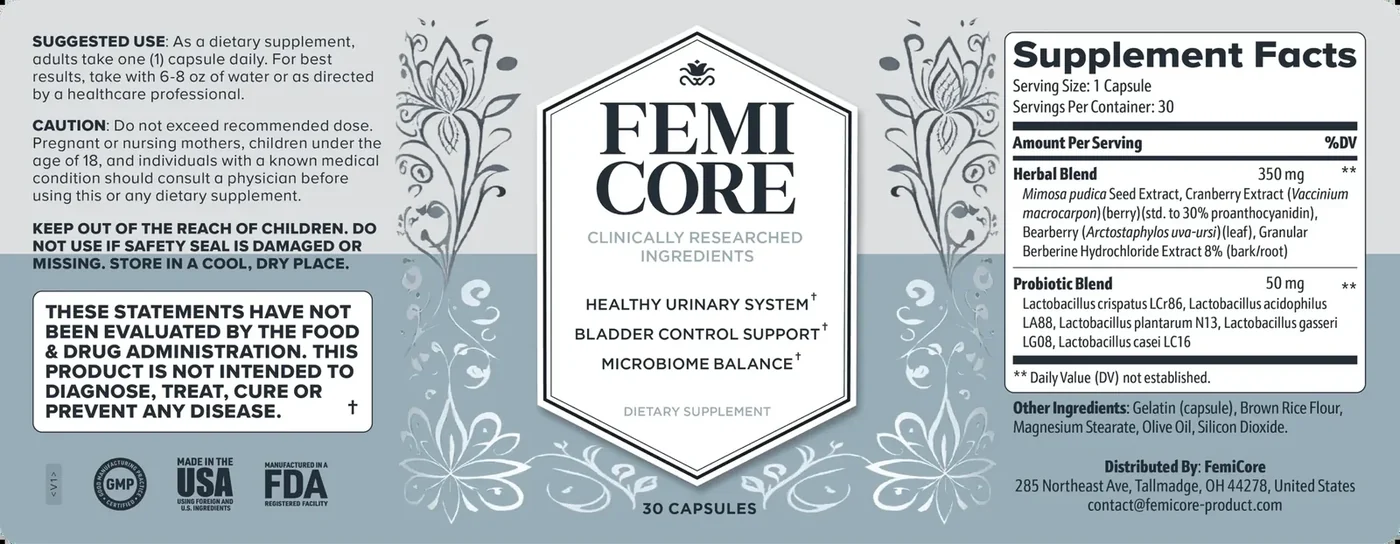
FemiCore is built around microbiome and gut balance: alongside its five Lactobacillus strains and cranberry and bearberry botanicals, it includes berberine and mimosa pudica, both positioned for digestive and gut support. The honest framing is general gut support, tried consistently over weeks — not a bloating treatment, a weight-loss aid or a hormone therapy, none of which it is. Two cautions are important in perimenopause specifically. First, berberine interacts with several prescription medications and is not recommended in pregnancy, so it is the ingredient most worth raising with a clinician — detailed in our berberine interactions guide. Second, a supplement should sit on top of the fiber, hydration and habit basics above, not replace them. If bloating is new, severe or persistent, that medical check comes first.
Related reading
- The Estrobolome: How Gut Bacteria Recycle Estrogen
- Magnesium for Women: PMS, Cramps, and Sleep
- Prebiotics vs Probiotics for Women's Health
Frequently asked questions
Why does bloating increase during perimenopause?
Fluctuating and declining estrogen and progesterone affect gut motility, water retention, and bile flow, and they shift the balance of gut bacteria and gas production. The result is more bloating, gas, and general digestive discomfort. Stress, slower transit, and dietary changes during this stage of life add to the effect.
Do probiotics help with menopause bloating?
Sometimes, but the effect is strain-specific and individual. Certain strains have reduced bloating and gas in trials, while others show little benefit, and results vary from person to person. Probiotics are best viewed as one part of a broader approach that includes fiber, hydration, and eating habits, tried consistently for several weeks.
Which foods ease perimenopausal digestive discomfort?
Gradually increasing soluble fiber, staying hydrated, and adding gentle carminatives such as ginger, fennel, and peppermint help many women. Smaller, slower meals and less carbonation reduce swallowed air and gas. Some people also feel better temporarily lowering high-FODMAP foods, though this is best done with guidance rather than as a permanent restriction.
Is bloating in perimenopause caused by estrogen changes?
Estrogen changes are a major driver, because estrogen influences gut movement, fluid balance, and the microbiome, but they are rarely the only cause. Diet, stress, sleep, activity, and other conditions all contribute. Because persistent or severe bloating can occasionally signal something else, ongoing symptoms deserve a medical check rather than self-management alone.
Scientific references
- Baker JM, Al-Nakkash L, Herbst-Kralovetz MM. — Estrogen-gut microbiome axis: physiological and clinical implications. Maturitas. 2017;103:45–53. PMID 28778332
- Alammar N, et al. — The impact of peppermint oil on the irritable bowel syndrome: a meta-analysis of the pooled clinical data. BMC Complement Altern Med. 2019;19:21. PMID 30654773
- Wu KL, et al. — Effects of ginger on gastric emptying and motility in healthy humans. Eur J Gastroenterol Hepatol. 2008;20(5):436–440. PMID 18403946
- NIH Office of Dietary Supplements — Magnesium Fact Sheet for Health Professionals
- National Institute on Aging — What Is Perimenopause?
- NIH NCCIH — Probiotics: What You Need To Know

General gut support, tried the honest way
FemiCore pairs berberine and mimosa pudica with five Lactobacillus strains and cranberry and bearberry botanicals for gut and microbiome support — a routine to layer on top of fiber, hydration and habits, not a bloating cure. Read our full FemiCore overview first, then decide.
Order Now