Magnesium for Women: PMS, Cramps and Sleep Evidence
Quick Answer: Is Magnesium Worth Taking for PMS, Cramps and Sleep?
For most adult women the daily target is 310–320 mg, mainly from food. Magnesium glycinate and citrate absorb well and are gentle; oxide is cheap but poorly absorbed. The evidence for PMS, menstrual cramps and sleep is real but modest — a reasonable thing to try, not a proven fix, and no substitute for medical care when symptoms are severe.
- Form: glycinate or citrate for absorption and tolerability; oxide often causes loose stools.
- Requirement: RDA 310 mg (19–30) / 320 mg (31+); supplement upper limit 350 mg/day.
- Honest caveat: benefits for PMS, cramps and sleep are modest and the trials are small.
Magnesium is one of the most searched-for supplements in women's health, and one of the most over-promised. It genuinely matters — it is a cofactor in hundreds of enzyme reactions, from muscle and nerve function to blood-sugar control — and national surveys keep finding that a large share of women fall short of the recommended intake from food. Both things can be true at once: magnesium is important, and a pill is not a cure for premenstrual syndrome, period pain or insomnia. This page walks through the forms, the numbers and the actual trial evidence, and it flags where the science is thinner than the marketing.
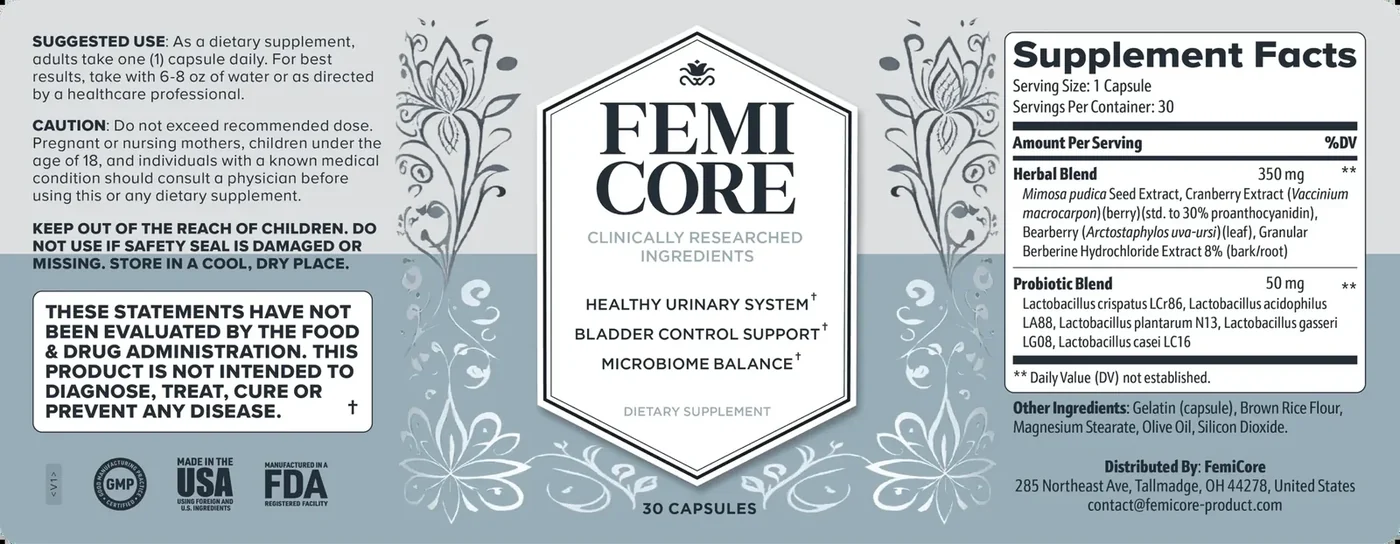
One note up front, because we would rather be straight than let a buy button imply otherwise: FemiCore is not a magnesium supplement. It is a women's urinary and vaginal microbiome formula built on cranberry, bearberry, berberine, mimosa pudica and a five-strain Lactobacillus blend. If magnesium is what you are after, a standalone magnesium product is the honest answer, and this article is written to help you choose one well — not to steer you toward the wrong shelf.
The forms: what absorbs, and what just passes through
The word "magnesium" on a label is never the whole story. Elemental magnesium is always bound to something else — a salt or an amino acid — and that partner changes two things: how much magnesium you actually absorb, and how likely the product is to loosen your stools. Here is the practical ranking.
Common magnesium forms compared
| Form | Absorption | Gut tolerability | Best suited to |
|---|---|---|---|
| Magnesium glycinate (bisglycinate) | Good | Gentlest | Daily top-up; people prone to loose stools |
| Magnesium citrate | Good | Loosening at higher doses | Everyday use; also used deliberately for constipation |
| Magnesium oxide | Poor (low fraction absorbed) | Most laxative | Cheap bulk magnesium; occasional constipation relief |
| Magnesium malate / taurate / L-threonate | Reasonable | Generally well tolerated | Niche marketing claims; evidence in women is thin |
General absorption and tolerability patterns; see NIH Office of Dietary Supplements, Magnesium (Health Professional fact sheet).
The single most useful habit when reading a magnesium label is to find the elemental magnesium figure, not the compound weight. A capsule may say "magnesium glycinate 1,000 mg" and deliver only a fraction of that as usable magnesium, because most of the weight is the glycine. A well-written panel states the elemental amount — for example "magnesium (as bisglycinate) 200 mg." If it only prints the compound weight, you cannot compare it to the daily target below.
Oxide deserves a specific caution. It is the cheapest form and the one most often found in low-cost multivitamins, but only a small fraction of it is absorbed, and the rest draws water into the bowel — which is exactly why the same compound is sold as a laxative. If you are taking oxide and getting loose stools without feeling any benefit, that is the form working against you, not a sign you need a higher dose.
How much do women actually need?
The Recommended Dietary Allowance for magnesium in adult women is 310 mg per day between ages 19 and 30, and 320 mg from age 31 onward. Those figures come from the NIH Office of Dietary Supplements magnesium fact sheet. In pregnancy the target rises to roughly 350–360 mg. Those figures are set by the National Academies and are meant to be met mainly through diet.
There is a second number that trips people up. The tolerable upper intake level for magnesium is 350 mg per day — but only for magnesium from supplements and fortified foods, not the magnesium naturally present in food. That is why you can eat a magnesium-rich diet well above 350 mg total and be perfectly fine, while a large supplemental dose on top can cause diarrhoea, cramping and nausea. The upper limit exists because the first sign of too much supplemental magnesium is a gut reaction, not because food magnesium is dangerous.
For most women, the least glamorous advice is the best: reach the RDA from food first. Pumpkin seeds, almonds, cashews, spinach and other leafy greens, black beans, edamame, whole grains and a square of dark chocolate all carry meaningful magnesium. The same test-first logic applies to the nutrient women ask about most often alongside this one, which we cover in vitamin D and recurrent vaginal infections. A supplement is a sensible top-up if your diet is genuinely short, or if a clinician has flagged low levels — not a replacement for the plate.
Magnesium and PMS: what the trials show
This is where expectations and evidence part company most. The idea that magnesium eases premenstrual syndrome rests largely on a handful of small studies from the 1990s and 2000s, several of which used magnesium oxide — the poorly absorbed form — sometimes paired with vitamin B6. Some reported reductions in mood symptoms, fluid retention and bloating; others were underpowered or hard to reproduce.
The fair summary is that magnesium may help some premenstrual symptoms modestly, that the combination with B6 has slightly more supporting data than magnesium alone, and that no single form has been shown to be best specifically for PMS. Professional bodies generally describe the evidence as limited. If you want to try it, a well-absorbed form at a sensible dose across the luteal phase is a reasonable, low-risk experiment — but treat any improvement as a personal result, not a guarantee, and give it a couple of cycles before judging.
Menstrual cramps: a modest, real signal
Primary dysmenorrhoea — period pain without an underlying gynaecological condition — is driven largely by prostaglandins that make the uterus contract. Magnesium has a plausible mechanism here, since it influences smooth-muscle activity, and a Cochrane review of dietary supplements for period pain found magnesium performed better than placebo in the small trials available.
The catch, in the reviewers' own words, is that the quality of that evidence was low: the studies were small, used different doses and forms, and measured pain in different ways. So magnesium sits in the "reasonable to try, not proven" category for cramps — potentially useful, cheap and low-risk, but not a reason to skip an evaluation if your pain is severe, getting worse, or not what your periods used to feel like. Pain that is escalating deserves a clinician, not a bigger dose — and if heavy bleeding is part of the picture, read iron deficiency and heavy periods before assuming the problem is a mineral you can buy.

Sleep: helpful if you are low, oversold if you are not
Magnesium's reputation as a sleep aid runs far ahead of the data. The most-cited trials are small, often in older adults with low magnesium status, and report modest improvements in how quickly people fall asleep or in their own rating of sleep quality. That is a genuine but narrow finding: correcting a shortfall can have knock-on benefits, and glycinate is popular partly because glycine itself has some calming research behind it.
If your magnesium intake is already adequate, do not expect a supplement to work like a sedative. The interventions with the strongest evidence for sleep are unglamorous — a consistent wake time, limiting caffeine and alcohol late in the day, a dark cool room, and winding down screens before bed. Magnesium is a fine thing to layer on if you are short of it; it is not a shortcut around sleep habits.
Who should be cautious
Magnesium is generally safe from food, but supplemental magnesium is not for everyone. People with reduced kidney function can accumulate magnesium to dangerous levels and should only supplement under medical supervision. Magnesium can also interact with certain medications — some antibiotics (tetracyclines and quinolones), bisphosphonates and others — where timing the doses apart matters. Berberine is the ingredient in this category with the most documented interactions, detailed in our berberine interactions guide. And the everyday reality is simply the gut: if a dose gives you diarrhoea, that is your ceiling, and a gentler form or a smaller amount is the fix.
Medical note: this article is general information, not medical advice. Dietary supplements are not intended to diagnose, treat, cure or prevent any disease. Speak to a healthcare professional before starting magnesium or any supplement, especially if you are pregnant, nursing, have kidney disease, or take prescription medication.
Related reading
- Iron Deficiency and Heavy Periods: A Woman's Guide
- Perimenopause Bloating and the Gut: What Helps
- Vitamin D and Recurrent Vaginal Infections: The Evidence
Frequently asked questions
Which magnesium form is best for PMS?
There is no form proven best for PMS, because the trials that studied magnesium for premenstrual symptoms mostly used magnesium oxide, not the better-absorbed forms. On absorption and tolerability grounds, magnesium glycinate and magnesium citrate are the sensible everyday choices: both are well absorbed, and glycinate is the gentlest on the gut. Oxide is cheap but poorly absorbed and the most likely to cause loose stools, so if you tolerate it and it helps, that is fine, but do not expect a premium form to work better for PMS than the evidence itself supports.
Does magnesium help with menstrual cramps?
Possibly, modestly. Small randomised trials and a Cochrane review of dietary supplements for period pain suggest magnesium may reduce menstrual cramp intensity more than placebo, plausibly by easing the prostaglandin-driven uterine contractions behind the pain. But the Cochrane authors rated the evidence as low quality, the studies were small, and doses and forms varied. Magnesium is a reasonable thing to try for cramps, not a proven treatment, and it is not a substitute for medical care if pain is severe or worsening.
How much magnesium do women need per day?
The Recommended Dietary Allowance is 310 mg per day for women aged 19 to 30 and 320 mg per day for women 31 and older, rising to about 350 to 360 mg in pregnancy. That total is meant to come mainly from food. There is a separate tolerable upper limit of 350 mg per day for magnesium from supplements and fortified products only, which does not include the magnesium in food. Most women can cover the RDA with leafy greens, nuts, seeds, legumes and whole grains.
Can magnesium improve sleep?
The evidence is limited and mixed. A few small trials, mostly in older adults with low magnesium status, reported modest improvements in how quickly people fell asleep or their subjective sleep quality, but the studies were small and not consistently high quality. If you are low in magnesium, correcting that may help sleep as a knock-on effect; if your levels are already fine, do not expect a supplement to act like a sleep aid. Sleep hygiene and a consistent schedule do more for most people.
Scientific references
- NIH Office of Dietary Supplements — Magnesium: Fact Sheet for Health Professionals (RDA, upper limits, food sources, interactions)
- Pattanittum P, et al. — Dietary supplements for dysmenorrhoea, Cochrane Database of Systematic Reviews 2016
- Facchinetti F, et al. — Oral magnesium successfully relieves premenstrual mood changes, Obstetrics & Gynecology 1991 (PMID 2067759)
- Abbasi B, et al. — The effect of magnesium supplementation on primary insomnia in elderly: a double-blind placebo-controlled clinical trial, Journal of Research in Medical Sciences 2012 (PMID 23853635)
- ACOG — Premenstrual Syndrome (PMS): patient guidance on symptoms and management

Looking after the urinary and vaginal side of women's health?
FemiCore is not a magnesium supplement — it is a daily cranberry, bearberry and five-strain Lactobacillus formula for urinary and vaginal microbiome balance, with a 60-day money-back guarantee handled by the manufacturer. Doses are not disclosed on the label, and we would rather you knew that before you buy.
Order Now