Iron Deficiency and Heavy Periods: A Woman's Guide
Quick Answer: Can Heavy Periods Cause Iron Deficiency?
Yes — heavy menstrual bleeding is one of the most common causes of iron deficiency in women of reproductive age, because every period loses iron-rich blood. Derman and Patted, reviewing iron deficiency in women and girls of reproductive age for the International Journal of Gynaecology and Obstetrics name heavy menstrual bleeding in non-pregnant people as one of the main contributors alongside pregnancy-related losses and dietary shortfall. Over months this can drain stores faster than food replaces them, causing fatigue, hair shedding and breathlessness. Test ferritin before supplementing, and pair non-heme iron with vitamin C to absorb more.
- The driver: repeated blood loss depletes iron and ferritin stores.
- The test: ferritin under about 30 ng/mL often signals low stores.
- The absorption tip: vitamin C boosts non-heme iron uptake; tea and coffee reduce it.
If your periods are heavy and you are exhausted in a way that rest does not touch, those two facts are very often connected. Iron deficiency is the most common nutritional deficiency in the world, and among women of reproductive age, heavy menstrual bleeding is one of its leading drivers. Yet it is frequently missed, partly because the symptoms are vague and partly because a standard blood count can look normal while your iron stores are quietly running down. This guide explains the mechanism, the numbers that matter, and why testing should come before the supplement aisle.
How heavy bleeding drains your iron
The logic is almost arithmetic. Blood contains iron, bound up in the haemoglobin of red cells. Every menstrual period sheds blood, so every period loses iron. A typical period loses a modest, easily replaced amount. But heavy menstrual bleeding — clinically, losing more than about 80 mL per cycle, or in practical terms soaking through pads or tampons hourly, passing large clots, bleeding beyond seven days, or flooding — loses considerably more, month after month. Bleeding that turns up between periods rather than during them is a separate question, covered in spotting between periods and when to see a doctor.
The body cannot always keep up. Iron absorption from food is limited and tightly regulated, so if losses outpace intake, the shortfall is made up from storage. This is where the concept of stages matters: you do not go from healthy to anaemic overnight. First your stores deplete (reflected in a falling ferritin), while your haemoglobin still holds steady. This is iron deficiency without anaemia, and it can already make you feel unwell. Only later, if the drain continues, does haemoglobin fall too and you develop iron deficiency anaemia. A woman with heavy periods can spend a long time in that first stage, feeling tired and being told her blood count is “normal.”
The symptoms worth taking seriously
Low iron symptoms are frustratingly non-specific, which is exactly why they get dismissed. The point of knowing them is not to self-diagnose but to recognise a pattern worth testing. Common signs include:
- Persistent fatigue and weakness that sleep does not resolve — usually the earliest and most common complaint.
- Shortness of breath on exertion that used to feel easy, such as stairs.
- Pale skin, and pallor inside the lower eyelids.
- Increased hair shedding — more hair in the brush or drain, often diffuse rather than patchy.
- Brittle or spoon-shaped nails, headaches, dizziness, and cold hands and feet.
- Restless legs at night, and unusual cravings for ice or non-food items (a phenomenon called pica).
Any of these can have other causes, and having one does not mean your iron is low. But if several cluster together and you also have heavy periods, that combination is a strong prompt to get a blood test rather than to guess.
The numbers: ferritin, haemoglobin and why ferritin comes first
There are two tests worth understanding. Haemoglobin, part of a standard full blood count, measures oxygen-carrying capacity and only falls once deficiency has progressed to anaemia. Ferritin measures stored iron, and it is the earlier warning — it drops while haemoglobin is still normal. That is why ferritin is the more sensitive marker of the early, symptomatic stage that heavy-period sufferers so often occupy.
Typical ferritin interpretation (varies by lab and guideline)
| Ferritin | General interpretation | Note |
|---|---|---|
| Below ~15 ng/mL | Iron deficiency likely | Common lab lower limit |
| ~15–30 ng/mL | Low stores, deficiency possible even without anaemia | Many clinicians act in this range with symptoms |
| ~30–100 ng/mL | Generally adequate stores | Interpret with symptoms |
| Raised | Can reflect inflammation, not just iron | Ferritin rises with infection/inflammation |
Thresholds are approximate and differ between laboratories and clinical guidelines. Ferritin is an acute-phase reactant, so it can read falsely high when there is inflammation — which is one reason it must be interpreted by a clinician, not read off a chart.
The practical takeaway: if you have heavy periods and low-iron symptoms, ask specifically about a ferritin test, not just a full blood count. A normal haemoglobin does not rule out iron deficiency, and being told “your blood is fine” when only haemoglobin was checked is a common way this problem gets missed.
Heavy bleeding itself deserves attention. Very heavy periods are not something to simply endure or supplement around. They can have treatable underlying causes, and persistent heavy bleeding, bleeding between periods, or a sudden change in your cycle warrants a clinical assessment in its own right.
How vitamin C helps — and what blocks absorption
Not all dietary iron is absorbed equally. Heme iron, from meat, poultry and fish, is absorbed relatively efficiently. Non-heme iron, from plants, fortified foods and most iron supplements, is absorbed far less efficiently and is sensitive to what you eat alongside it. This is where vitamin C earns its reputation: it converts non-heme iron into a more absorbable form and counteracts some of the compounds that inhibit uptake. Taking a non-heme iron source with a source of vitamin C — citrus fruit, peppers, a glass of orange juice — measurably increases how much iron you absorb.
The flip side matters just as much. Several everyday things reduce non-heme iron absorption when consumed at the same time: the tannins in tea and coffee, calcium (including dairy and calcium supplements), and the phytates in some whole grains and legumes. You do not have to eliminate these — just separate them from your iron by an hour or two. Magnesium raises the same form-and-dose questions from the other direction, which we work through in magnesium for women. A classic mistake is taking an iron supplement with a milky tea, which blunts the very absorption you are trying to achieve.
Simple absorption levers
| Helps absorption | Hinders absorption (if taken together) |
|---|---|
| Vitamin C (citrus, peppers, juice) | Tea and coffee (tannins) |
| Heme iron alongside non-heme | Calcium and dairy |
| Taking iron on an emptier stomach (if tolerated) | Phytates in some grains/legumes |
Test before you supplement — and why more is not better
It is tempting to skip the doctor and start an iron supplement on suspicion. Resist that. Iron is one of the few nutrients where taking it unnecessarily can do harm: excess iron is not easily excreted, high-dose iron commonly causes constipation, nausea and stomach upset, and a small number of people have conditions (such as haemochromatosis) where extra iron is actively dangerous. Supplementing blindly can also mask an underlying cause of bleeding that needs its own attention.
The right order is: test, identify, then treat under guidance. If a deficiency is confirmed, your clinician can recommend an appropriate dose and form and, importantly, look for why you are deficient — because for many women with heavy periods, addressing the bleeding is as important as replacing the iron. Repletion also takes time: even with correct supplementation, rebuilding depleted ferritin stores typically takes months, not days, and it is common to keep going for a while after symptoms improve to refill the tank.
Where this fits with women's supplements generally
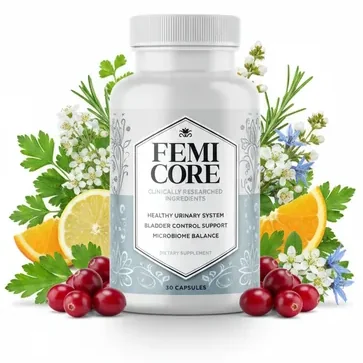
A quick note on scope, in the interest of being straight with you. Iron deficiency from heavy periods is a distinct issue with a distinct fix — iron, guided by testing — and it is not what a women's microbiome supplement is designed to address. FemiCore, for example, is built around cranberry and bearberry botanicals, berberine, mimosa pudica and five Lactobacillus strains for urinary, bladder and vaginal microbiome support. It is not an iron supplement, and no probiotic-and-botanical formula is a substitute for correcting a confirmed iron deficiency — and the CFU number on that sort of label answers a different question again, as we explain in why a bigger CFU count is not a better probiotic.
We mention this because women's-health products are often marketed as though one bottle covers everything, and it is more honest to keep the categories clear. If your issue is iron, the answer is a ferritin test and a targeted plan. If your interest is separately in urinary and vaginal microbiome balance, that is a different lever — you can read what that formula actually contains, with amounts, on our main FemiCore review.
Looking at women's microbiome support?
FemiCore covers the urinary and vaginal microbiome side — cranberry and bearberry botanicals with five Lactobacillus strains, on the manufacturer's official store with a 60-day money-back guarantee. It is not an iron product; for iron, test first.
Order NowThe honest bottom line
Heavy periods are a genuine and common cause of iron deficiency, and the deficiency can make you feel unwell long before a standard blood count turns abnormal. Learn the symptom pattern, ask specifically for a ferritin test, and if you supplement, do it on the basis of a result and with vitamin C to aid absorption — not on a hunch. And treat persistent heavy bleeding as something worth investigating in its own right, not just working around. The most powerful thing in this whole article is not a supplement; it is a blood test.
Medical note: this article is general information, not medical advice. FemiCore is a dietary supplement, not a drug, and is not intended to diagnose, treat, cure or prevent any disease. Speak to a healthcare professional about heavy bleeding, before any iron testing or supplementation, and before starting any supplement — especially if you are pregnant, nursing, under 18, or taking medication.
Related reading
- Magnesium for Women: PMS, Cramps and Sleep
- Vitamin D and Recurrent Vaginal Infections: The Evidence
- Spotting Between Periods: When to See a Doctor
Frequently asked questions
Can heavy periods cause iron deficiency?
Yes. Heavy menstrual bleeding is one of the most common causes of iron deficiency in women of reproductive age. Each period loses blood, and blood contains iron, so consistently heavy or prolonged bleeding can drain the body's iron stores faster than diet replaces them. Over months this can move a woman from full stores to depleted stores and eventually to iron deficiency anaemia if it is not addressed.
What ferritin level indicates low iron stores?
Ferritin reflects stored iron, and many laboratories flag deficiency below about 15 to 30 nanograms per millilitre, though the exact cut-off varies by lab and guideline. A number of clinicians consider a ferritin under 30 ng/mL suggestive of iron deficiency even when a full blood count still looks normal, because stores can be depleted before anaemia appears. Ferritin can be falsely raised by inflammation, so it is interpreted in context rather than in isolation.
Does vitamin C improve iron absorption?
Yes, for non-heme iron, the form found in plants and in most iron supplements. Vitamin C helps convert iron into a more absorbable form and counteracts some dietary compounds that block absorption. Taking a non-heme iron source or supplement with a source of vitamin C, such as citrus or a glass of orange juice, can increase how much iron you take up, while tea, coffee and calcium taken at the same time tend to reduce it.
What are common signs of iron deficiency in women?
Common signs include persistent fatigue, weakness, shortness of breath on exertion, pale skin, brittle nails, increased hair shedding, headaches, cold hands and feet, and sometimes unusual cravings for ice or non-food items. These symptoms are non-specific and overlap with many other conditions, so they point toward getting tested rather than self-diagnosing. Only a blood test can confirm whether iron is the cause.
Further reading
- NIH Office of Dietary Supplements — Iron fact sheet for health professionals
- NIH Office of Dietary Supplements — Iron consumer fact sheet
- U.S. CDC — Iron deficiency information
- ACOG — Heavy menstrual bleeding patient FAQ
- Derman RJ, Patted A — Overview of iron deficiency and iron deficiency anemia in women and girls of reproductive age, International Journal of Gynaecology and Obstetrics 2023;162(Suppl 2):78–82 (PMID 37538013)
Order FemiCore from the official store
Five named Lactobacillus strains plus cranberry and bearberry botanicals in one daily capsule, with the 60-day money-back guarantee handled by the manufacturer.
Order Now