Prebiotics vs Probiotics: What Women Should Know
Quick Answer: What Is the Difference Between Prebiotics and Probiotics?
Probiotics are live beneficial microbes; prebiotics are the fibers — inulin, FOS, GOS — that feed the good bacteria you already have. A synbiotic combines both. Put simply, probiotics are the bacteria, prebiotics are their food. Most women get plenty of prebiotics from a varied high-fiber diet, and both support gut and, indirectly, vaginal balance.
- Probiotic: live microbes added to the system (e.g. Lactobacillus).
- Prebiotic: fermentable fiber that nourishes resident bacteria.
- Synbiotic: both together, on the logic they may work better paired.
Two words that get used interchangeably almost never mean the same thing. “Prebiotic” and “probiotic” differ by a single letter and by their entire biology. One is alive; the other is not. One adds bacteria; the other feeds them. Getting the distinction right is the difference between choosing a supplement that matches what you actually need and buying the wrong thing because the label sounded close enough. Here is the clear version, written for women who want to understand their gut and vaginal microbiome rather than memorise marketing terms.
The definitions, precisely
Probiotics are, in the consensus definition used by the International Scientific Association for Probiotics and Prebiotics (ISAPP), “live microorganisms that, when administered in adequate amounts, confer a health benefit on the host.” Three parts matter in that sentence: they are alive, the amount has to be adequate, and the benefit has to be real for that specific organism. In practice, women's probiotics are usually Lactobacillus and sometimes Bifidobacterium species.
Prebiotics are defined by ISAPP as “a substrate that is selectively utilised by host microorganisms conferring a health benefit.” The everyday translation: a prebiotic is food for your good bacteria. It is not alive. It is typically a specific type of fiber that your own digestive enzymes cannot break down, so it travels intact to the colon, where resident bacteria ferment it. The classic prebiotics are inulin, fructooligosaccharides (FOS) and galactooligosaccharides (GOS).
So the relationship is simple and complementary. Probiotics are the gardeners you bring in; prebiotics are the compost that helps whatever is already growing. Neither is inherently superior — they do different jobs.
Those definitions are not casual usage. They come from three consensus statements published in Nature Reviews Gastroenterology & Hepatology by the International Scientific Association for Probiotics and Prebiotics: Hill and colleagues on the scope and appropriate use of the term probiotic (2014), Gibson and colleagues on the definition and scope of prebiotics (2017), and Swanson and colleagues on synbiotics (2020). Each one exists because the words were being applied loosely in marketing, and each sets a bar a product has to clear before the label is accurate.
What each one actually does
When you swallow a probiotic, you are introducing live cells into a crowded, competitive ecosystem. Most transit through rather than permanently colonising, which is why the effect tends to fade when you stop and why consistency matters. While they are present, certain strains can nudge the balance of the community, produce compounds like lactic acid, and interact with the gut lining and immune tissue. The effects are strain-specific and generally modest, not dramatic.
When you consume a prebiotic, you are not adding organisms at all — you are changing the food supply so that beneficial bacteria already living in you have more to eat and can grow. Fermentation of prebiotic fiber produces short-chain fatty acids such as butyrate, which nourish the cells lining the colon and are one of the most consistently studied benefits of fiber. Because you are feeding an established community rather than introducing transient newcomers, some researchers consider prebiotics a more durable way to shift the microbiome — though, as always, it depends on the person and the dose.
Prebiotics vs probiotics vs synbiotics at a glance
| Probiotic | Prebiotic | Synbiotic | |
|---|---|---|---|
| What it is | Live microbes | Fermentable fiber (food) | Both, combined |
| Alive? | Yes | No | Partly (the microbe part) |
| Typical examples | Lactobacillus, Bifidobacterium | Inulin, FOS, GOS | A strain + its fiber |
| Main job | Adds specific organisms | Feeds resident bacteria | Deliver microbes with fuel |
| Storage sensitivity | Higher (living cells) | Lower (stable fiber) | Follows the microbe part |
Typical doses, and where food beats a pill
Prebiotic research most often uses daily doses in the region of about 3 to 10 grams of a specific fiber such as inulin, FOS or GOS, with some study protocols going higher. There is a practical ceiling, though: fermentable fiber produces gas, so ramping up too quickly is a common cause of bloating and discomfort. The sensible approach is to start low and increase gradually, which lets your microbiome and your comfort adjust together. We cover the bloating angle in more detail for the perimenopausal transition in perimenopause bloating and the gut.
Here is the honest headline most supplement pages skip: for the majority of women, food is the better prebiotic source. A varied, high-fiber diet delivers a mix of fermentable fibers that no single-ingredient supplement matches, and it does so cheaply. Onions, garlic, leeks, asparagus, slightly under-ripe bananas, chicory root, Jerusalem artichoke, oats, barley, apples and legumes are all rich sources. A prebiotic supplement is a reasonable convenience or top-up, not a replacement for eating plants.
One more distinction worth clearing up, because it trips people constantly: fermented foods are not the same as prebiotics. Yoghurt, kefir, kimchi and sauerkraut can supply live bacteria — putting them loosely on the probiotic side of the ledger, though the amounts and strains vary and are rarely specified — but they are not, in themselves, prebiotic fibers. Resistant starch is a related idea worth knowing too: cooked-then-cooled potatoes, rice and legumes form starch that resists digestion and ferments in the colon much as classic prebiotics do. So the practical toolkit has three parts — live-microbe foods, prebiotic fibers, and resistant starch — and a genuinely varied diet quietly gives you all three without a single capsule.
What this means for the vaginal microbiome
Most of the strong prebiotic evidence lives in the gut, so it is important to be careful here. The vaginal microbiome is dominated in health by Lactobacillus species — especially L. crispatus — which keep the environment acidic. The idea of feeding those organisms with targeted prebiotic compounds is being actively researched, including formulations applied locally rather than swallowed, but it is an emerging field rather than a settled one. It would be overstating the science to promise that a prebiotic fiber you eat will directly nourish vaginal bacteria.
What is better established is the indirect route: the gut and vaginal environments are connected, and the gut acts as a reservoir from which Lactobacillus can reach the vaginal tract. Supporting a healthy, fiber-fed gut community is therefore part of the wider picture of women's microbiome balance, even if the direct vaginal-prebiotic story is still being written. Whether swallowed probiotics reach the vaginal tract at all is its own question, and a fair one to ask before you buy.
A realistic frame. Prebiotics and probiotics support balance; they do not treat infections. If you have symptoms — unusual discharge, odour, itching, burning or urinary pain — that is a reason to see a clinician, not to reach for a fiber supplement.
Where FemiCore sits in this picture
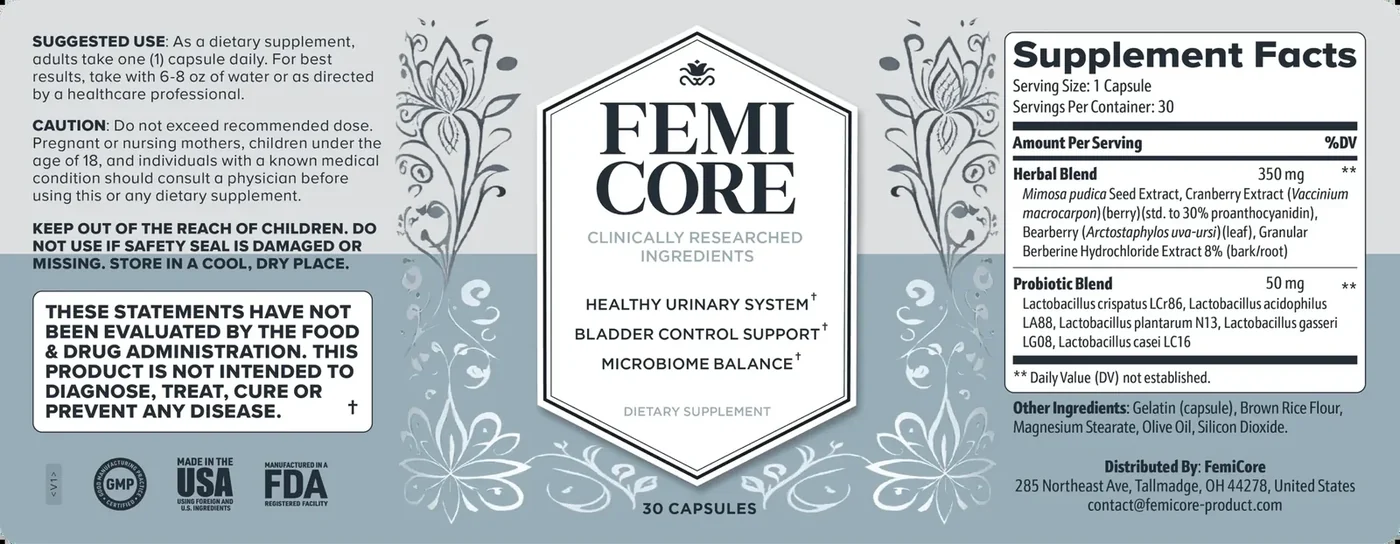
FemiCore is primarily a probiotic-and-botanical formula rather than a prebiotic one. Its five named Lactobacillus strains — L. acidophilus, L. casei, L. crispatus, L. gasseri and L. plantarum — are the live-microbe (probiotic) component, and its botanicals (cranberry, bearberry, berberine and mimosa pudica seed) are studied for urinary comfort and gut support rather than as classic prebiotic fibers. In other words, it is bringing organisms to the system, not primarily feeding the ones you have.
That is not a criticism — it just tells you what the product is and is not. If your goal is to feed your existing gut bacteria, the most reliable lever is dietary fiber, and a dedicated prebiotic supplement if you want a top-up. If your goal is to add specific Lactobacillus strains, that is the probiotic side, and it is where a formula like this one plays. Some women do both. You can read the full ingredient breakdown, including where we think the evidence is strongest and weakest, on our main FemiCore review, and check the amounts on the Supplement Facts panel yourself — bearing in mind what a CFU count does and does not tell you.

See what is actually in FemiCore
Five named Lactobacillus strains and four botanicals, with amounts on the Supplement Facts panel and a 60-day money-back guarantee handled by the manufacturer. Check the label against what you have just read.
Order NowThe honest limits
Being clear about what these categories cannot do: neither prebiotics nor probiotics are drugs, and neither diagnoses, treats, cures or prevents disease. Prebiotic doses ramped up too fast commonly cause gas and bloating. Probiotic effects are strain-specific, usually modest, and often fade after you stop. And the vaginal-prebiotic field, while promising, is still early science. A supplement is a support measure layered on top of the basics — a varied diet, hydration and sleep — not a substitute for them or for medical care.
Medical note: this article is general information, not medical advice. FemiCore is a dietary supplement, not a drug, and is not intended to diagnose, treat, cure or prevent any disease. Speak to a healthcare professional before starting any supplement, especially if you are pregnant, nursing, immunocompromised, under 18, or taking medication.
Related reading
- Probiotic CFU Counts: Why More Isn't Always Better
- The Estrobolome: How Gut Bacteria Recycle Estrogen
- Perimenopause Bloating and the Gut: What Helps
Frequently asked questions
What is the difference between prebiotics and probiotics?
Probiotics are live microorganisms that, in adequate amounts, can confer a health benefit. Prebiotics are non-living substances, usually specific fibers, that your own beneficial bacteria ferment as food. In short, probiotics are the bacteria and prebiotics are what those bacteria eat. One adds microbes to the system; the other nourishes the microbes already there.
Do prebiotics feed vaginal bacteria too?
The best-established prebiotic activity is in the gut, where fibers such as inulin, FOS and GOS are fermented by resident bacteria. There is growing but still early research into prebiotic compounds that support vaginal Lactobacillus, some applied locally rather than swallowed. It is an active area of study rather than a settled one, so it is fair to say prebiotics mainly feed gut bacteria today, with vaginal applications still being researched.
What foods are natural sources of prebiotics?
Everyday foods rich in prebiotic fibers include onions, garlic, leeks, asparagus, slightly green bananas, chicory root, Jerusalem artichoke, oats, barley, apples and legumes. These supply inulin, fructooligosaccharides and other fermentable fibers. For most women, a varied high-fiber diet delivers prebiotics more reliably and cheaply than any supplement.
What is a synbiotic?
A synbiotic is a product that combines probiotics and prebiotics together, on the logic that supplying live bacteria alongside the fiber they feed on may help them establish. The category is defined by the International Scientific Association for Probiotics and Prebiotics. The evidence is still developing, so a synbiotic is a reasonable concept rather than a guaranteed advantage over taking either component well.
Further reading
Order FemiCore from the official store
Five named Lactobacillus strains plus cranberry and bearberry botanicals in one daily capsule, with the 60-day money-back guarantee handled by the manufacturer.
Order Now